
Last updated September 23, 2026
Whole-system duct and dryer vent check with before-and-after photos - you see exactly what came out of your vents
That "$99 whole-house special" is a bait ad - the real number appears once they are in your hallway, or the "clean" is a shop-vac at the register. We photograph the inside of your ducts before and after instead.
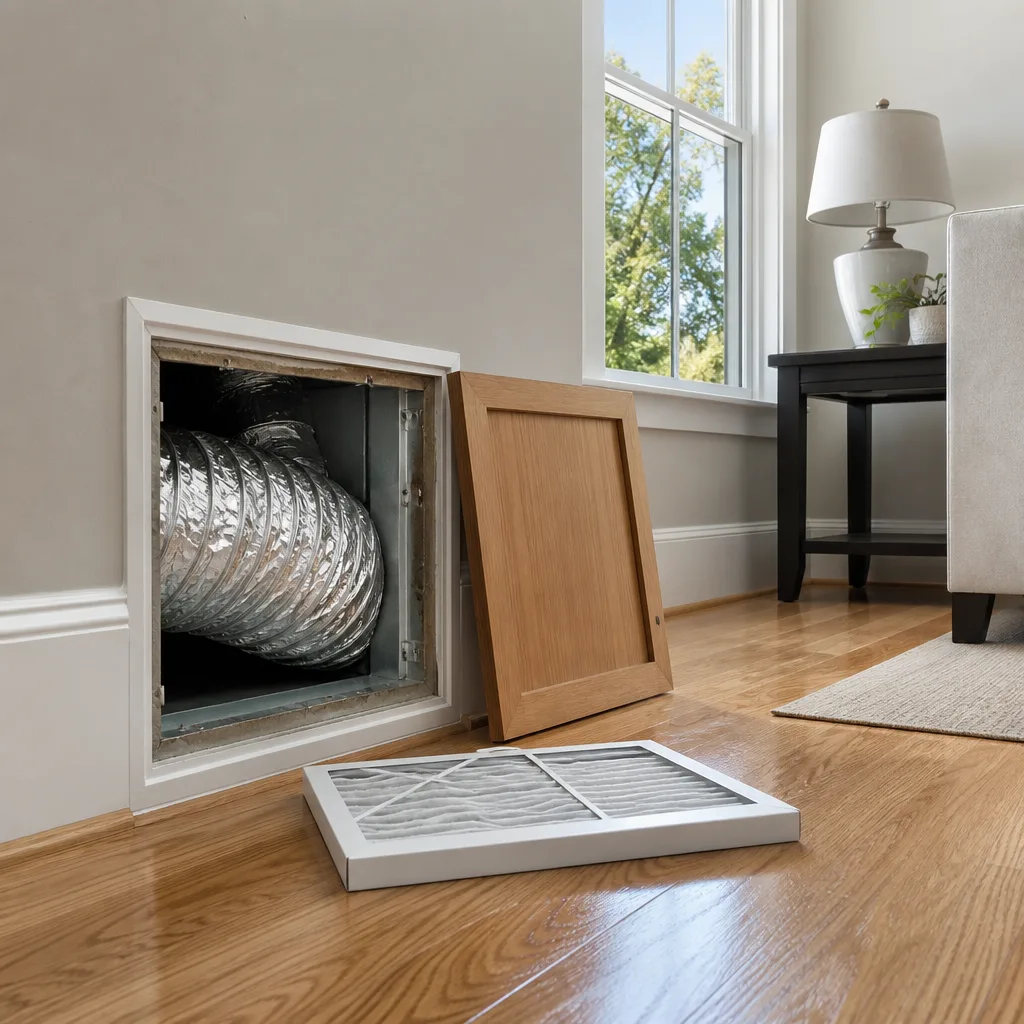
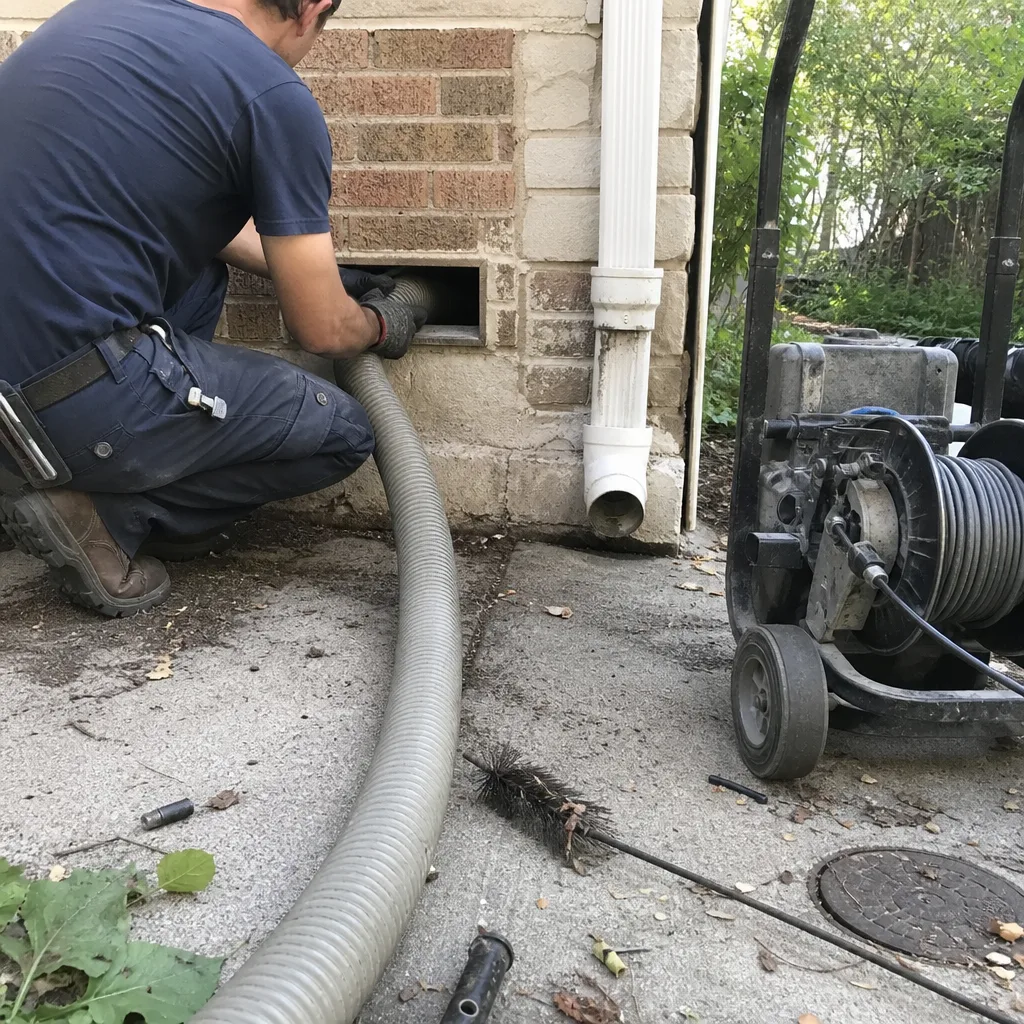 Before
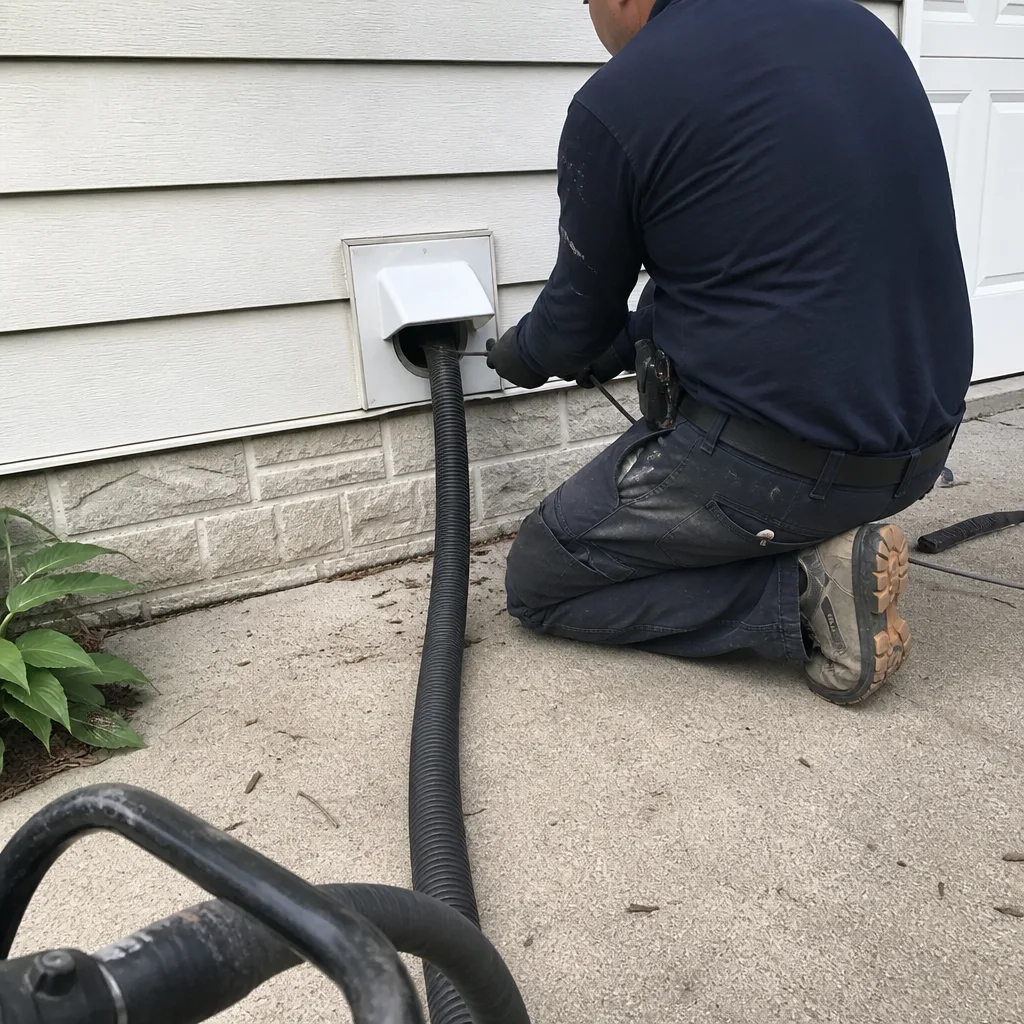 After
After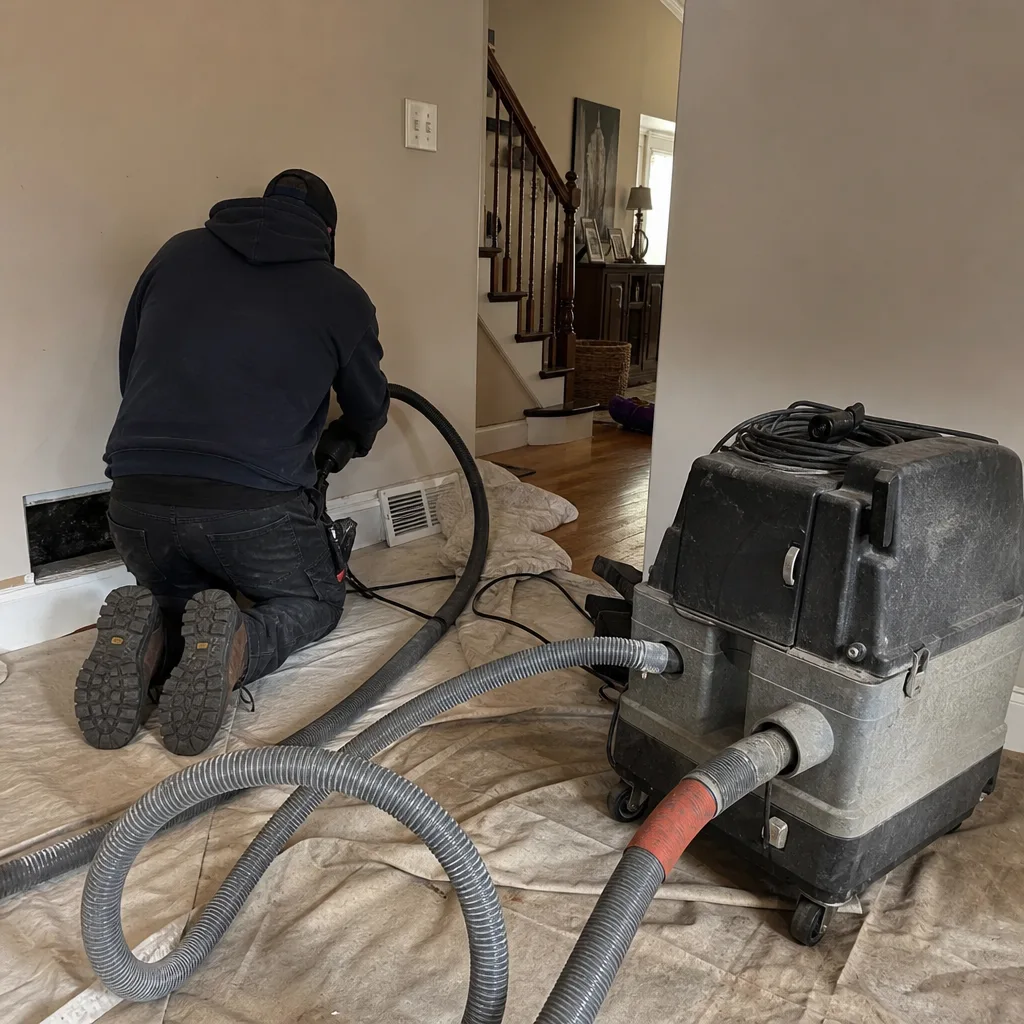 Before
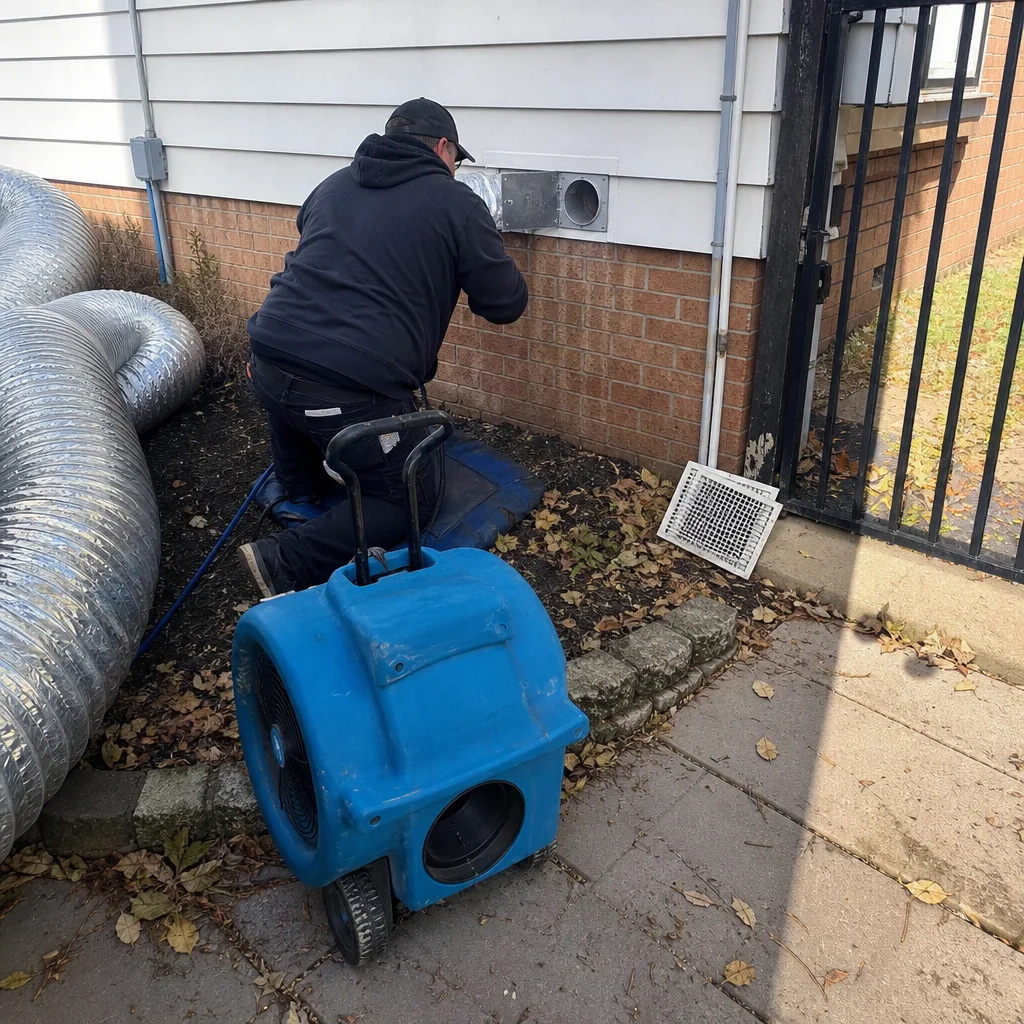 After
After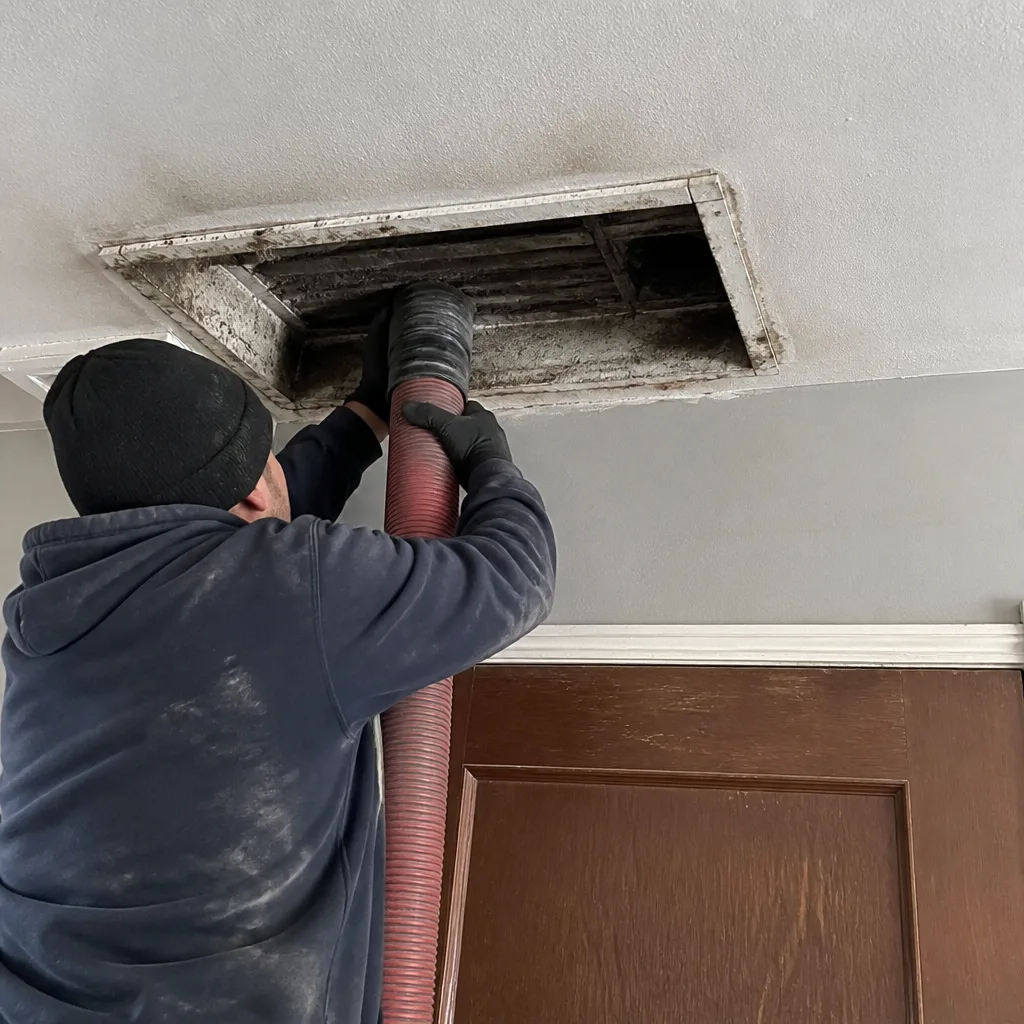 Before
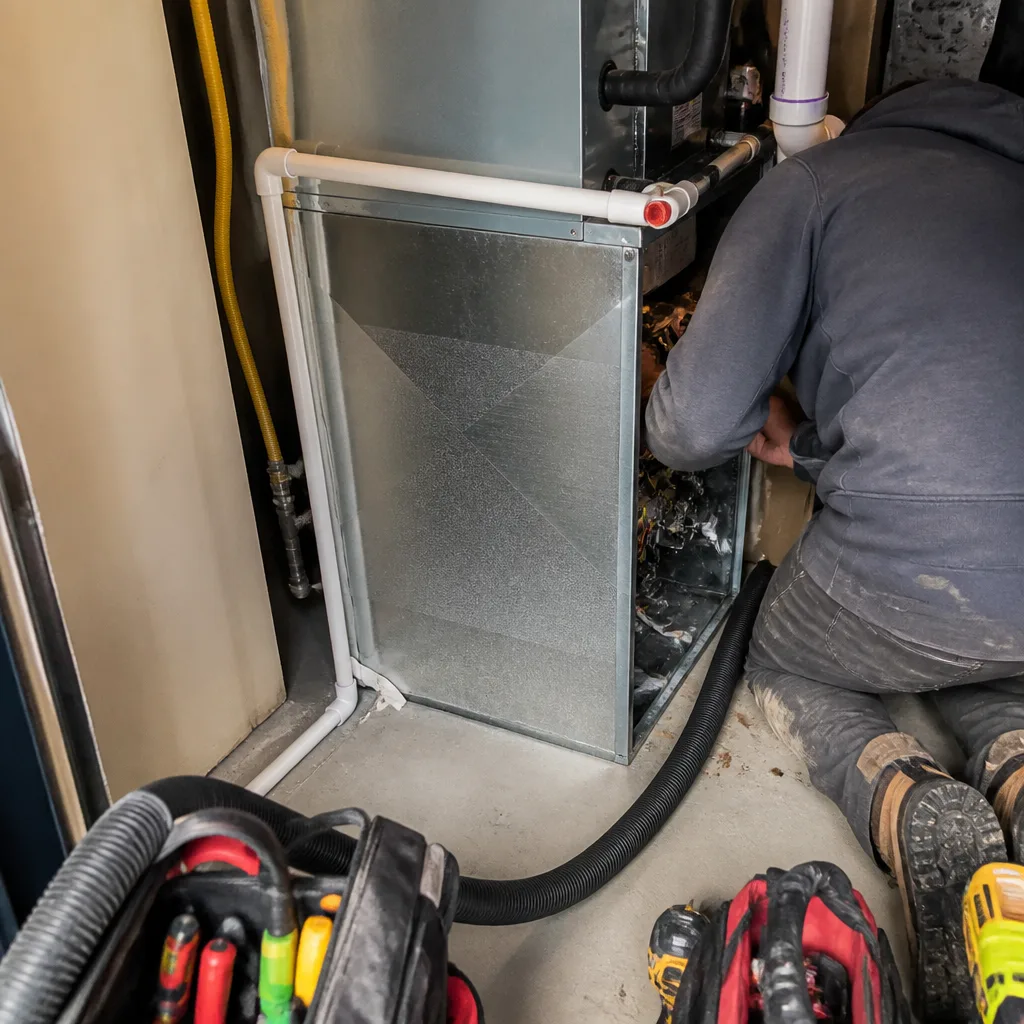 After
AfterSeasonal Air Duct Cleaning Care for Chicago: Year-Round Homeowner’s Guide
Chicago’s average outdoor humidity swings from roughly 82% in August to 68% in February, and that range is almost exactly backward from what happens inside an unsealed duct system. The season most homeowners ignore, late summer, is often when mold-favorable conditions inside ductwork peak. In this guide, we’ll map the actual work to the actual season: what to inspect, when to inspect it, and what the findings mean for your home’s air quality, your HVAC system’s efficiency, and your overall Air Duct Cleaning needs. This isn’t a generic calendar; it’s built on what we’ve documented inside Chicago homes since 2013, from Rogers Park bungalows to South Loop high-rises.
Quick Answer
Chicago homeowners should focus duct maintenance on two high-stakes transition windows: fall furnace startup (September-October) and spring humidity onset (March-May). In fall, a camera inspection of the supply plenum before first heat prevents the most common cold-weather failure mode: dust and debris burning off and circulating through the system. In spring, checking uninsulated metal duct runs in unconditioned spaces for rust staining at seams catches condensation damage before mold colonizes. The quieter seasons, winter and late summer, are for filter management and documentation, not major cleaning.
Table of Contents
- Fall Furnace Startup: The Highest-Value 15 Minutes of the Year
- Winter Dry Air: Particle Accumulation and Filter Load
- Spring Humidity Transition: The Hidden Mold Risk
- Summer AC Season: Protecting Clean Ducts from a Dirty Coil
- The Seasonal Log Template: Building a Running Record
- What Seasonal Duct Care Costs in Chicago
- Common Mistakes to Avoid
- When to Call a Professional
- Frequently Asked Questions
BeforeAfterFall Furnace Startup: The Highest-Value 15 Minutes of the Year
Every September in Chicago, the first sustained cold snap triggers a synchronized furnace startup across the metro area. That first heating cycle is diagnostic gold. Here’s what happens: after six months of dormancy, dust settles in the heat exchanger cavity, on the burner assembly, and in the supply plenum (the main distribution box where heated air enters the duct runs). When the burners ignite, that dust burns off. If the accumulation is heavy, you’ll smell it. If it’s severe, you’ll see it as a brief haze from registers.
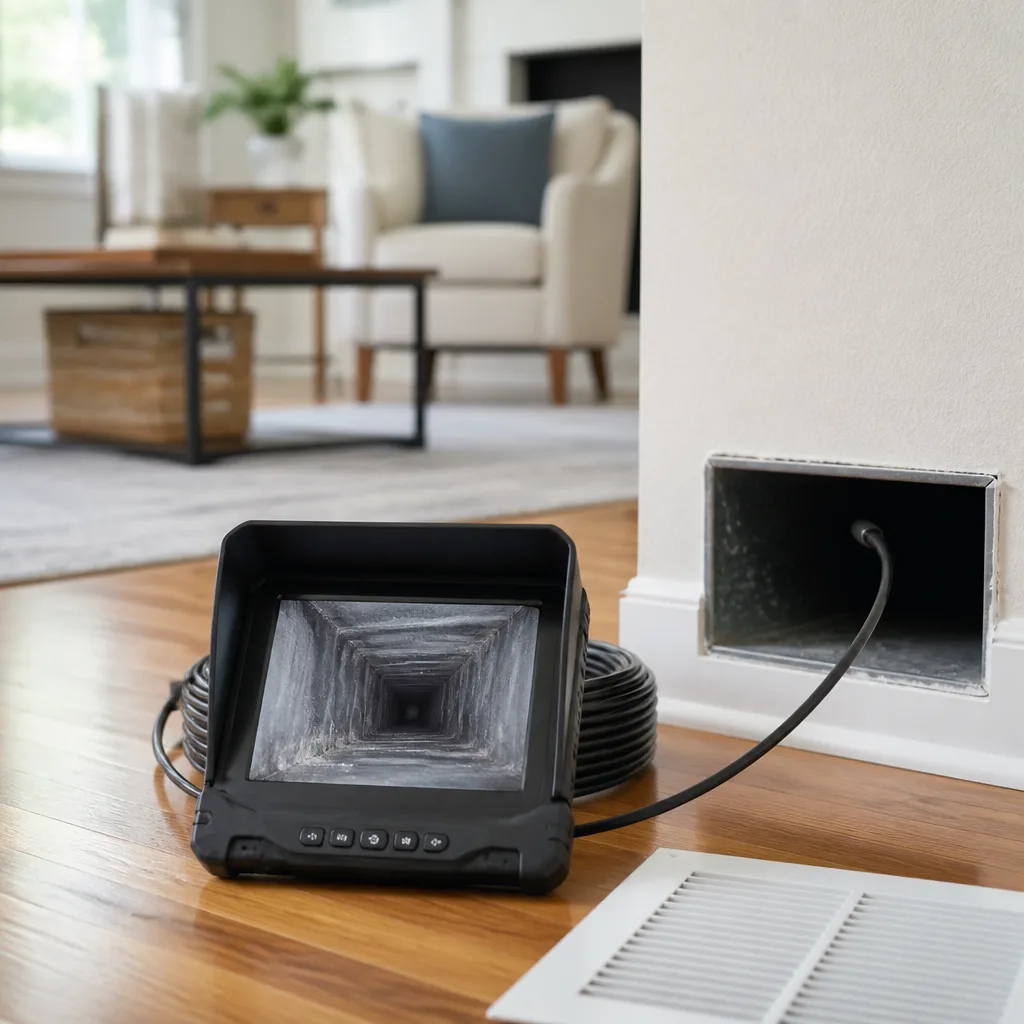
The critical task is a camera inspection of the supply plenum and the first few feet of each main trunk line before the first sustained heating cycle. In our work across Chicago neighborhoods from Portage Park to Hyde Park, we’ve documented that this 15-minute check prevents the most common seasonal complaint: “My house smells like burning dust for the first week of heat.” More importantly, it reveals whether the previous season’s accumulation requires cleaning before it becomes a combustion or airflow problem.
What to check before first heat:
- Visual inspection of the heat exchanger cavity - Look for debris accumulation that could restrict combustion air or create hot spots. A flashlight and a mirror on an extension handle are sufficient for most homeowners; we use a borescope for documentation.
- Camera check of the supply plenum - The plenum is the sheet-metal box directly above the furnace where heated air collects before entering the duct runs. Debris here distributes to every room. A smartphone with a borescope attachment ($30-50 at any hardware store) lets you photograph what you find.
- Register flow test - With the blower on but burners off, feel each supply register. Uneven flow often indicates a blockage in the duct run, typically a collapsed flex duct or a significant debris deposit.
- Filter condition and fit - A filter that fit loosely in April may have warped over a humid summer. Gaps around the filter frame bypass filtration entirely.
In Chicago’s older housing stock, particularly pre-1950s brick bungalows in neighborhoods like Austin or Chatham, we regularly see original ductwork with internal rust scale that flakes off during the first heating cycle. This isn’t a cleaning issue; it’s a degradation issue that requires documented evaluation. The photo record you create in fall becomes the baseline for comparing spring conditions.
Fall is also when we recommend scheduling Air Duct Cleaning in Chicago if the camera shows accumulation exceeding roughly 1/8 inch of debris in the plenum or visible debris at register openings. The work should be completed before sustained heating begins, so contaminants aren’t baked into the system over winter.
Winter Dry Air: Particle Accumulation and Filter Load
Chicago’s winter indoor relative humidity typically drops to 20-30%, far below the 40-60% range where biological growth thrives. This is the quiet season for mold risk, but it’s the active season for particle accumulation. Dry air doesn’t suppress dust; it makes it more mobile. Every time the furnace cycles, it pulls dry, charged particles through the return system at higher velocity than summer’s slower AC airflow.
The critical winter task is filter management, not duct cleaning. Specifically: upgrading to MERV-11 or higher filtration and tracking pressure drop across the filter over the heating season.
Why MERV-11 matters in Chicago winter:
- Standard fiberglass filters (MERV 1-4) capture less than 20% of particles in the 1-3 micron range, which includes most household dust, pollen fragments, and combustion particles.
- MERV-11 captures 85% or better of those same particles, per ASHRAE 52.2 testing protocols.
- In Chicago’s heating-dominant climate, a typical home runs 2,000+ furnace hours per winter. At that runtime, filter efficiency directly determines particle load in the duct system.
- We’ve documented in Chicago homes that switching from MERV-8 to MERV-11 reduces visible dust accumulation at registers by roughly 40% over a single heating season, measured by photo comparison.
The tradeoff is static pressure. Higher-MERV filters restrict airflow more than cheap fiberglass. In systems with undersized return ducts, common in Chicago’s 1920s-1950s housing stock, a MERV-13 filter can drop airflow enough to trigger high-limit safety shutdowns. The safe path: upgrade one step at a time, from your current filter to MERV-11, and monitor furnace cycling. If heat runs lengthen or the unit short-cycles, the filter is too restrictive for your duct system.
Winter is also documentation season. Every filter change, photograph the old filter’s loading pattern and date the image. Uneven loading, clean stripes, or collapsed pleats indicate duct leaks that bypass filtration. These photos become evidence when you discuss duct sealing with a contractor in spring.
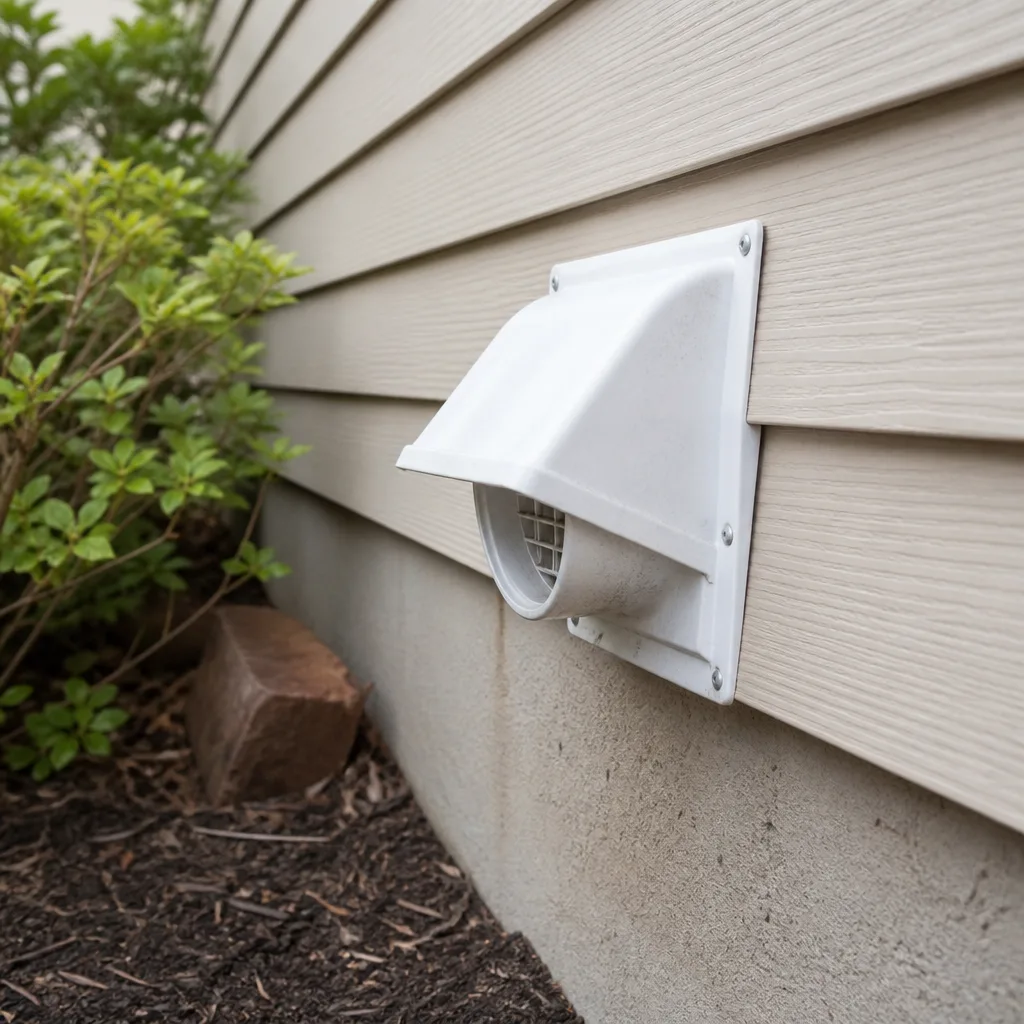
For homes with Dryer Vent Cleaning in Chicago needs, winter compounds the risk: lint accumulation in exterior vents freezes into dense blocks, extending dry times and creating fire hazards. We document this regularly in January and February service calls, particularly in multi-unit buildings where vents terminate through roof assemblies.
Spring Humidity Transition: The Hidden Mold Risk
March through May in Chicago is when outdoor humidity climbs fast, often from 60% to 80% while indoor temperatures lag. In unconditioned spaces, attics, crawl spaces, and basements, this creates the year’s highest condensation risk on metal ductwork.
The mechanism is straightforward: cold metal duct runs, still chilled from winter’s ground-coupled air or residual cold in basement concrete, meet warm humid air. When the metal surface temperature drops below the dew point, water condenses. In a dark, enclosed duct system, that moisture persists for hours or days. Mold colonization requires roughly 48-72 hours of sustained moisture on an organic surface. Dust and debris inside ducts provide that surface.
The specific visual sign to look for: rust staining at seams.
Seams are where sheet metal joins, typically spot-welded or folded and sealed with mastic. They’re also the lowest points in a duct run where condensation collects. When we inspect Chicago homes in April and May, rust staining at longitudinal or transverse seams is the definitive indicator that condensation occurred during the humidity transition. In neighborhoods near the lake, from Edgewater to South Shore, where spring humidity arrives earlier and lingers longer, we see this pattern more frequently than in western suburbs.
Spring inspection sequence:
- Basement and crawl space walk - With a flashlight, examine exposed duct runs for rust staining, particularly at seams and where flex duct connects to metal fittings. Photograph anything suspicious with date stamp.
- Register removal and inspection - Look for discoloration on the back side of ceiling or wall registers. Brown or black staining indicates moisture-driven soiling, not simple dust.
- Odor check at startup - The first AC cycle of spring should smell neutral or faintly metallic. Musty or earthy odors indicate biological activity that developed over winter or during the humidity transition.
- Condensate drain verification - The AC evaporator’s drain pan and line must be clear before cooling season. A backed-up drain floods the plenum, distributing moisture throughout the duct system.
If rust staining is present but limited to surface discoloration, cleaning and sealing may suffice. If the metal shows pitting or the mastic seal has degraded, duct repair is indicated. CleanRun’s documented photo record captures this condition precisely, so homeowners can compare year-over-year progression rather than relying on memory.
Spring is also when we recommend HVAC Cleaning in Chicago that includes the evaporator coil, blower assembly, and drain pan. A contaminated coil upstream of clean ducts recontaminates the entire system within days of the first cooling cycle.
Summer AC Season: Protecting Clean Ducts from a Dirty Coil
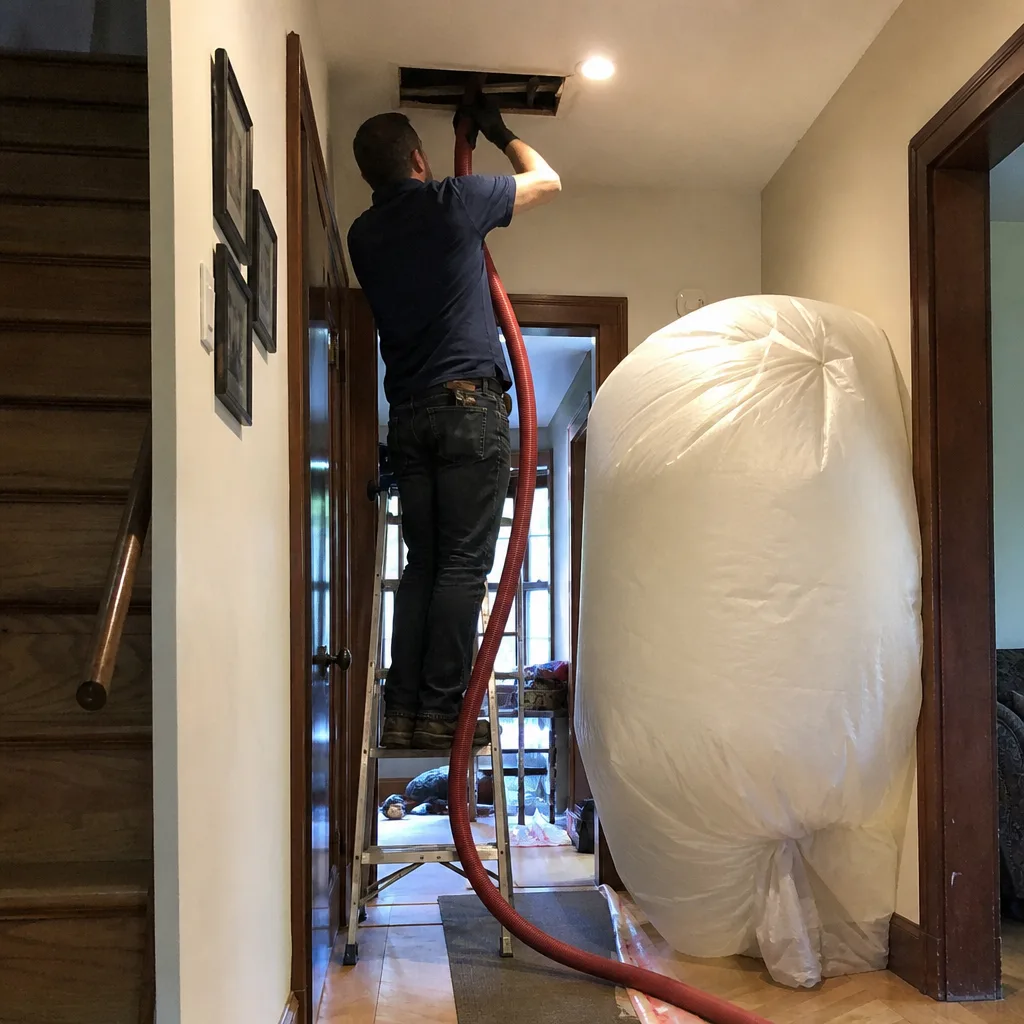
Chicago’s summer cooling load is concentrated: roughly 60% of annual AC runtime occurs in June, July, and August. The evaporator coil, located in the plenum above the furnace, is the system’s primary dehumidifier and particle trap. It’s also the most commonly neglected component.
A dirty coil creates two problems that flow downstream into the duct system. First, reduced heat transfer forces longer runtimes, increasing total airflow volume through ducts and accelerating particle deposition. Second, microbial growth on the coil itself, fed by condensate and organic dust, becomes an active source of contamination. Every cubic foot of cooled air passes over that coil before entering the duct runs.
In our Chicago work, we’ve photographed coils that appeared clean from the exterior access panel but showed 3-4mm of biofilm on the interior fins, visible only with borescope inspection. The homeowners had cleaned their ducts the previous fall and couldn’t understand why registers showed new soiling by July. The ducts weren’t recontaminating themselves; the coil was seeding them.
Summer maintenance priorities:
- Coil inspection before peak season - Schedule this for late May or early June, before the sustained 85°F+ days that drive maximum runtime. A borescope inspection of the coil’s interior face takes 10 minutes and provides definitive documentation.
- Condensate line treatment - Algae and biofilm in drain lines back up into the pan. A single overflow event can introduce enough moisture to support mold growth in downstream ductwork for weeks.
- Register monitoring - Photograph register interiors monthly. New soiling during summer, when windows are closed and the system is recirculating indoor air, indicates an upstream contamination source, almost always the coil or a humidifier reservoir.
- Whole-home dehumidifier integration - In Chicago’s lake-effect humidity zones, supplemental dehumidification reduces coil loading and extends duct cleanliness. Honeywell and Aprilaire make units sized for typical Chicago bungalows and two-flats; we specify these brands under the H.A.V.E.N. Standard equipment clause.
Late summer, August specifically, is when we see the highest indoor humidity readings in Chicago ductwork. Outdoor humidity peaks while AC runtime may decrease if homeowners open windows during cooler nights. The duct system, now humid and potentially warm during off cycles, approaches conditions favorable to biological growth. This is the season to run the system fan periodically for air circulation, even if cooling isn’t needed, and to verify that bathroom and kitchen exhaust fans are actually moving air to the exterior, not just making noise.
The Seasonal Log Template: Building a Running Record
Documentation is the difference between reactive service and predictive maintenance. We’ve built our practice on this principle since 2013: every CleanRun job includes a Documented Photo Record of every duct run, before and after, delivered as a standard job record. Homeowners can apply the same discipline to seasonal self-inspections.
The log below is designed to be photographed on your phone, completed by hand, and stored in a dated album. When you call for service, you have a running record any contractor can review in 60 seconds.
Seasonal Duct Log - Chicago Home
Print this section, or copy into a notebook. Photograph completed pages with date stamp.
- Date: ___________
- Season: Fall / Winter / Spring / Summer (circle one)
- Outdoor conditions today: Temp ___°F, Humidity ___% (check weather app)
- Filter changed? Y / N. If Y: Brand/model _______, MERV rating _______
- Filter photo taken? Y / N
- Registers inspected: Number checked ___ / total ___. Any staining? Y / N. Describe: ___________
- Plenum or duct photo taken? Y / N
- Odor at startup: None / Metallic / Dusty / Musty / Other: _______
- Airflow at furthest register: Strong / Moderate / Weak / Uneven
- Notes: _________________________________________________
Keep four entries per year, minimum. After three years, you’ll have twelve data points that reveal patterns: whether your fall inspections consistently find debris, whether spring humidity correlates with register staining, whether filter upgrades changed your findings. This record transforms vague concerns into actionable evidence.
When CleanRun technicians arrive for service, we review any documentation the homeowner provides. The most productive service calls we’ve conducted, from Lincoln Park to Bronzeville, started with a customer who handed us a phone showing two years of dated register photos. We knew exactly where to focus our inspection and could validate their observations against our own documentation.
What Seasonal Duct Care Costs in Chicago
Honest pricing for duct maintenance requires distinguishing between inspection, cleaning, and repair, as detailed in our Air Duct Cleaning Cost Breakdown: The Chicago Homeowner’s Reference for 2026. These are separate services with separate value propositions. Under Haven Standard Clause 1, CleanRun delivers a written price before any work starts, every time. The ranges below reflect Chicago market conditions for 2024-2025 and are based on our documented job records across the metro area.
Seasonal service cost ranges in Chicago:
| Service | Typical Range | What It Includes | Best Season |
|---|---|---|---|
| Camera inspection (plenum + 2 main trunks) | $89-$149 | Borescope imaging, digital photo delivery, written findings summary | Fall, Spring |
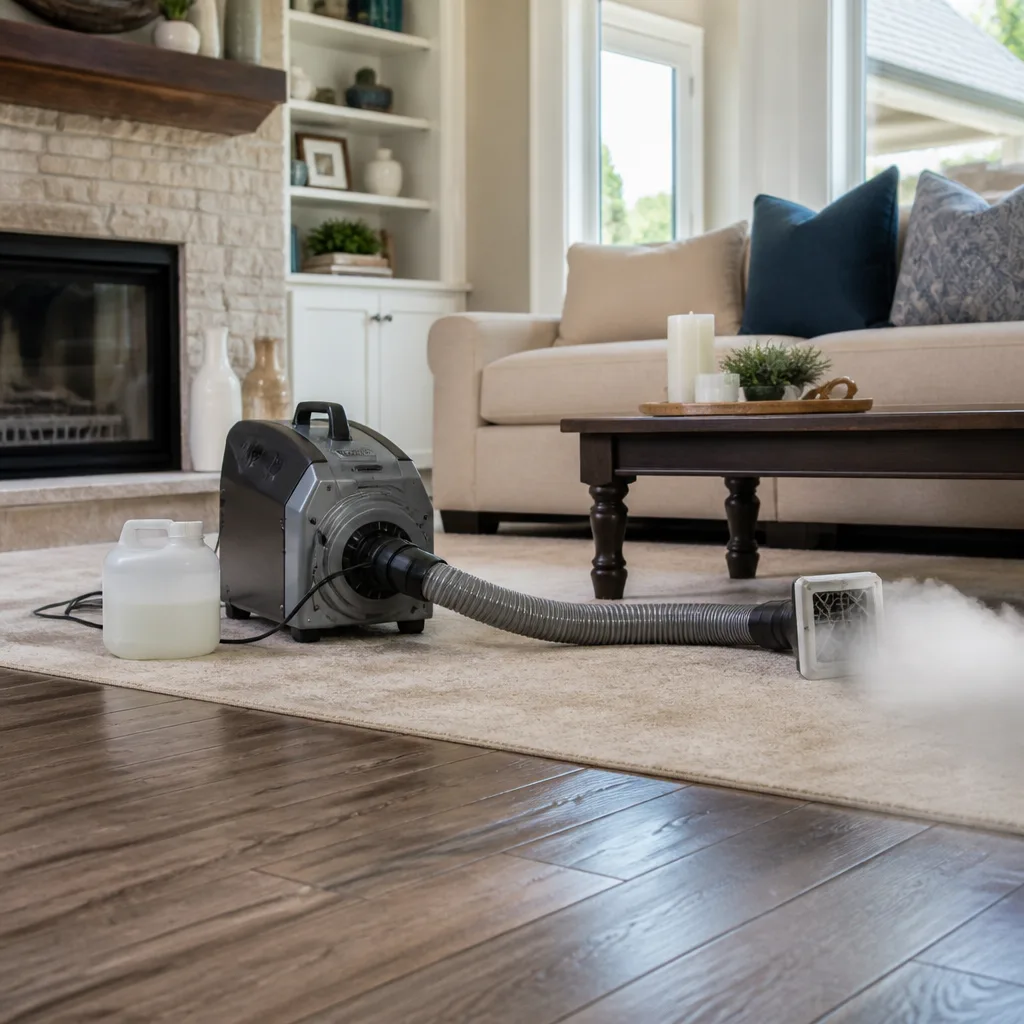
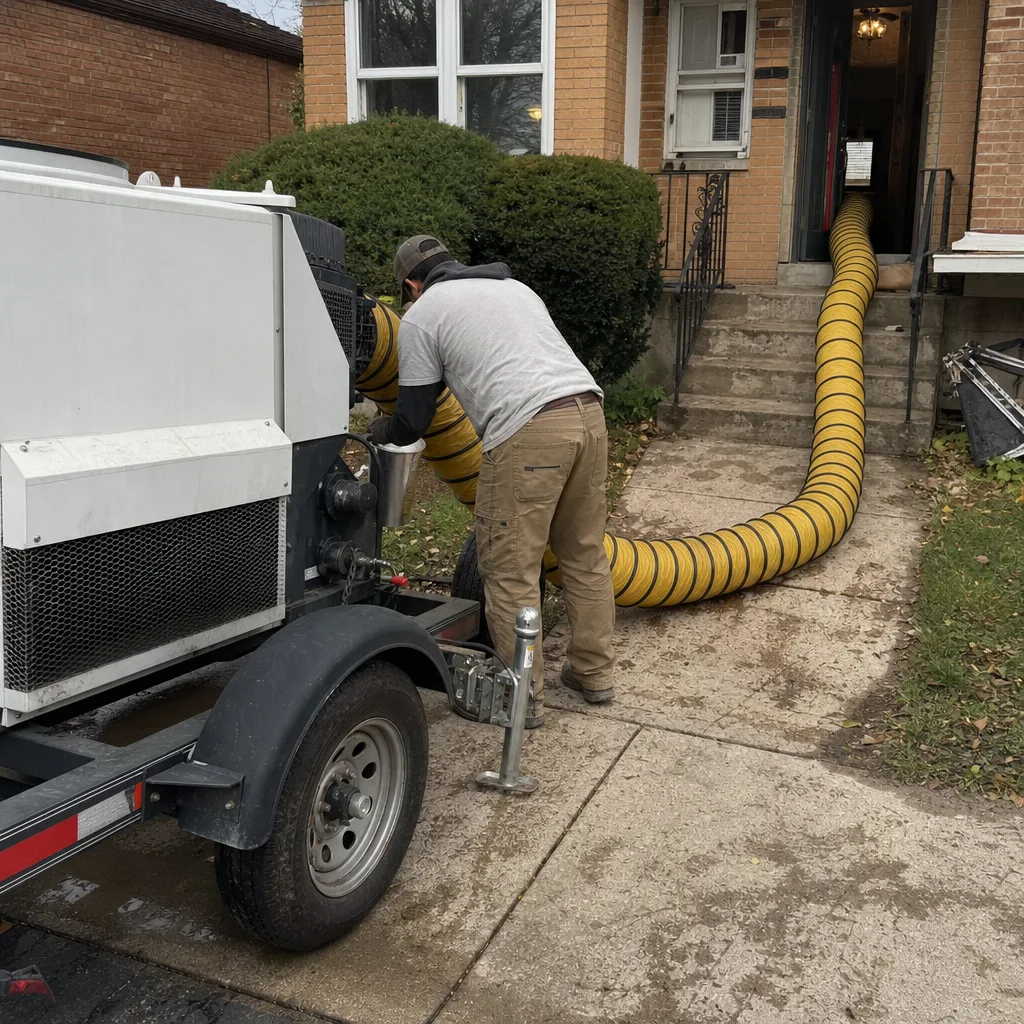
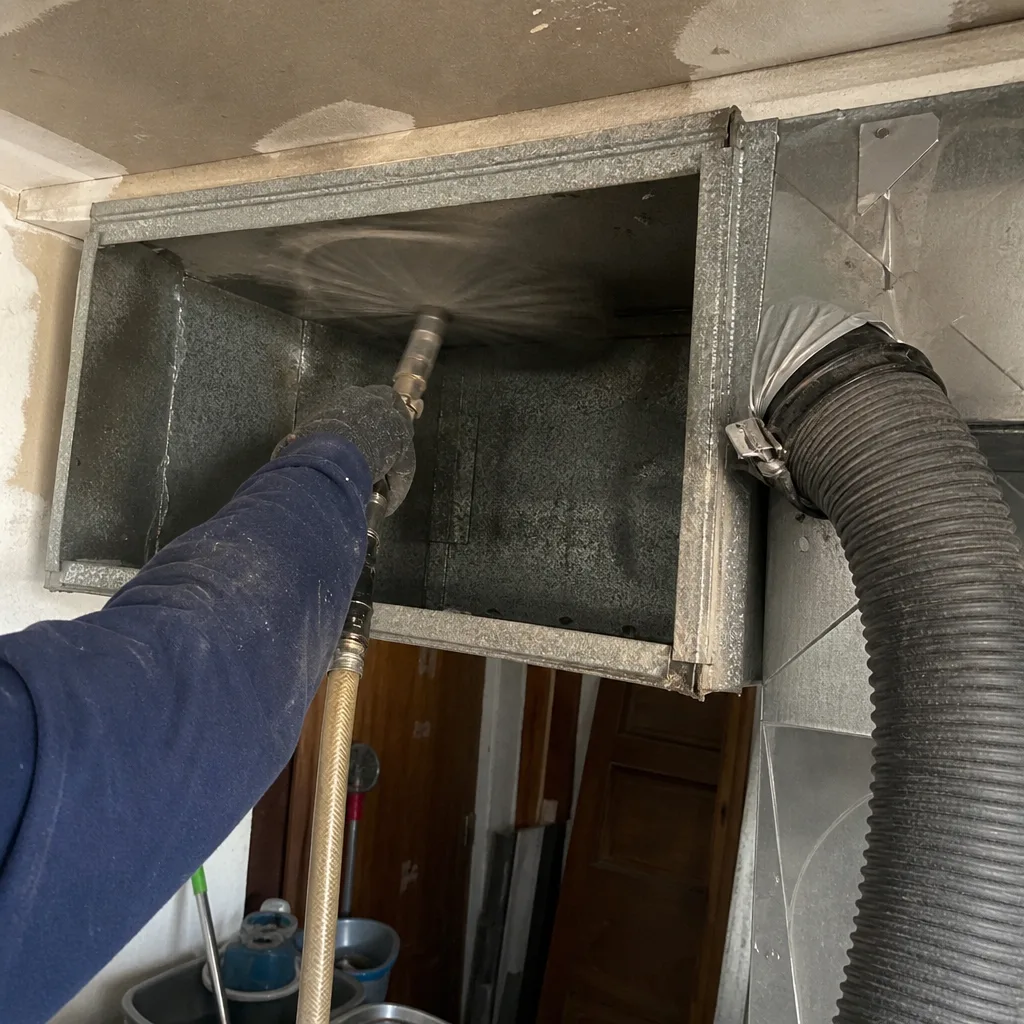
| Full air duct cleaning (single system, up to 12 runs) | $450-$750 | Negative-pressure extraction with Rotobrush or Nikro equipment, register removal and cleaning, plenum access, before/after photo record | Fall (before heat), Spring (after humidity transition) |
| Evaporator coil cleaning | $180-$320 | Chemical-free foaming cleaner, fin straightening if needed, drain pan treatment, photo documentation | Late Spring (pre-AC season) |
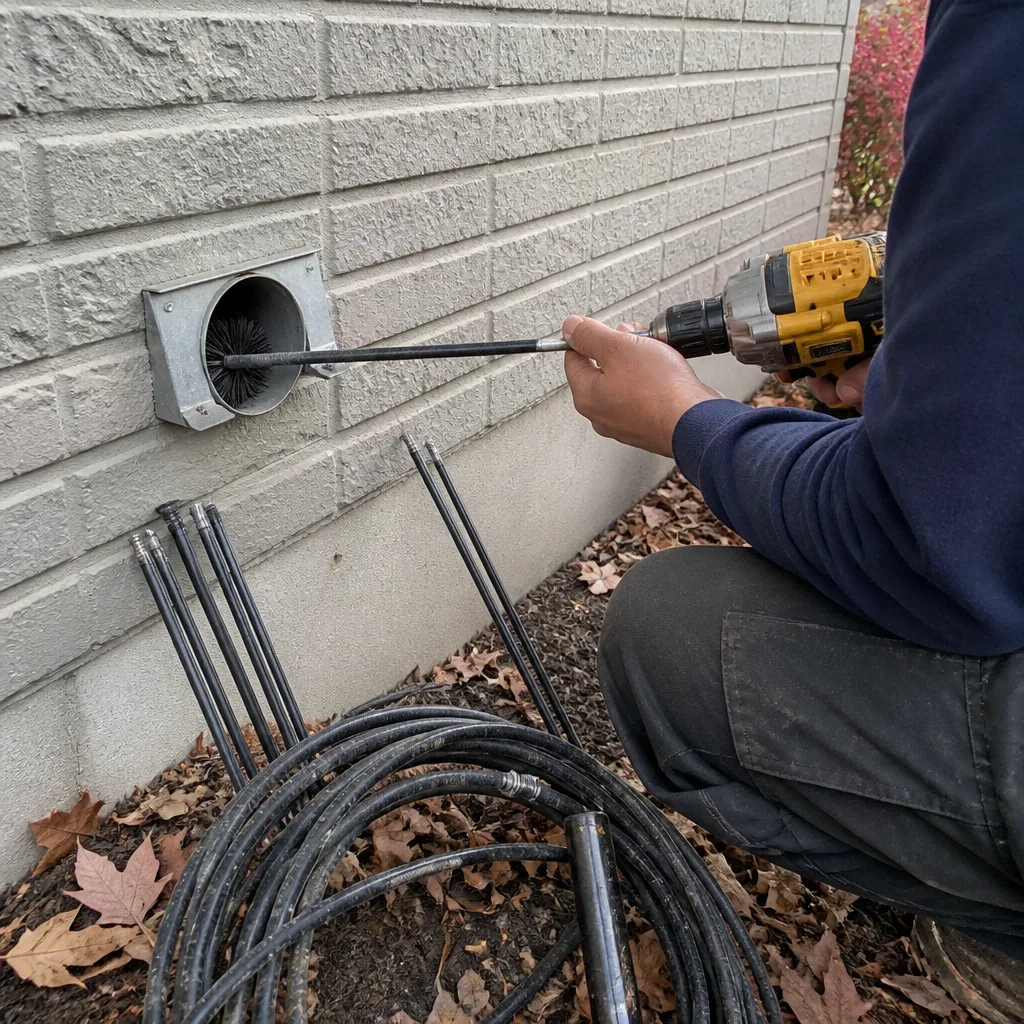
| Dryer vent cleaning (single family) | $120-$180 | Full line brushing from exterior termination, airflow verification, lint debris photo | Winter (post-heavy use), Spring |
| Duct sealing (Aeroseal or manual mastic) | $800-$2,400 | Leak detection, sealant application, post-test pressure measurement, written leakage reduction report | Spring, Fall |
These ranges are whole-system prices, not per-vent teaser rates. The $79 coupon model that dominates Chicago search results typically covers a single register cleaning with a shop vacuum, not negative-pressure extraction of the full duct system. When a competitor’s “whole house special” requires a phone call for “actual pricing,” the final invoice typically lands in the same range as our upfront written price, minus the documentation and guarantee.
CleanRun’s 365-Day Done Right Promise applies to all cleaning and repair work: if the results don’t match what was documented, we return and correct it at no charge. This is a written guarantee, not a policy subject to manager approval.
Common Mistakes to Avoid
- Cleaning ducts without inspecting the coil first. A contaminated evaporator coil recontaminates clean ducts within 48 hours of first use. The coil must be addressed in the same scope, or the duct cleaning is wasted money.
- Using the cheapest filter that fits. Fiberglass filters protect the furnace, not your lungs or your ducts. The $3 saved monthly costs far more in accelerated duct soiling and reduced equipment life. MERV-11 is the practical minimum for Chicago’s particle load.
- Ignoring rust stains as “just old ducts.” Rust at seams indicates active condensation, which indicates active moisture intrusion. In Chicago’s spring humidity, this progresses from surface staining to through-metal pitting in 2-3 seasons if unaddressed.
- Scheduling duct cleaning in mid-winter. Winter’s dry air means biological growth is dormant. Cleaning in January addresses dust, yes, but misses the mold risk that develops during spring’s humidity transition. Fall or spring timing captures the full problem.
- Trusting “sanitizing” fogging without mechanical cleaning. EPA-registered sanitizers require clean surfaces to be effective. Fogging into dirty ducts deposits chemical on top of debris, not on the duct surface, and provides no lasting benefit. We document this regularly in homes that purchased “sanitizing specials” elsewhere.
- Failing to photograph before-and-after conditions. Without documentation, you have no evidence that work was performed, no baseline for future comparison, and no recourse if results disappoint. Demand photo records as a standard deliverable, not an upsell.
- Sealing ducts without testing leakage first. Aeroseal and similar technologies are powerful, but sealing without pre-test measurement means you can’t verify results. Haven Standard Clause 2 requires pre- and post-test documentation for all sealing work.
When to Call a Professional
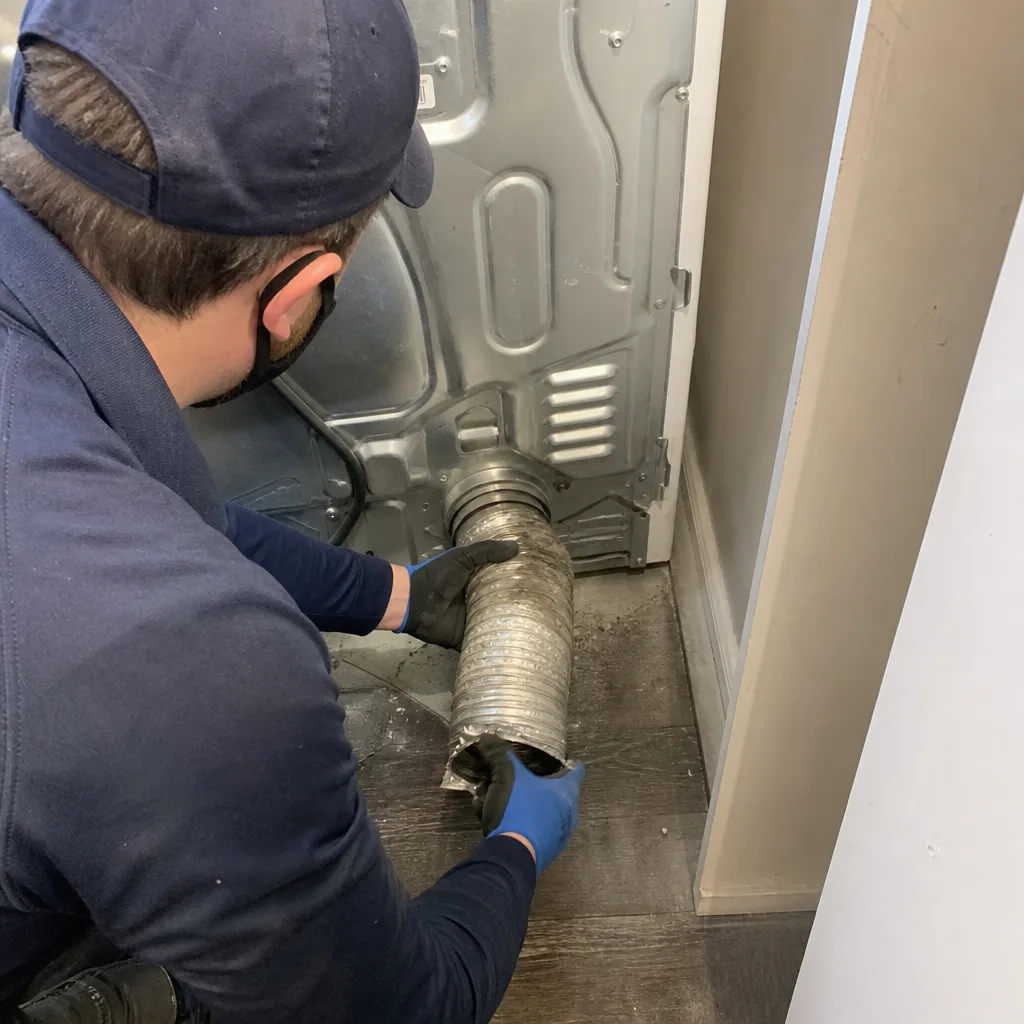
Some conditions require trained evaluation, not homeowner inspection. Call for professional assessment if you observe any of the following: visible mold growth on register surfaces or duct interiors; persistent musty odor that survives filter changes and cleaning; rust staining that has progressed to metal pitting or mastic failure; airflow reduction of more than 30% at any register compared to others; or debris accumulation visible at register openings that recurs within 30 days of cleaning.
CleanRun Air Duct Cleaning Chicago offers free estimates in Chicago. Every estimate includes a written price before any work starts, per Haven Standard Clause 1, and a preliminary camera inspection of accessible ductwork so you see what we see before deciding. Call (708) 683-3974 to schedule. All technicians are background-checked and uniformed under Haven Standard Clause 3: Verified Crews, and identified by name before arrival.
Frequently Asked Questions
Whole-system air duct cleaning in Chicago typically ranges from $450 to $750 for a single HVAC system with up to 12 duct runs, based on 2024-2025 market rates. Per-vent pricing below $50 per run usually indicates limited-scope work with shop-vacuum equipment rather than negative-pressure extraction. CleanRun provides a written flat price per system before any work starts, with no per-vent add-ons. Call (708) 683-3974 for an exact quote on your home; estimates are free.
The $79-$149 “whole house specials” common in Chicago advertising typically cover a single register cleaning and cursory vacuuming of accessible areas, not full-system negative-pressure extraction. The actual invoice often rises to $400-$600 once the technician is in the home and “discovers” additional vents, contamination, or access difficulties. CleanRun’s written price, delivered before work starts under Haven Standard Clause 1, includes all accessible duct runs in the quoted system with no surprise additions.
Demand a documented photo record of every duct run, before and after, as a standard deliverable. CleanRun has provided this on every job since 2013; the images are dated, location-labeled, and delivered with the final invoice. Without photographic evidence, you’re trusting a verbal report. With it, you can verify that debris was removed and compare conditions year over year using your own seasonal log.
For typical Chicago homes with no pets, no smokers, and standard MERV-8 or higher filtration, professional cleaning every 3-5 years is sufficient if seasonal self-inspections show stable conditions. Homes with multiple pets, recent renovations, or occupants with respiratory sensitivities may need cleaning every 2-3 years. The seasonal log described in this guide-and the deeper protocols in our Air Duct Cleaning Maintenance Checklist for Chicago Homeowners-provides the data to make this decision based on evidence, not calendar superstition.
Chicago’s wide humidity swing and heating-dominant climate create specific risks: winter dry air increases particle mobility, spring humidity transition creates condensation conditions in unconditioned spaces, and summer’s heavy cooling load stresses coil cleanliness. These factors don’t necessarily increase cleaning frequency, but they do make seasonal inspection and documentation more valuable here than in climates with narrower humidity ranges.
Homeowners can and should perform seasonal register cleaning, filter changes, and visual inspections. However, negative-pressure extraction of the full duct system requires professional-grade equipment, specifically a vacuum system capable of maintaining sufficient airflow to prevent debris redistribution during cleaning. Rotobrush and Nikro equipment, which CleanRun uses, is not available for consumer rental at meaningful specification. For safety and efficacy, full-system cleaning should be performed by trained technicians.
The Bottom Line
Chicago’s duct maintenance calendar has two active seasons and two documentation seasons. Fall furnace startup demands a camera inspection of the supply plenum before first heat. Spring humidity transition requires checking uninsulated metal runs for rust staining at seams. Winter is for filter upgrades and particle management. Summer is for coil protection and humidity monitoring. The homeowners who avoid problems are those who build a running record, photograph what they find, and make decisions based on documented change rather than calendar anxiety or coupon pricing. For additional seasonal guidance, explore our more guides & resources.
Written by Tomas Reyes, Owner at CleanRun Air Duct Cleaning Chicago, serving Chicago since 2013.