
Last updated September 23, 2026
Whole-system duct and dryer vent check with before-and-after photos - you see exactly what came out of your vents
That "$99 whole-house special" is a bait ad - the real number appears once they are in your hallway, or the "clean" is a shop-vac at the register. We photograph the inside of your ducts before and after instead.
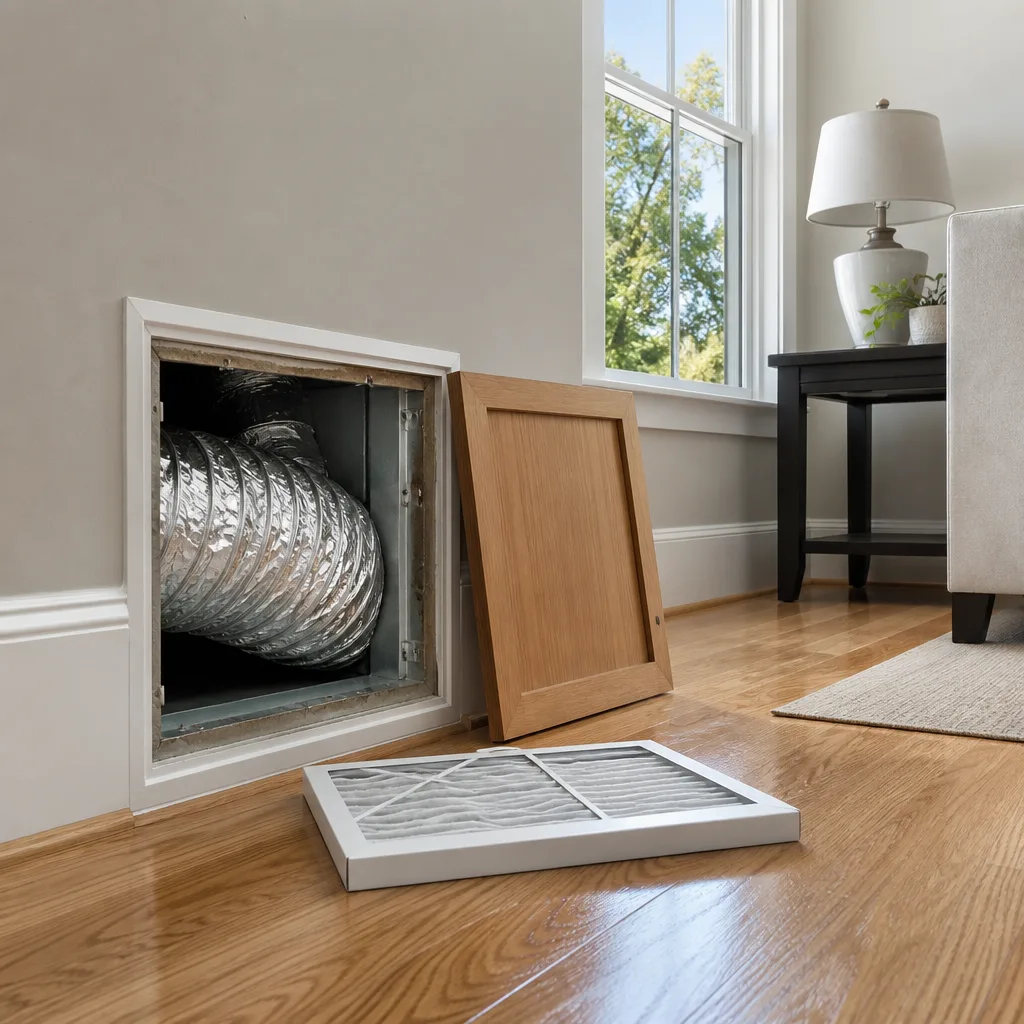
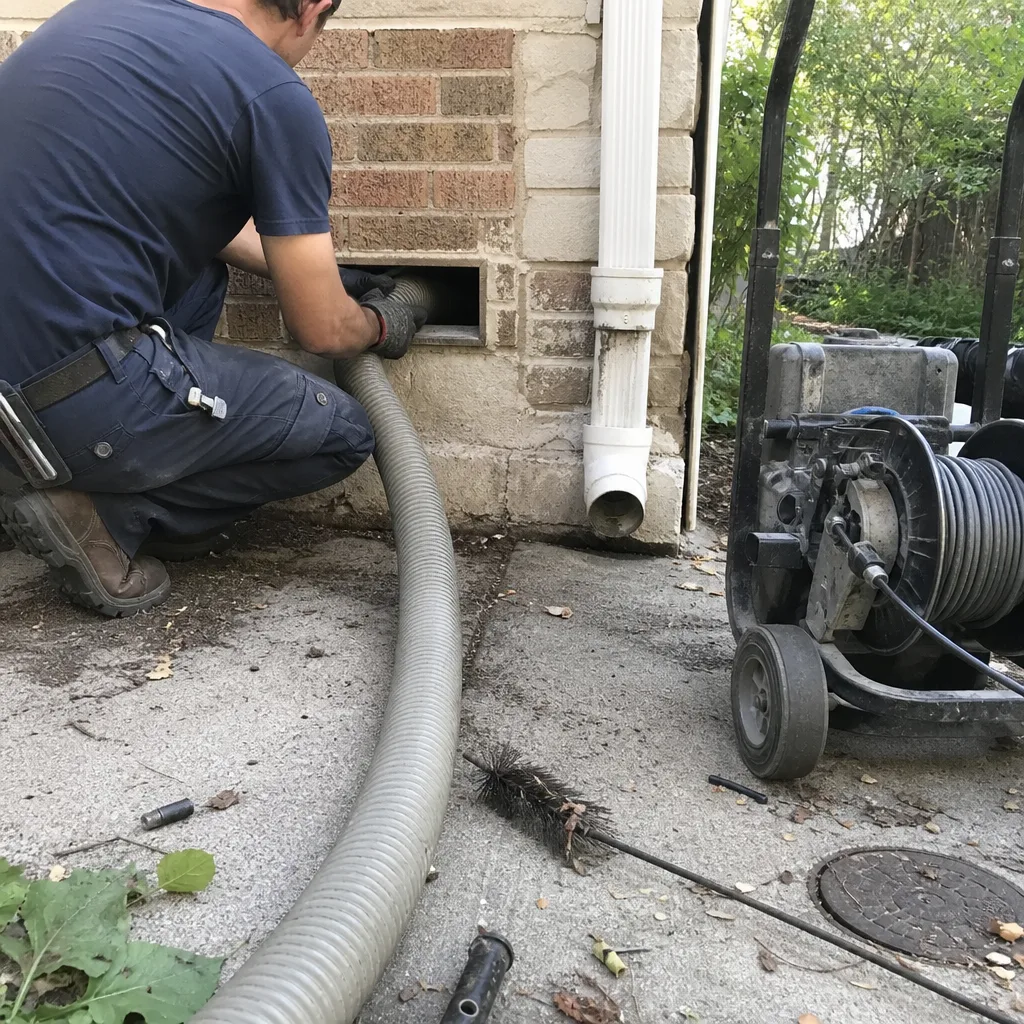 Before
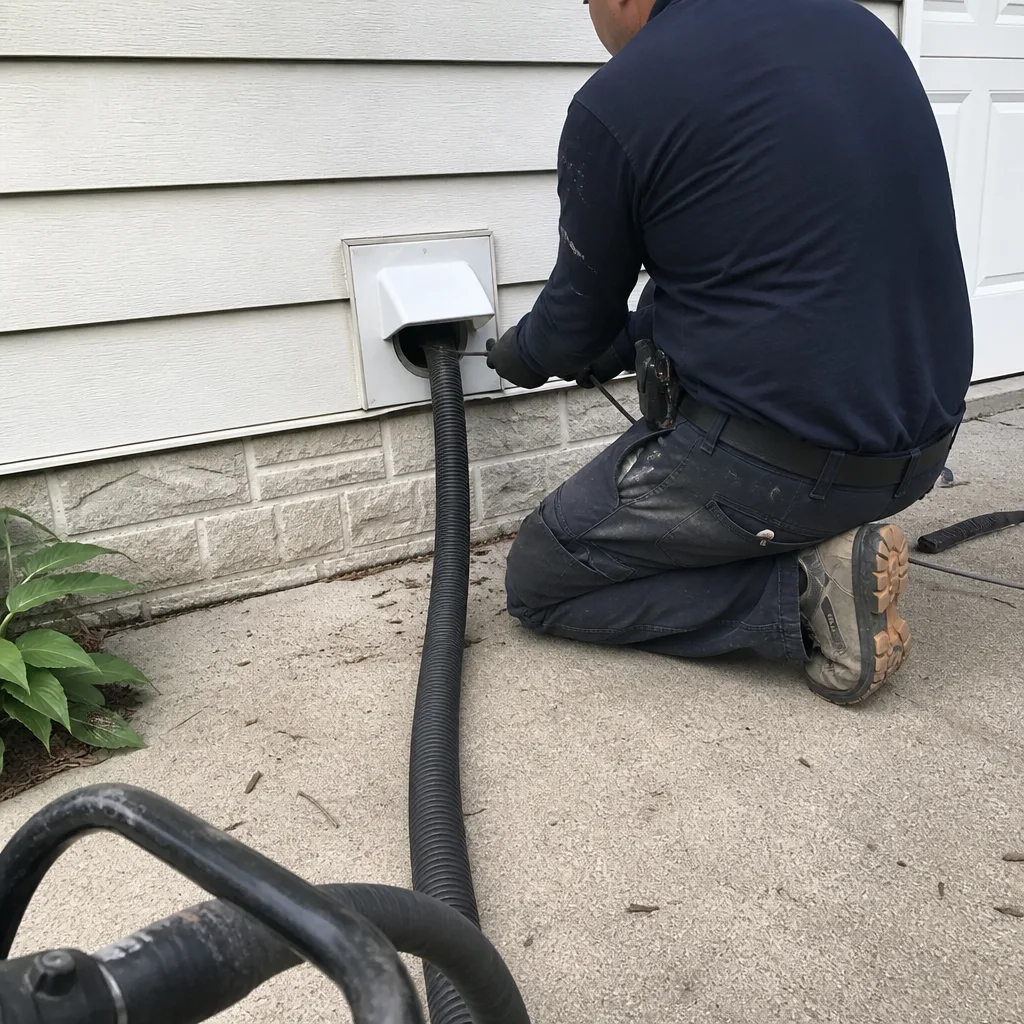 After
After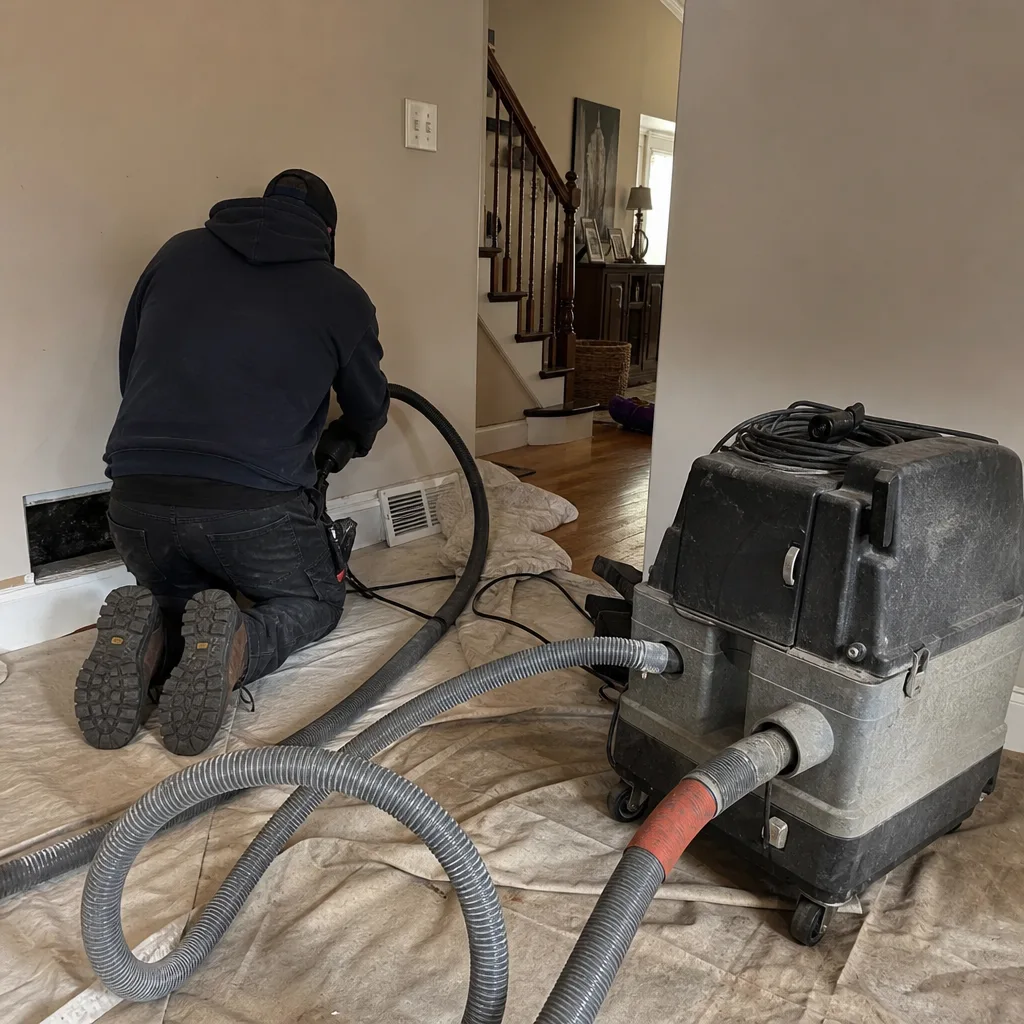 Before
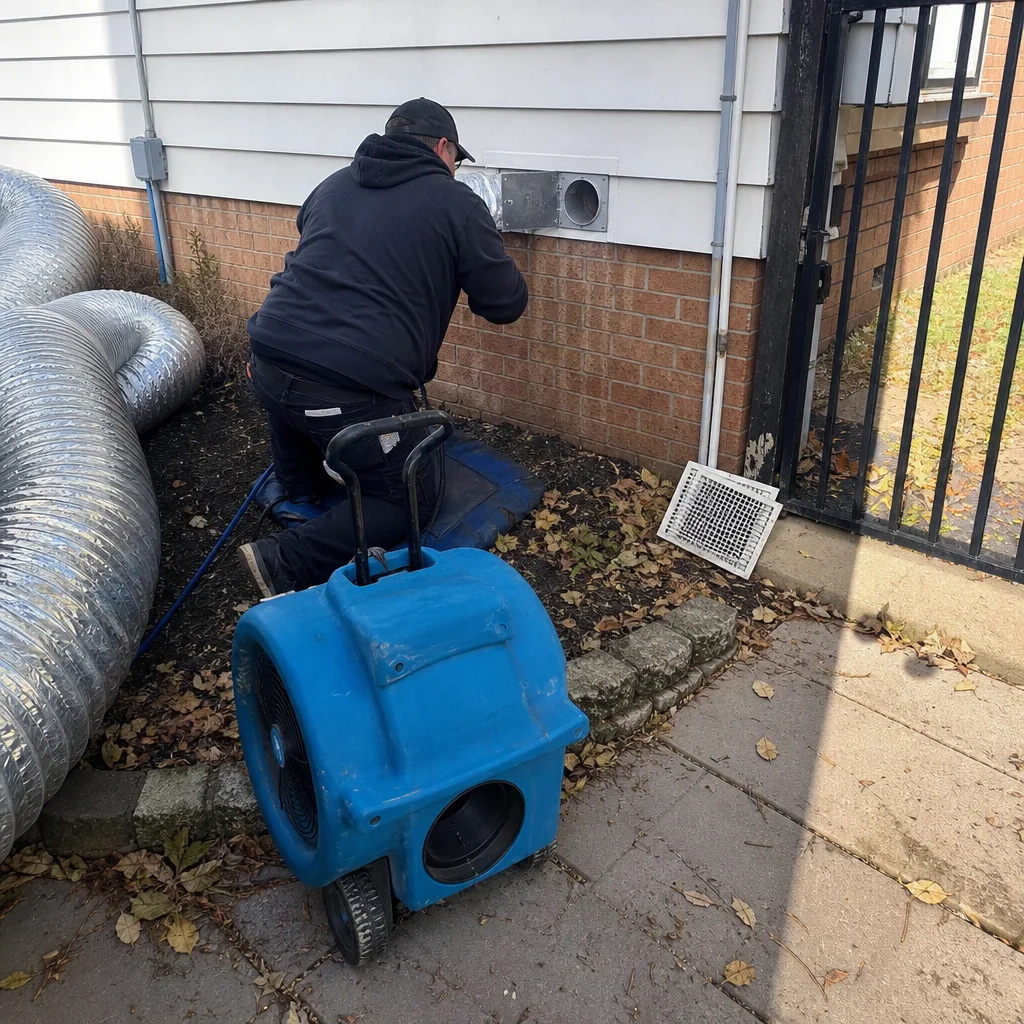 After
After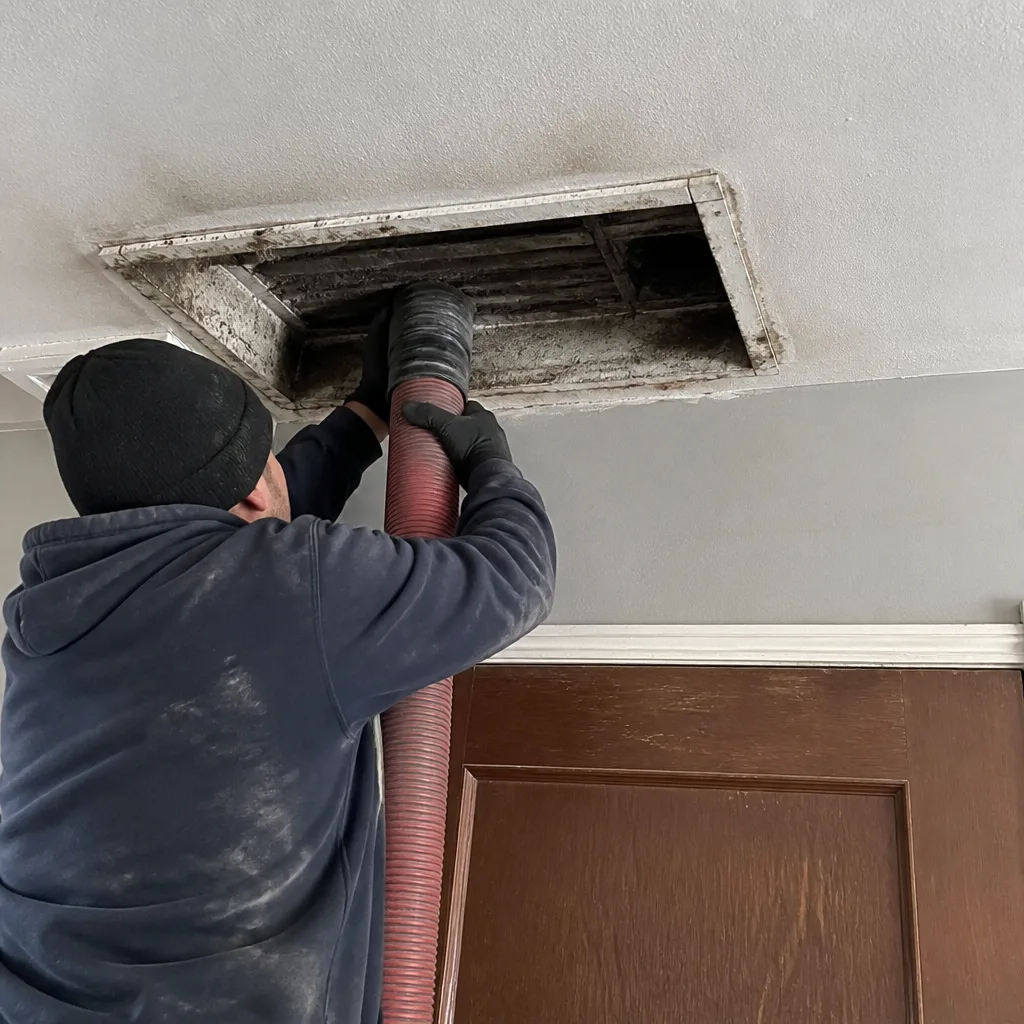 Before
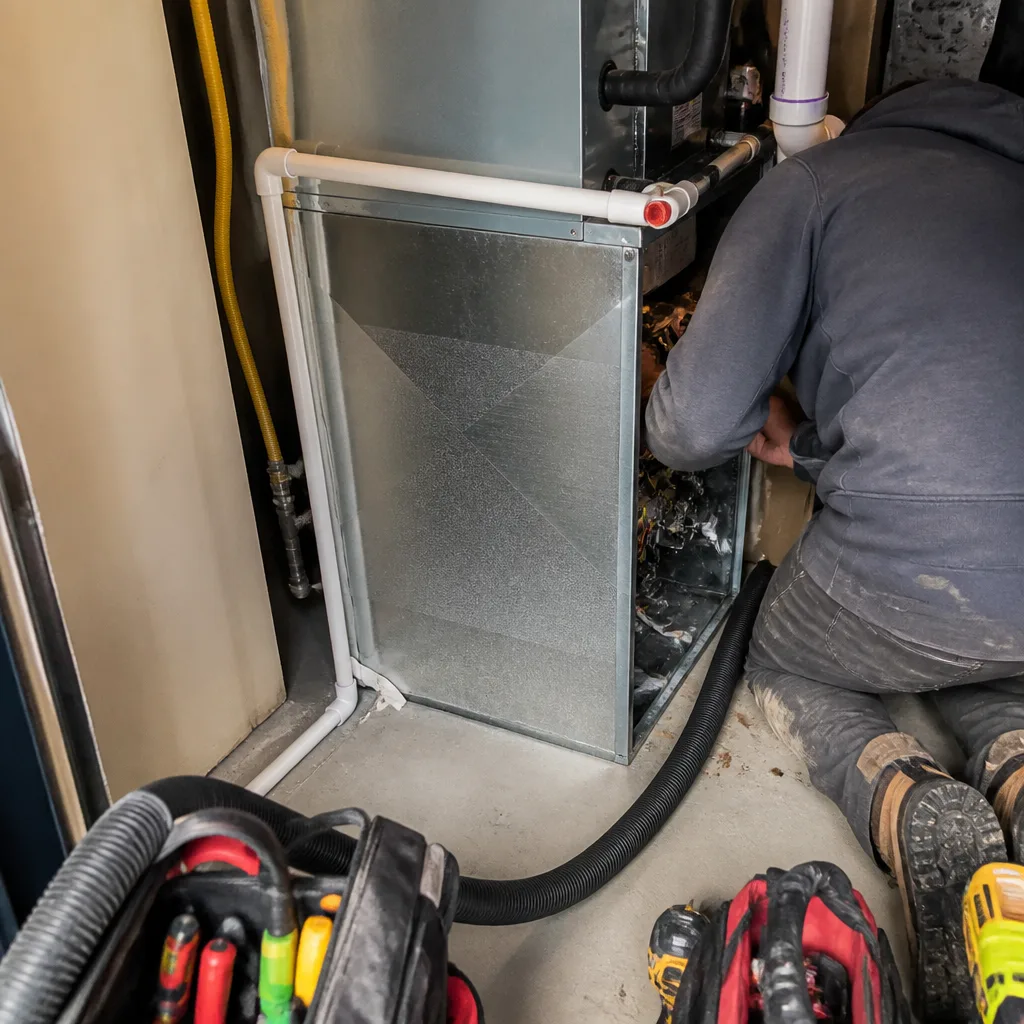 After
AfterThe Complete Guide to Air Duct Cleaning in Chicago
A 2023 Better Business Bureau report found that air duct cleaning ranked among the top five home-service categories for bait-and-switch complaints in Illinois. Not because the service itself is a scam, but because almost no homeowner knows what a completed job is supposed to look like. In Chicago, where two-flats, bungalows, and high-rise conversions each hide radically different duct systems behind identical walls, that knowledge gap costs people hundreds of dollars for work that never happened. This guide builds a documented framework for what legitimate our Air Duct Cleaning services in Chicago actually involves, start to finish, using real equipment specifications, line-item scopes, and the construction quirks you’ll find in neighborhoods from Bridgeport to Rogers Park.
Quick Answer
Professional air duct cleaning in Chicago typically costs $400-$900 for a complete residential system, takes 3-5 hours, and should include source-removal cleaning of all supply and return runs with a documented photo record of every duct. A legitimate job follows NADCA standards, delivers a written scope before work starts, and leaves you with before-and-after images you can verify yourself. Anything less is a maintenance visit, not a cleaning.
Table of Contents
- What Legitimate Air Duct Cleaning Actually Looks Like
- Chicago-Specific Duct Construction and Why It Matters
- Source-Removal Cleaning vs. Blow-and-Go: The Equipment Difference
- How to Read a Written Scope of Work (and Why Most Quotes Hide This)
- What You Should Receive After the Job: The Documentation Standard
- The $79 Coupon Model Explained: Upsells, Add-Ons, and What Actually Works
- What Air Duct Cleaning Costs in Chicago: A Line-Item Breakdown
- How to Choose an Air Duct Cleaning Company in Chicago
BeforeAfterWhat Legitimate Air Duct Cleaning Actually Looks Like
Most homeowners in Chicago assume they’ve had their ducts cleaned because a truck showed up and made noise. The distinction that matters is source removal: the physical extraction of debris from inside the duct runs, not the disturbance of it.
Here’s what a legitimate job looks like from arrival to departure.
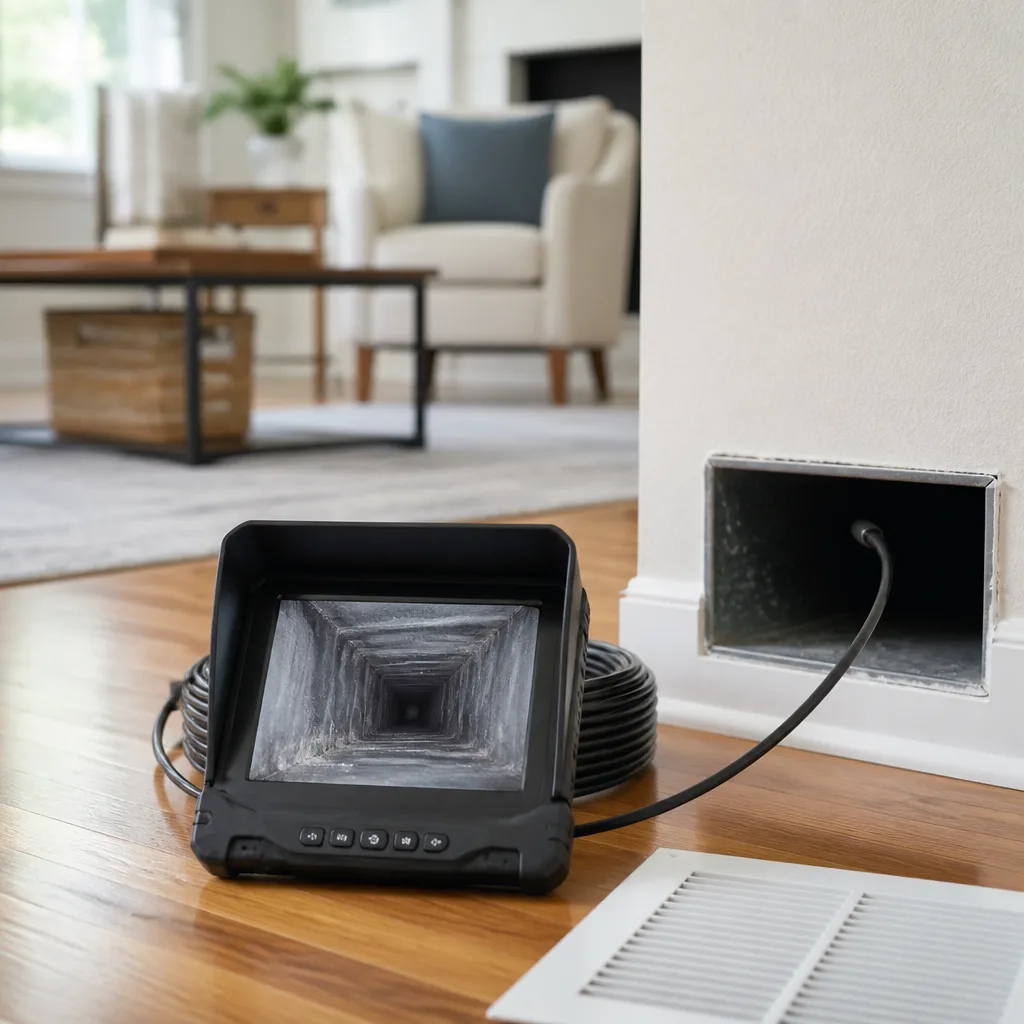
- Pre-job inspection with camera. A technician feeds a borescope through at least one supply and one return register to show you what’s inside before anything is disturbed. In our work across Chicago, we’ve found that homeowners who see a 2-inch mat of construction dust and pet hair at the first elbow understand immediately why vacuuming the register cover isn’t the same as cleaning the duct.
- Written scope delivered and signed. Before any panel comes off, you receive a document listing: number of supply runs, number of return runs, linear footage of trunk line to be cleaned, access panel locations, and the flat price for the complete system. Haven Standard Clause 1 requires this on every job. There is no “call for a quote” at this stage because the quote is already in writing.
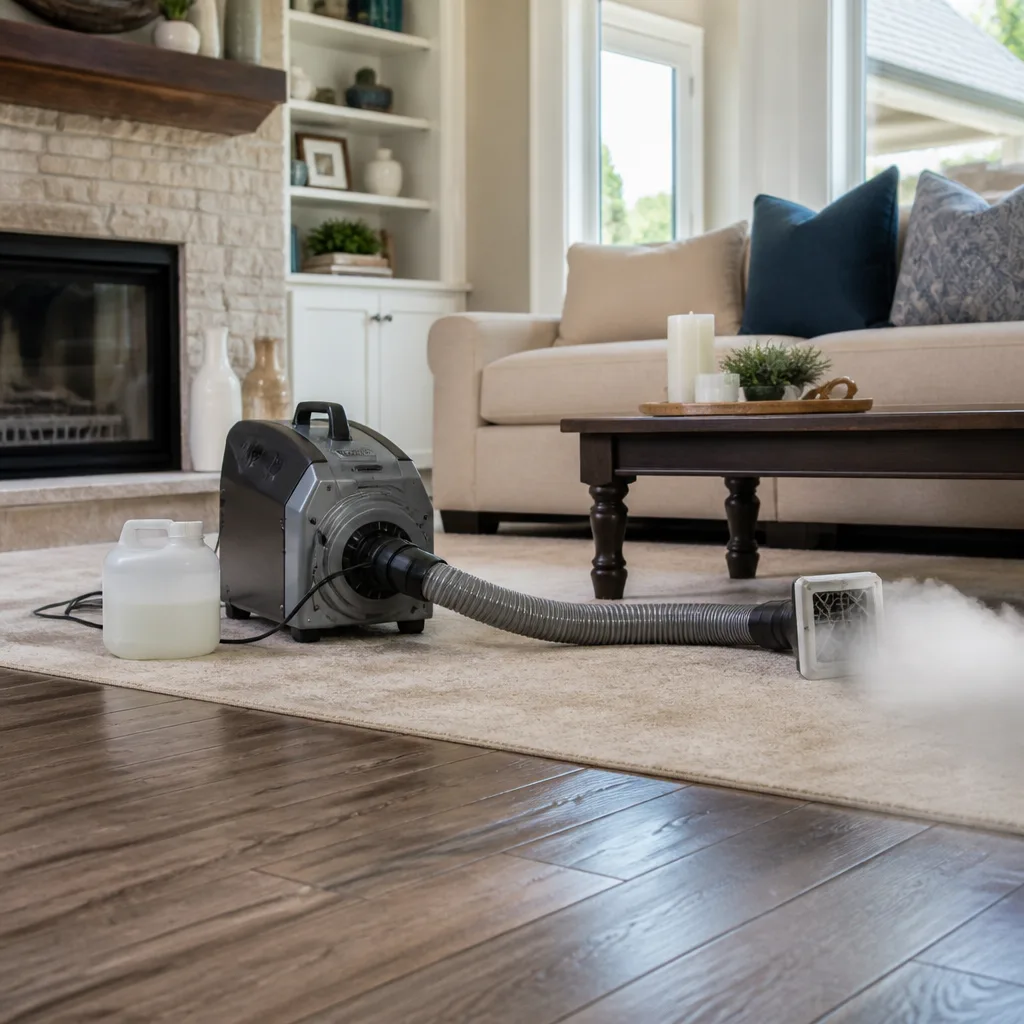
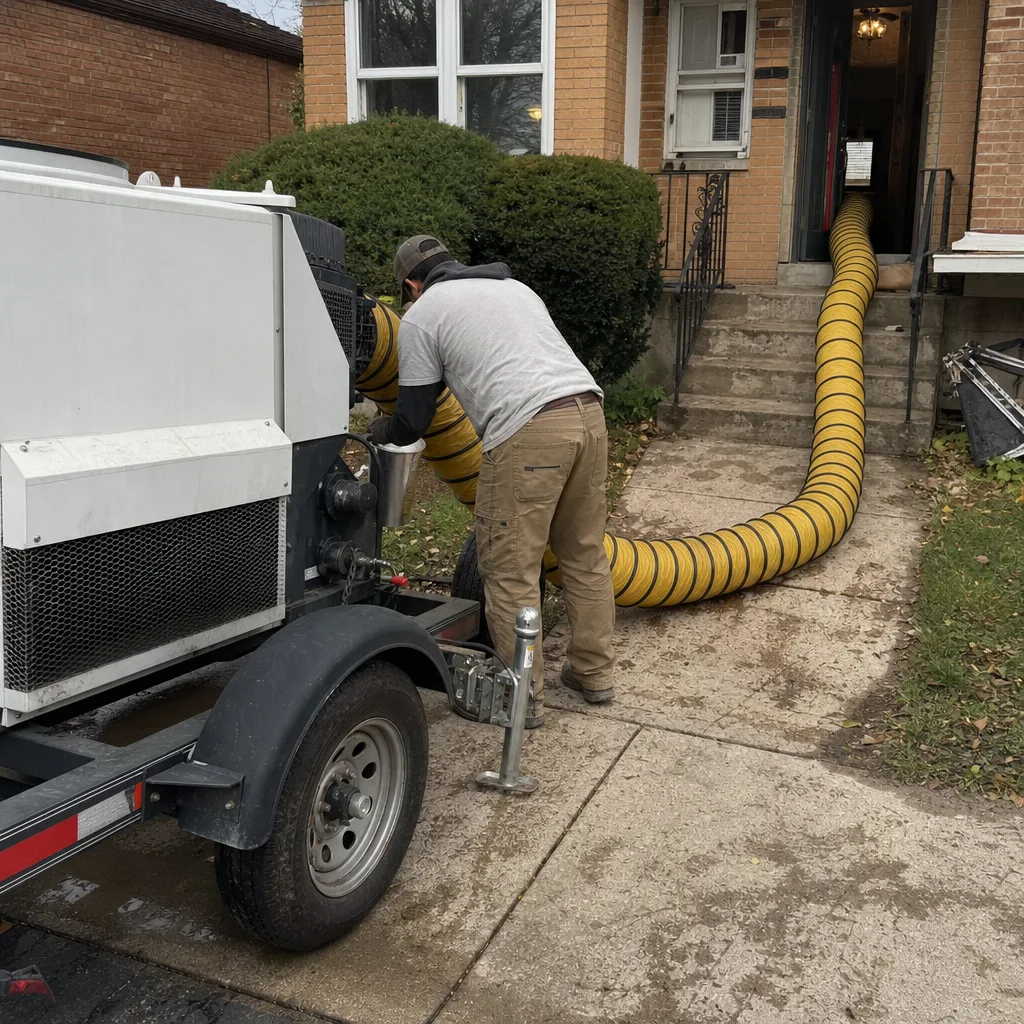
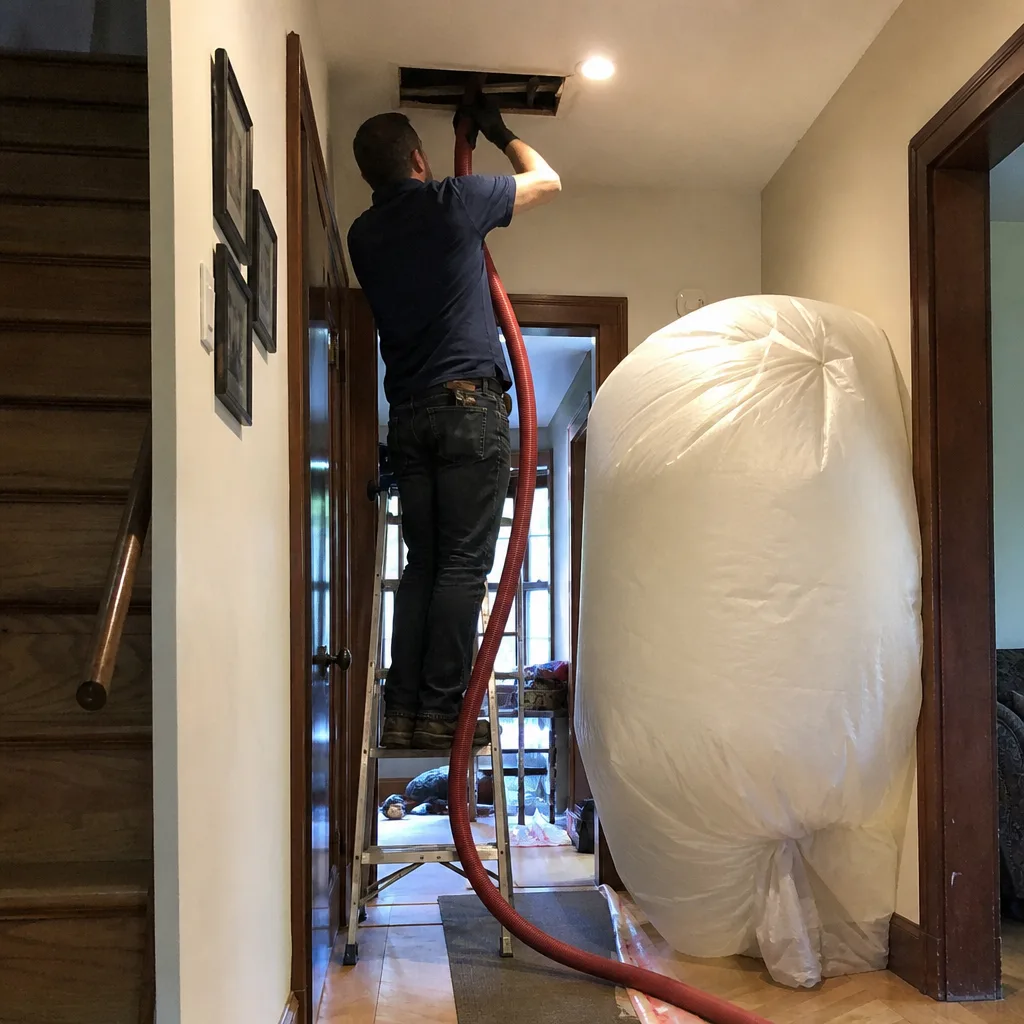
- Negative-pressure extraction setup. A vacuum collection unit, typically mounted on a truck or portable HEPA system, is connected to the duct system to create suction throughout the network. This is the “negative pressure” you’ve seen referenced; it means debris is pulled toward the vacuum rather than pushed into your living space.
- Agitation per run. Each supply and return run is mechanically agitated using brushes, whips, or compressed air tools that dislodge debris from duct walls. The dislodged material is immediately carried away by the negative-pressure airflow. In a typical Chicago bungalow with 8 supply runs and 2 return drops, this phase alone takes 90-120 minutes.
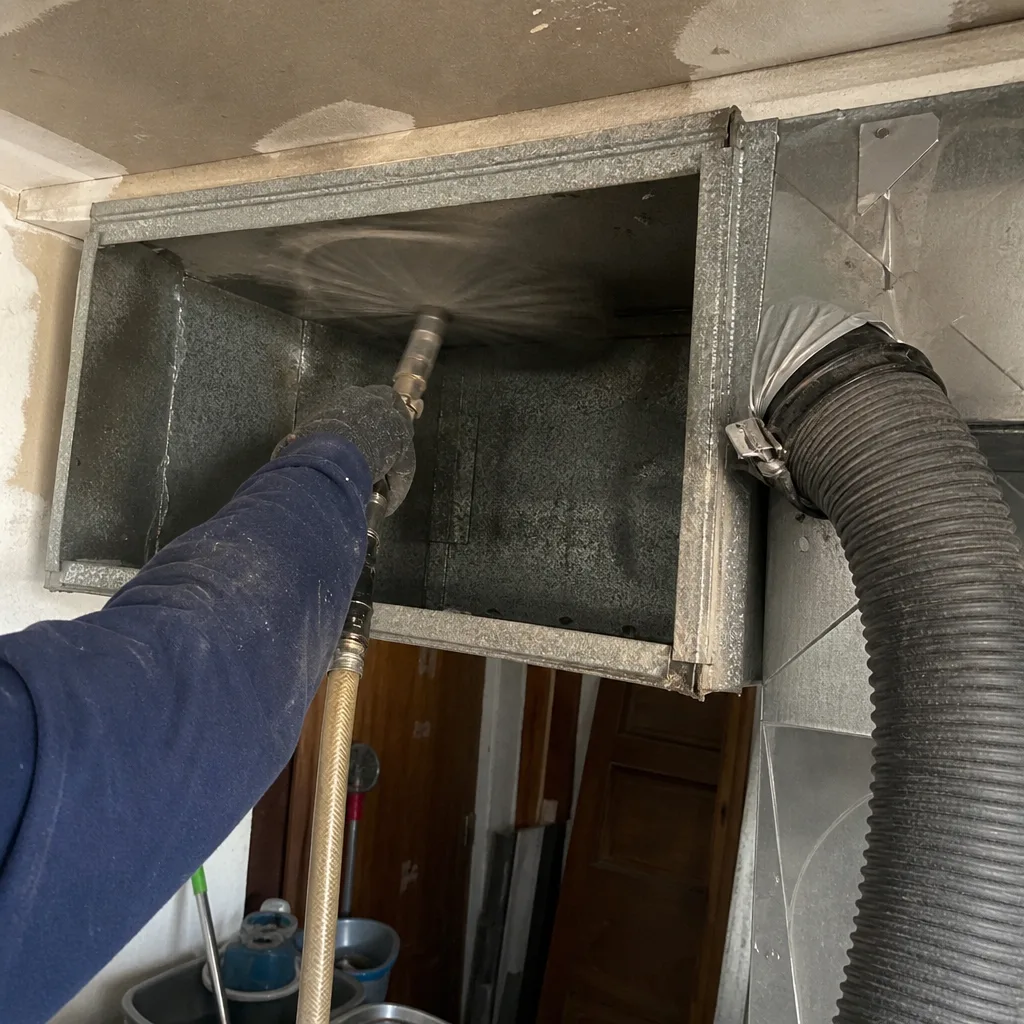
- Trunk line cleaning. The main trunk, the large rectangular or round duct that feeds the individual runs, is cleaned separately with larger-diameter tools. In octopus furnace layouts common in pre-1950s Chicago homes, this step is critical and often missed by low-price operators because the trunk is inaccessible without cutting access panels.
- Post-job camera verification. The borescope is run again through the same points. You see the after condition. These images become part of your documented photo record, delivered with your invoice.
- System test and written summary. The HVAC system is powered on, airflow is verified at each register, and you receive a written summary confirming what was cleaned, what access panels were installed, and what the 365-Day Done Right Promise covers.
Total time for a complete residential system in Chicago: 3 to 5 hours. A job completed in 45 minutes did not include steps 1, 5, 6, or 7.
Chicago-Specific Duct Construction and Why It Matters
Chicago’s housing stock spans 150 years of construction methods, and the ductwork hidden in walls and basements reflects that history directly. The equipment and access strategy for a Greystone two-flat in Little Village differs substantially from a 2005 frame house in Norwood Park.
Octopus Furnace Layouts in Pre-1950s Housing
In Chicago’s older neighborhoods, Humboldt Park, Austin, Chatham, and South Shore among them, we regularly encounter gravity furnace remnants converted to forced-air systems. The original “octopus” furnace sat in the basement center with large, uninsulated ducts radiating outward like arms. When these systems were retrofitted, the new ductwork was often patched into existing channels without proper sealing.
The consequence: debris accumulates at the original junction points where duct diameter changes abruptly. Cleaning these systems requires cutting access panels at each major junction to reach the full trunk line. A technician who quotes over the phone without seeing the basement cannot know how many panels are needed. This is why CleanRun does not quote by vent count; we quote by system, after inspection.
Flex Duct in 1990s-2000s Suburban Additions
In neighborhoods like Portage Park, Garfield Ridge, and parts of Beverly where additions were built during the housing boom, flex duct, the ribbed plastic-sleeve tubing, is common for extended runs. Flex duct crushes easily under aggressive brushing and tears at connection points if pulled. Proper cleaning requires lower-RPM agitation tools and careful handling at each collar connection.
We’ve replaced flex duct in Chicago homes where previous cleaners tore the lining and simply pushed it back into place, leaving a leak that conditioned air escaped into the attic for years. The photo record exists partly to catch this; if we damage something, we document it and fix it under the 365-Day Done Right Promise.
High-Rise Conversions and Limited Access
Downtown and Near North high-rises converted from boiler heat to forced air present their own constraints. Mechanical rooms are often on separate floors, fire dampers interrupt duct runs, and building management may require after-hours scheduling. In these buildings, portable HEPA collection units replace truck-mounted vacuums, and the job scope must explicitly note which runs are accessible per building code.
Chicago’s climate amplifies one issue across all construction types: summer humidity drives condensation in unconditioned duct sections, particularly in basements and crawl spaces. That moisture binds dust into adhered layers that won’t move with air pressure alone. Mechanical agitation is non-negotiable in these conditions.
Source-Removal Cleaning vs. Blow-and-Go: The Equipment Difference
The NADCA standard for air duct cleaning is source removal: debris is dislodged and removed from the system. The alternative, which dominates the coupon market, is disturbance without extraction. A shop vacuum at the register cover, or a compressed air nozzle blown into a duct without collection, moves debris around. Some of it exits. Most of it resettles.
The equipment roster tells you which method a company actually employs.
- Truck-mounted vacuum collection: A gasoline-powered vacuum generating 10,000+ CFM, connected to the duct system via an 8-inch hose. This is the standard for residential source removal. Brands like Nikro and Abatement Technologies manufacture units we use on Chicago jobs where driveway access allows truck placement within 25 feet of the furnace.
- Portable HEPA collection: Electric units on casters, used where truck access is impossible. Lower CFM, but with proper agitation still achieves source removal. Guardsman and Abatement Technologies build portables we deploy for high-rises and rear-lot Chicago homes with no front parking.
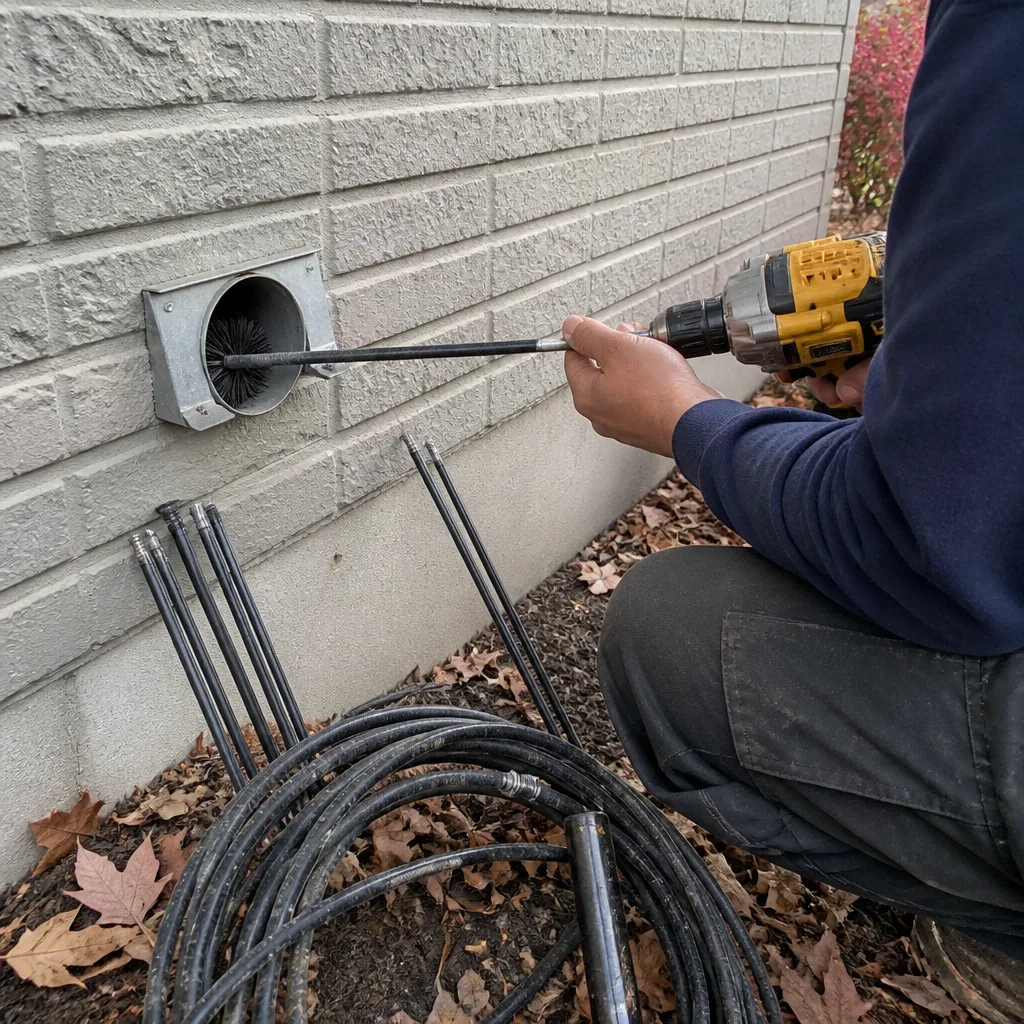
- Mechanical agitation tools: Rotobrush systems use a rotating brush on a flexible cable fed through each run. Pneumatic whips use compressed air to strike duct walls. Both require matching to duct material; we use Rotobrush equipment on metal duct and softer pneumatic tools on flex duct to avoid damage.
- Borescope/camera system: Not optional for documentation. If a company cannot show you the inside of your duct before and after, they cannot prove they performed source removal.
A “blow-and-go” operator typically arrives with a shop vacuum and a compressed air tank. The equipment cost is under $500. A source-removal setup with truck mount, portables, agitation tools, and camera runs $30,000-$60,000. The price difference in the quote reflects this directly.
How to Read a Written Scope of Work (and Why Most Quotes Hide This)
The written scope is where bait-and-switch lives or dies. A legitimate scope for air duct cleaning in Chicago must itemize the following. If any element is missing, the quote is not comparable to one that includes it.
| Line Item | What It Means | Why It Matters |
|---|---|---|
| Number of supply runs | Individual ducts carrying conditioned air to rooms | Determines agitation time; 8 runs vs. 14 runs is not the same job |
| Number of return runs/drops | Ducts pulling air back to the furnace | Returns are often dirtier; skipping them is common in cut-rate work |
| Trunk line footage | Linear feet of main duct to be cleaned | The trunk holds the most debris; “per vent” quotes often exclude it |
| Access panel locations | Where sheet metal will be cut for tool entry | Required for octopus layouts and sealed trunks; each panel must be sealed after |
| Flat system price | One price for everything listed | No per-vent add-ons, no hourly surprises |
| Equipment specified | Brand and type of vacuum and agitation tools | Lets you verify the company owns source-removal equipment |
| Post-job deliverables | Photo record, written summary, warranty terms | Creates accountability; without it, no evidence the work occurred |
In our experience across Chicago, the most common scope omission is trunk line footage. A company quotes “12 vents cleaned” and cleans 12 register covers while the trunk, which holds 60% of system debris, is untouched. The homeowner sees clean covers and assumes the job is done.
Another frequent omission: access panel sealing method. Panels must be cut in many Chicago homes to reach the full trunk. If the scope doesn’t specify how they’re sealed, air leaks at the panel site, wasting energy and pulling basement air into the system. CleanRun specifies screw-and-gasket sealing on every panel, noted in the written scope before work starts.
What You Should Receive After the Job: The Documentation Standard
The work is only as real as the record of it. After a legitimate air duct cleaning in Chicago, you should receive three documents: a photo record, a written summary, and a warranty statement. Each serves a distinct purpose.
The Documented Photo Record
This is not a single “after” shot of a clean register cover. The photo record should show:
- Pre-cleaning borescope image from each supply run, with timestamp
- Pre-cleaning borescope image from each return run, with timestamp
- Post-cleaning borescope image from the same access points
- Trunk line interior before and after, where accessible
- Any damage found, pre-existing or incurred during work
- Access panel locations, sealed
CleanRun has delivered this record on every job since 2013. The images are yours to keep, share with a home inspector, or reference if you suspect a problem later. In one Lincoln Park job, a homeowner used our photo record to prove to their HVAC contractor that a collapsed flex duct section we documented was pre-existing, avoiding a disputed repair charge.
The Written Summary
A one-page document confirming: number of runs cleaned, trunk line footage addressed, access panels installed and sealed, equipment used, technician names, date and time, and any recommendations for repair or follow-up. This is your proof of scope completion. Without it, a warranty claim is your word against theirs.
The 365-Day Done Right Promise
Haven Standard Clause 5 specifies that if the work is not right, we make it right, backed in writing on every job. This is not a “satisfaction guarantee” subject to manager discretion. It is a written obligation with a defined term. The documentation package exists so both parties know what “right” means: the photo record shows the condition we promised, the summary confirms the scope we agreed to, and the promise binds us to correct any deviation.
Most Chicago homeowners have never received all three documents. Many have received none. The difference is how you tell a real job from a performance.
The $79 Coupon Model Explained: Upsells, Add-Ons, and What Actually Works
The $79 air duct cleaning coupon is a well-documented funnel, not a price. The model works because the initial visit is priced below cost, and revenue is recovered through a structured upsell sequence. Understanding the sequence protects you from paying legitimate-job prices for minimal work.
Stage one: the arrival. The technician confirms the coupon price covers “basic cleaning” of a limited number of “vents,” typically 8-10. Most Chicago homes have more. Additional vents are $20-$40 each. A 12-vent system suddenly costs $160-$320 more.
Stage two: the discovery. The technician produces a borescope image showing mold, or claims to. “This is black mold, very dangerous, EPA requires treatment.” The upsell: $300-$800 for antimicrobial spray or “mold remediation.” In our experience, actual mold growth in Chicago ducts is localized to areas with chronic moisture intrusion, typically from a roof leak or basement flooding, and requires fixing the moisture source first. Spraying a chemical without addressing the source is not remediation.
Stage three: the sanitizer. A fogging treatment with an EPA-registered disinfectant, $150-$400. This has documented utility in specific circumstances: after rodent infestation, during immunocompromised occupant care, or post-construction dust removal. It is not a standard maintenance procedure and does not improve routine air quality in a clean system.
Stage four: the coating. An “antimicrobial coating” applied to duct interior, $500-$1,200. The EPA has not registered any product for this use in residential ductwork. We do not offer it.
What we do instead: CleanRun quotes one flat price per system, agreed in writing before work starts. The price covers complete source-removal cleaning of all supply runs, all return runs, and accessible trunk line. Sanitizer is available as a documented add-on with its EPA registration number provided, priced separately, never pushed. No mold treatments without independent lab confirmation. No coatings.
The $79 coupon is not illegal. It is a marketing choice that relies on customer ignorance of what the job should include. This guide exists to remove that ignorance, and you can find more guides & resources on our blog.
What Air Duct Cleaning Costs in Chicago: A Line-Item Breakdown
These ranges reflect what we’ve quoted for Chicago-area residential jobs in 2023-2024, based on system size and construction type. Every quote is flat-price, system-based, delivered in writing before work begins.
| System Type | Typical Range | What Drives Price |
|---|---|---|
| Small system (condo, 1-2 bedroom, 6-8 runs) | $400-$550 | Limited access, portable equipment, shorter trunk |
| Medium system (bungalow, 2-3 bedroom, 8-12 runs) | $550-$750 | Standard truck-mount access, moderate trunk footage |
| Large system (single-family, 3-4 bedroom, 12-16 runs) | $750-$900 | Extended trunk, multiple access panels, longer agitation time |
| Octopus/legacy system (pre-1950s, modified gravity) | $700-$950 | Multiple access cuts, irregular duct sizing, careful handling |
| High-rise/conversion (portable equipment required) | $500-$700 | After-hours scheduling, building coordination, HEPA portables |
What these prices include: complete source-removal cleaning, documented photo record, written summary, 365-Day Done Right Promise, and sealing of all access panels. What they do not include: repairs to damaged ductwork, replacement of flex duct, or HVAC component cleaning beyond the duct system itself. HVAC cleaning in Chicago, which addresses coils, blower, and cabinet, is a separate service with its own scope.
Prices below $300 for a complete system should be viewed with skepticism. They do not cover the labor hours, equipment depreciation, and documentation standard described in this guide. The operator is either losing money on every job, which is unsustainable, or not performing the work described.
How to Choose an Air Duct Cleaning Company in Chicago
The research process most Chicago homeowners follow, reading reviews, checking BBB, asking neighbors, filters out the obviously fraudulent. It does not filter out the competent-looking operation that simply performs minimal work. For help evaluating your options, see our DIY vs Professional Air Duct Cleaning: The Chicago Homeowner’s Decision Guide, and use these criteria to distinguish documented accountability from professional appearance.
- Demand a written scope before scheduling. Not a price range, not a “starting at” figure. A line-item scope with your specific run count, trunk footage, and flat price. If the company cannot produce this without an in-home visit, that is reasonable; if they cannot produce it at all, the price is not real. CleanRun delivers this after inspection, before any agreement to proceed.
- Verify equipment ownership. Ask specifically: do you use truck-mounted or portable HEPA vacuum collection? What agitation tools? What camera system? A legitimate company names brands and models without hesitation. We use Nikro and Abatement Technologies collection equipment, Rotobrush agitation systems, and borescope documentation on every job.
- Confirm documentation deliverables. What exactly do I receive after the job? How many photos? From how many locations? Is the warranty in writing? Vague answers predict vague work. Specific answers, Haven Standard Clause 1 for pricing, Clause 4 for documentation, Clause 5 for warranty, predict accountable work.
- Check for Chicago-specific experience. Ask: have you worked in homes with octopus furnace layouts? With flex duct additions? In high-rise conversions? Technicians who have cleaned in Chicago’s actual housing stock understand access problems before they encounter them. We’ve cleaned ducts in Greystones where the only furnace access was through a coal chute; that experience changes how you quote and how you arrive prepared.
- Use the Free Second Opinion. CleanRun offers this under Haven Standard Clause 2: bring any competitor’s written estimate, and we’ll put our scope and price next to it in writing, at no cost. The comparison usually reveals what’s missing from the lower quote, not what’s extra in ours.
Background-checked, uniformed technicians operating under Haven Standard Clause 3 are non-negotiable for us. You should know who is arriving, by name, before they knock. In Chicago, where home service scams have made the news repeatedly, this transparency is basic security, not a premium feature.
Common Mistakes to Avoid
- Accepting a per-vent price. This structure incentivizes the company to minimize time per vent and exclude the trunk line. Always insist on a system-based flat price.
- Booking based on coupon price without scope review. The $79 figure is a lead generation tool, not a service price. Read the fine print for vent limits, trunk exclusions, and mandatory add-ons.
- Assuming all “mold” requires immediate treatment. Actual mold in ducts requires a moisture source and lab confirmation. Visual identification by a cleaning technician is not sufficient for a $500 upsell.
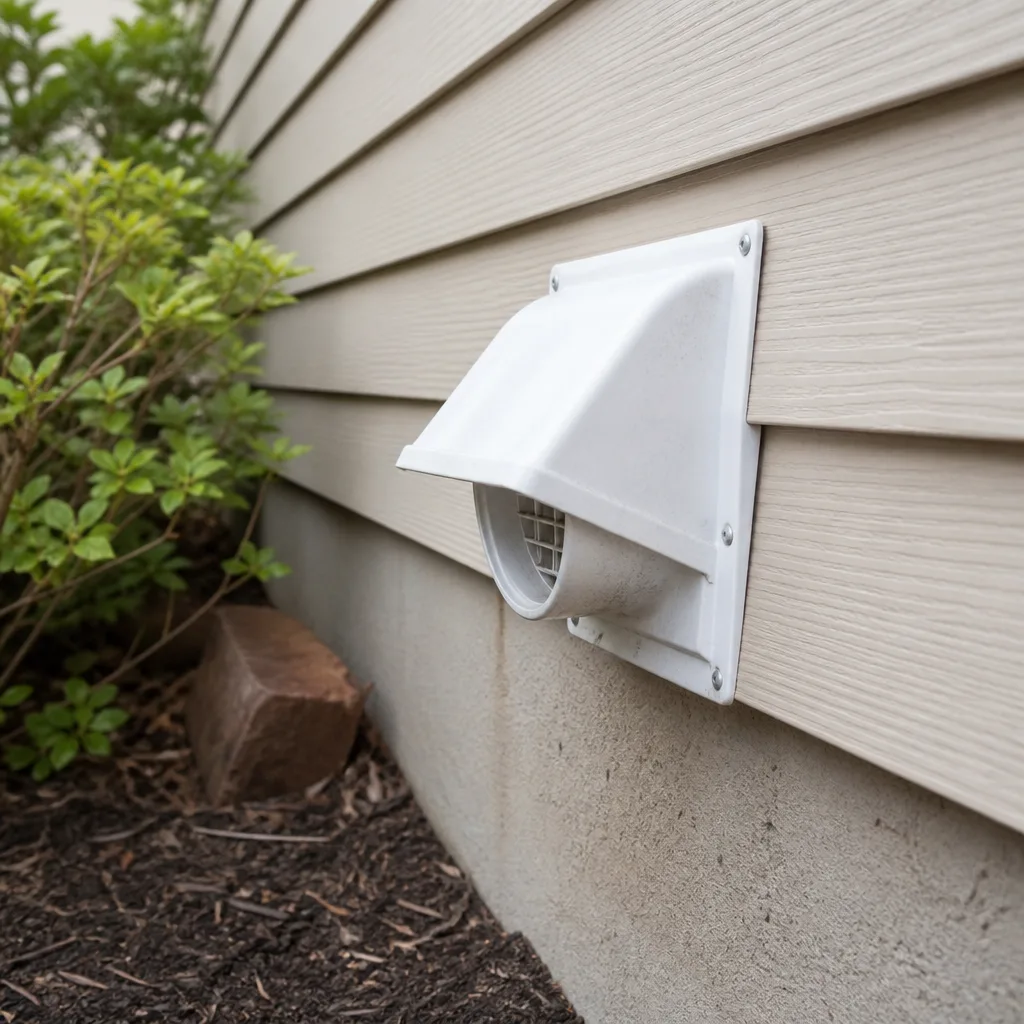
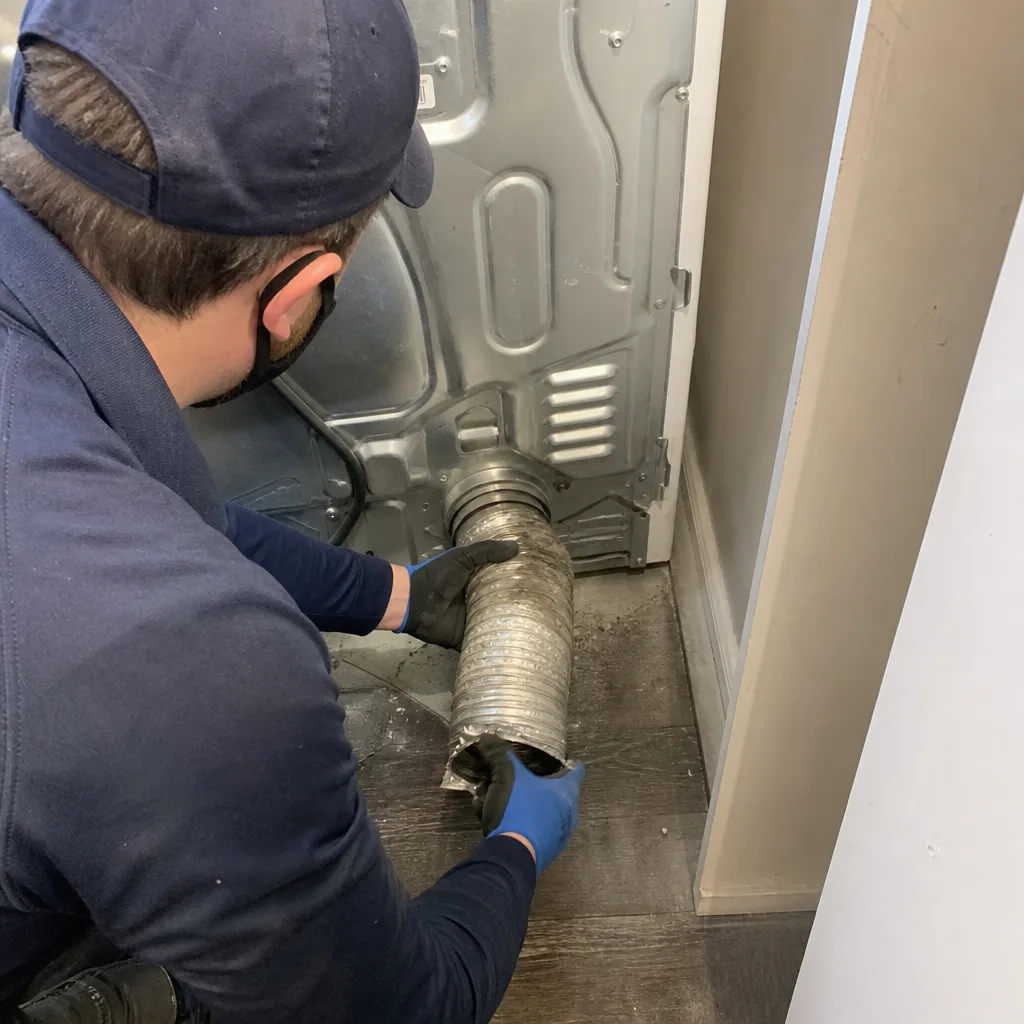
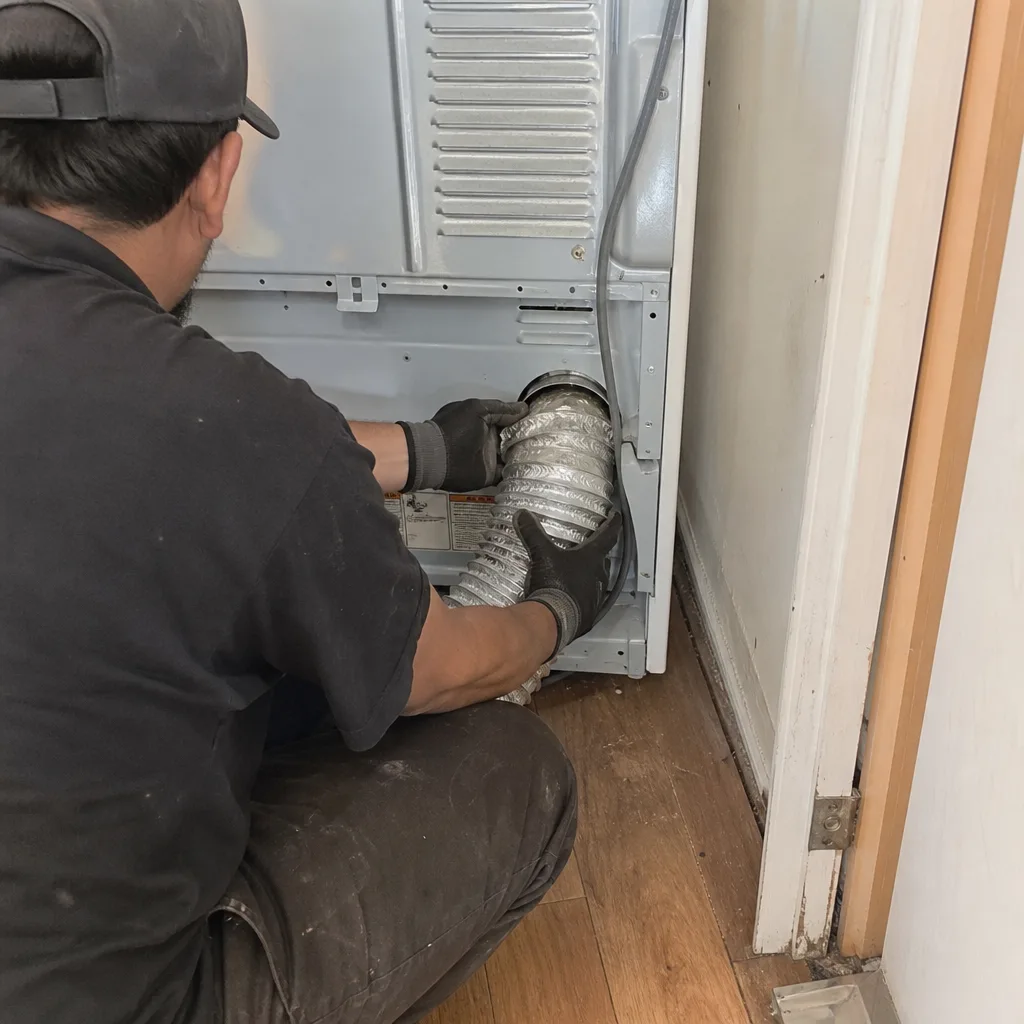
- Neglecting the dryer vent. In Chicago’s older housing, dryer vent cleaning in Chicago is often more urgent than duct cleaning, with lint accumulation causing hundreds of fires annually. A company that pushes duct cleaning while ignoring your clogged dryer vent is not prioritizing your safety.
- Expecting air duct cleaning to solve HVAC performance problems. Cleaning improves airflow efficiency and removes debris. It does not fix undersized ductwork, failing blowers, or refrigerant leaks. If your system has performance issues, request HVAC evaluation separately.
- Failing to request the photo record. Without documentation, you have no evidence the work occurred. A company confident in its work produces the record without being asked. CleanRun delivers it as standard.
- Ignoring Chicago’s seasonal timing. Spring and fall are peak scheduling periods. Winter jobs in unheated basements take longer; summer jobs in attics face heat constraints. Book shoulder seasons for optimal technician access and your own comfort.
When to Call a Professional
Call for professional air duct cleaning when you can see debris at register openings, when airflow is visibly reduced at distant rooms, when you’ve completed renovation work that generated construction dust, or when you’ve moved into a home with no record of prior cleaning. In Chicago’s rental market, particularly in converted two-flats and courtyard buildings, the absence of maintenance records is common and the duct debris correspondingly heavy.
Do not call for duct cleaning as a response to suspected carbon monoxide, gas odor, or electrical malfunction. These are emergencies for utility or fire department response, not maintenance services.
CleanRun Air Duct Cleaning Chicago offers free estimates in Chicago. Every estimate includes a preliminary inspection, a written scope, and a flat system price with no obligation to proceed. For guidance on selecting a contractor, read our How to Hire a Air Duct Cleaning Contractor in Chicago: A Step-by-Step Guide. Call (708) 683-3974 to schedule.
Frequently Asked Questions
Complete residential air duct cleaning in Chicago typically ranges from $400 for a small condo system to $900 for a large single-family home with legacy ductwork. The price depends on total run count, trunk line footage, and construction type, not on a per-vent rate. Call (708) 683-3974 for a written estimate on your specific system.
Low quotes typically exclude the trunk line, limit the number of vents covered, or use disturbance methods without debris extraction. The $79-$149 coupon model recovers revenue through staged upsells for additional vents, “mold treatment,” and sanitizer sprays. A legitimate source-removal job with documented results cannot be performed at those prices. Compare scopes line by line, not headline prices.
Require a documented photo record showing before-and-after borescope images from multiple duct locations, with timestamps. The photo record should be delivered as a standard job deliverable, not available only on request. CleanRun has included this on every job since 2013; without it, any claim of cleaning is unverified.
NADCA recommends cleaning every 3-5 years for typical residential systems, sooner after construction, renovation, or pest infestation. In Chicago, homes with pets, smokers, or occupants with allergies may benefit from more frequent cleaning. The correct interval is determined by inspection, not calendar alone. A borescope examination reveals whether accumulation warrants service.
Moderately, if debris accumulation has restricted airflow. Clean ducts allow the HVAC system to move design airflow with less blower effort. The savings are typically 5-15% on heating and cooling costs in systems with significant buildup. Duct cleaning does not compensate for poor insulation, leaky windows, or equipment at end of life.
Air duct cleaning addresses the distribution network: supply runs, return runs, and trunk lines. HVAC cleaning in Chicago addresses the air handler itself: evaporator coils, blower assembly, and cabinet interior. The services are complementary; a clean duct system with a dirty blower recirculates debris immediately. CleanRun offers both with separate, itemized scopes.
The Bottom Line
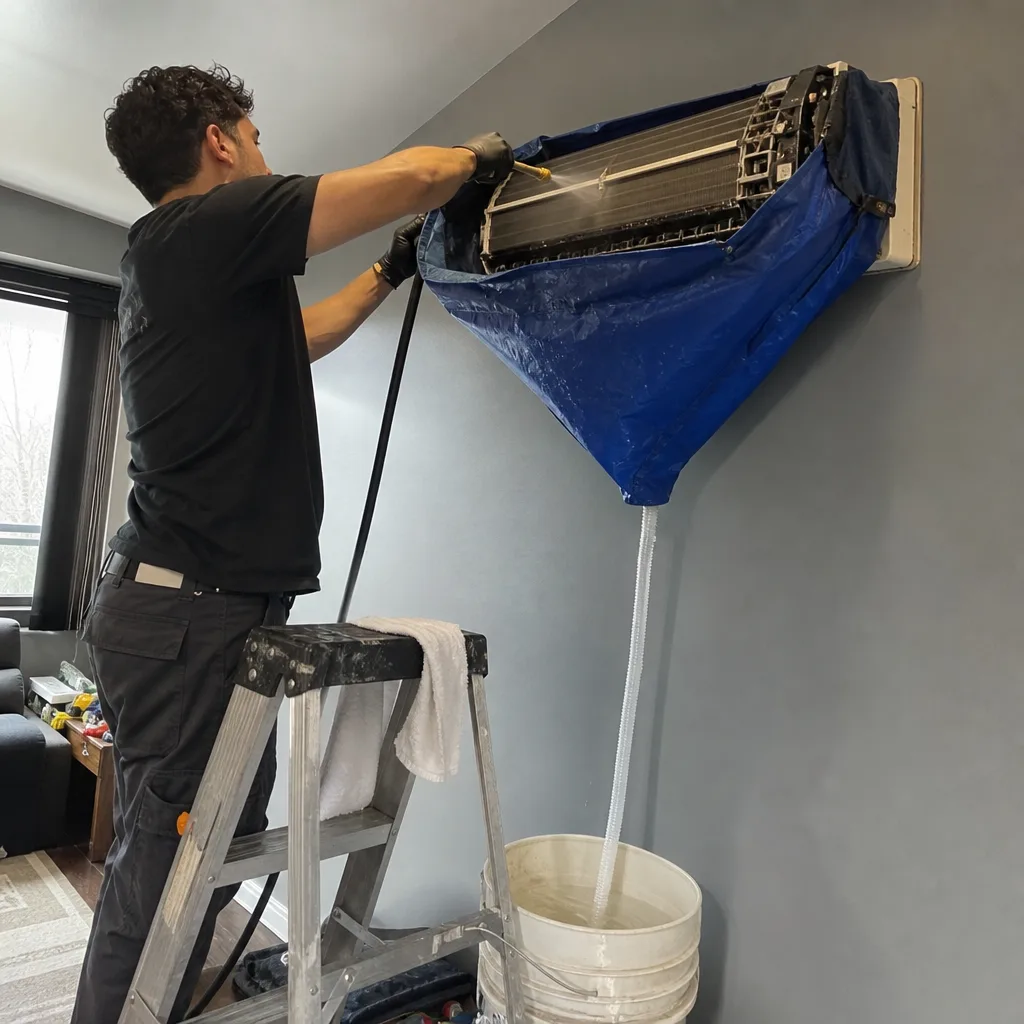
Air duct cleaning in Chicago is not fundamentally complicated, but it is systematically obscured by an industry that profits from customer uncertainty. The framework in this guide, written scope, source-removal equipment, documented photo record, and written warranty, gives you the tools to evaluate any quote on its actual merits. The construction quirks of Chicago housing, from octopus furnace remnants to flex duct additions, make generic pricing and generic methods inadequate. Demand specificity. Demand documentation. The companies prepared to provide both are the ones prepared to stand behind their work.
Written by Tomas Reyes, Owner at CleanRun Air Duct Cleaning Chicago, serving Chicago since 2013.