
Whole-system duct and dryer vent check with before-and-after photos - you see exactly what came out of your vents
That "$99 whole-house special" is a bait ad - the real number appears once they are in your hallway, or the "clean" is a shop-vac at the register. We photograph the inside of your ducts before and after instead.
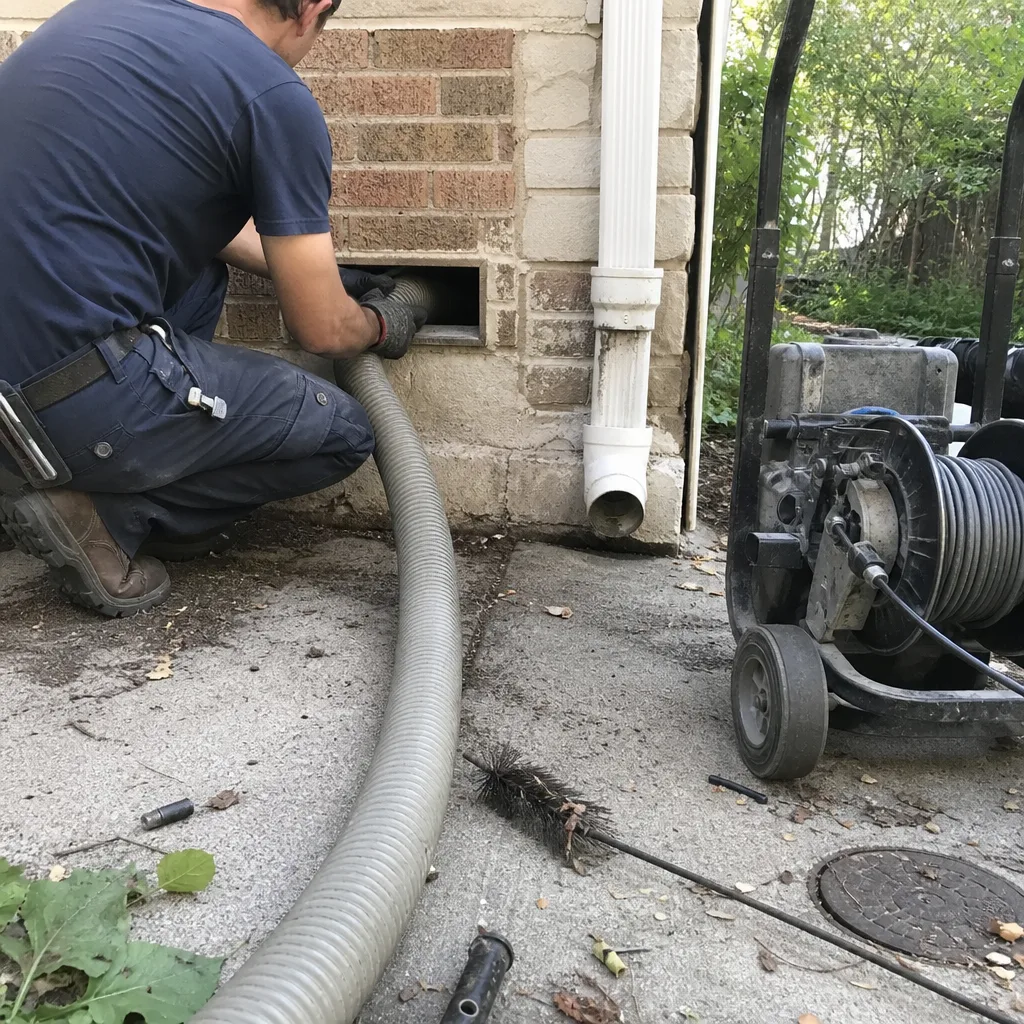 Before
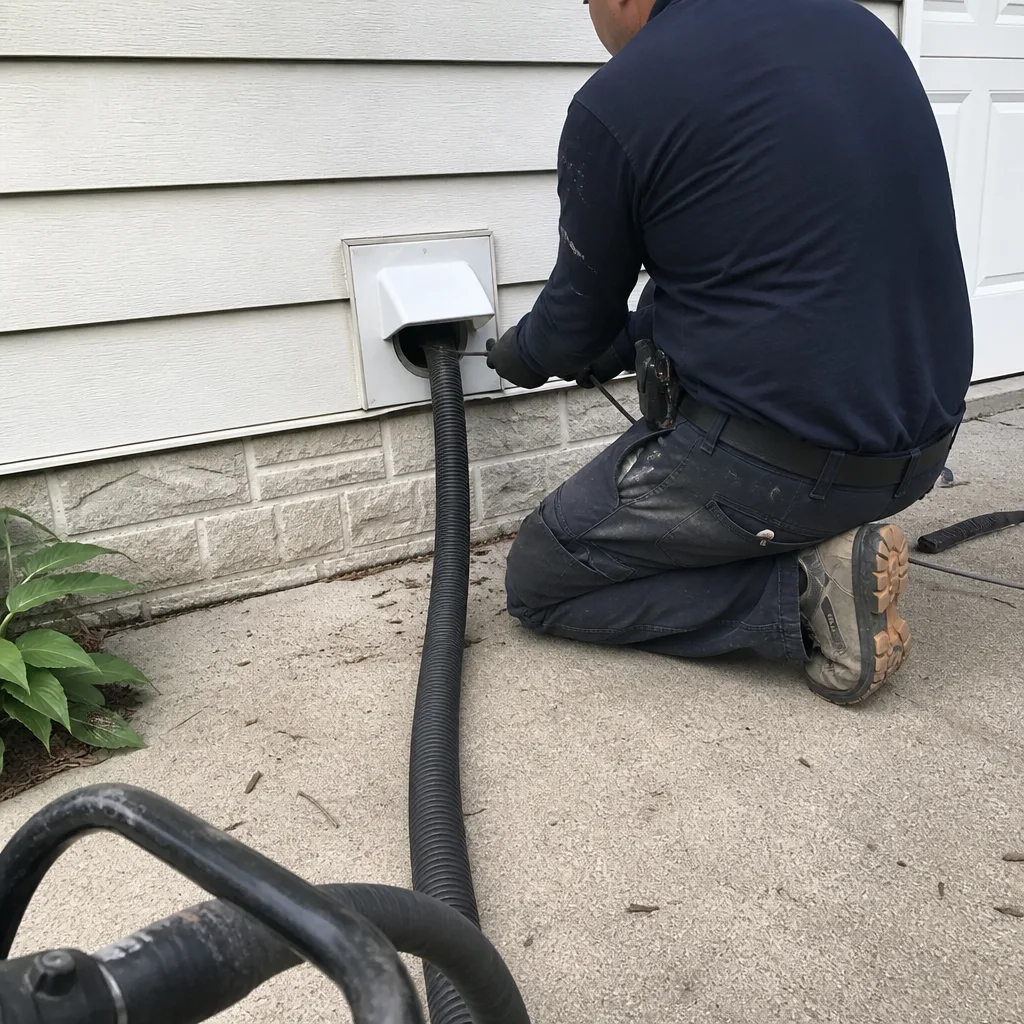 After
After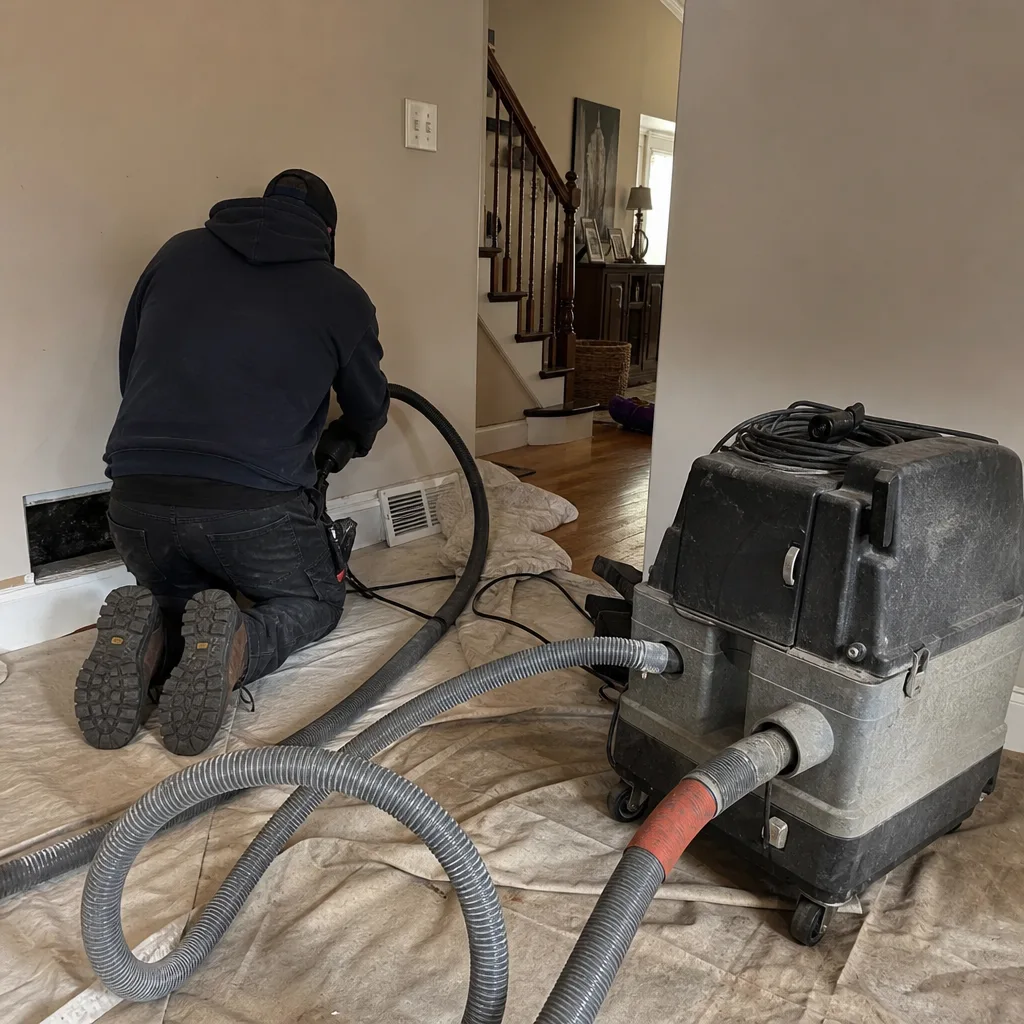 Before
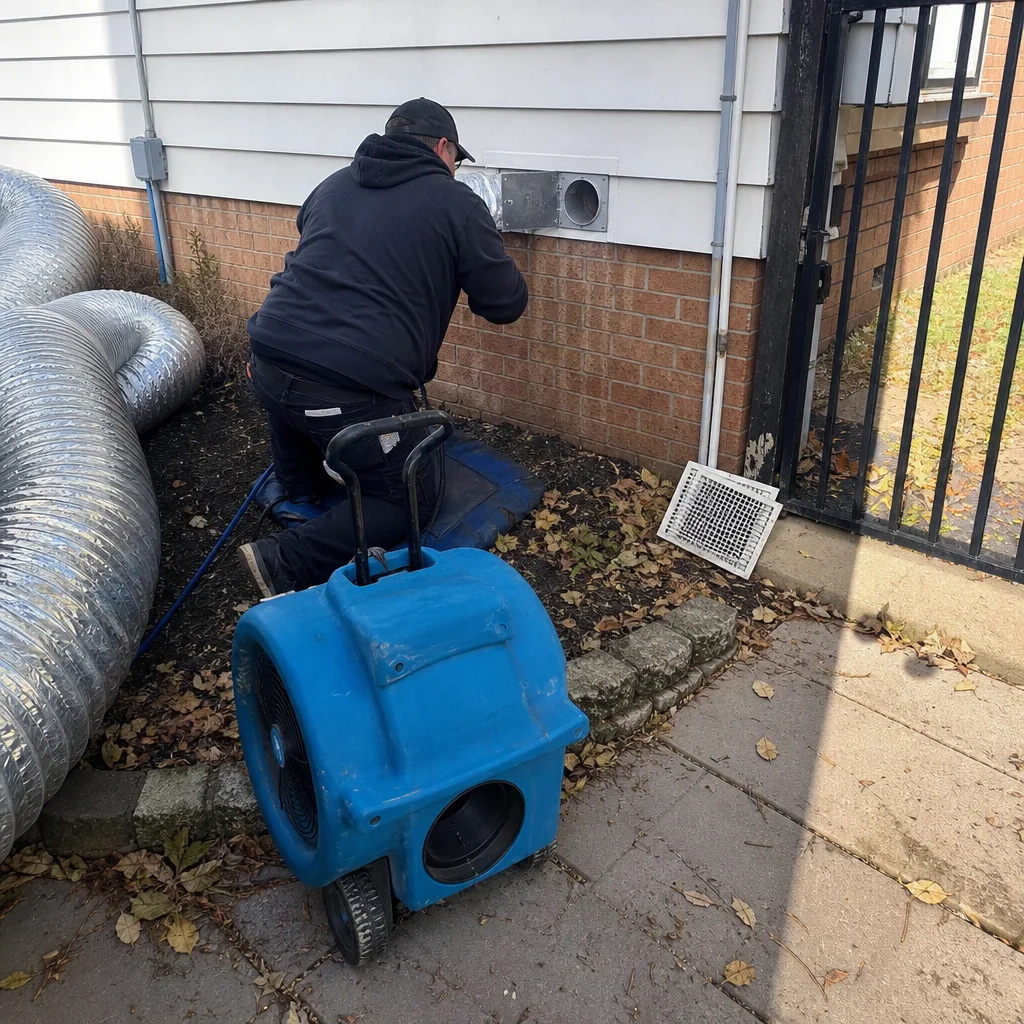 After
After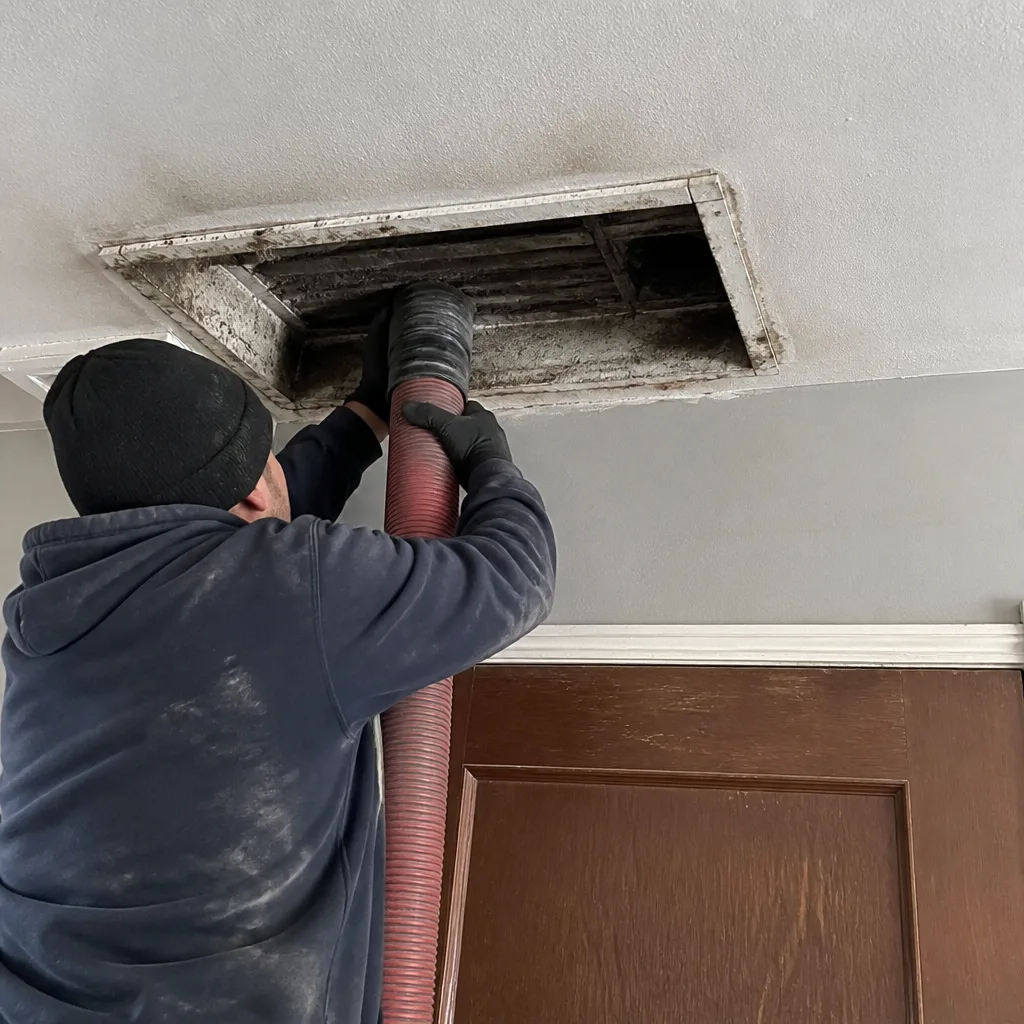 Before
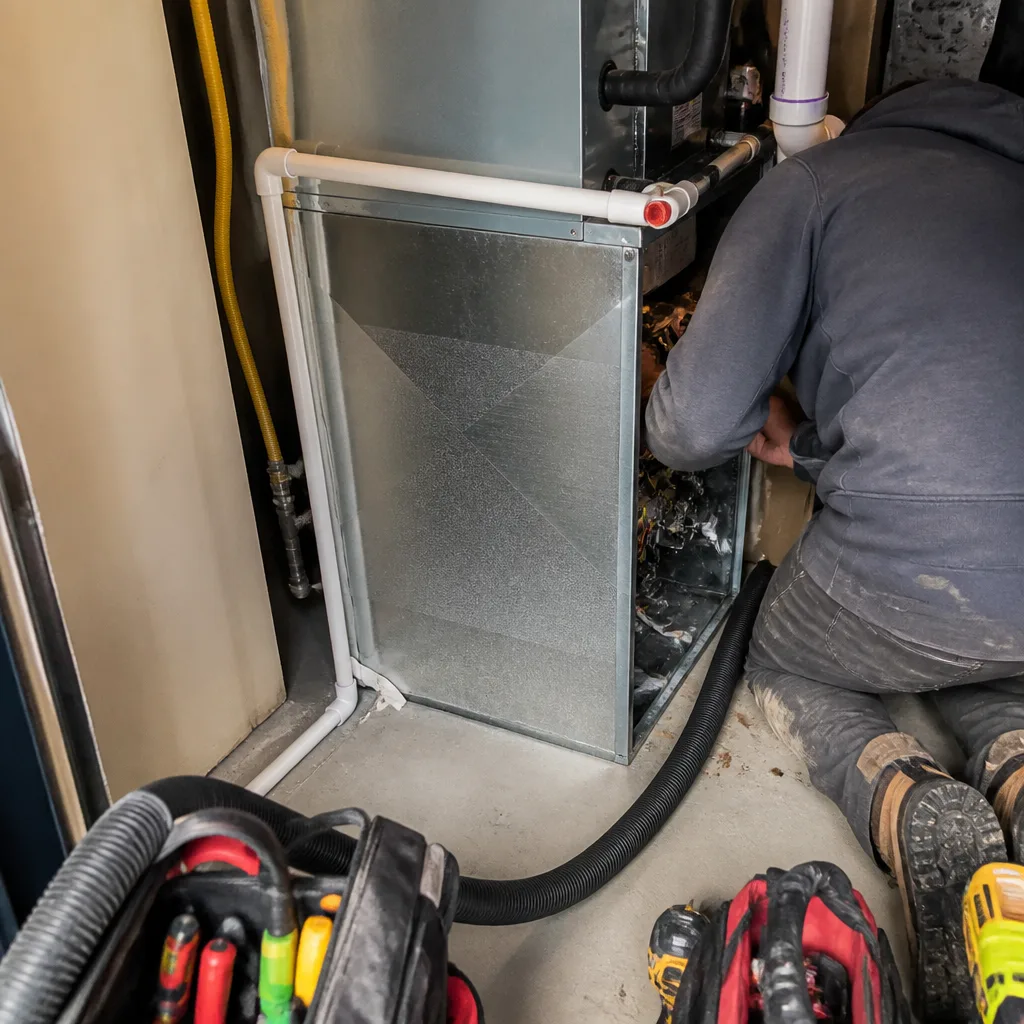 After
AfterDryer Vent Inspection in Chicago, IL
A dryer vent inspection in Chicago typically runs $89-$149 and gives you a camera-documented record of what is actually inside your vent run – lint accumulation depth, connection integrity, and whether the duct meets current code clearances. If you’re also considering Dryer Vent Cleaning services, the inspection determines whether that’s needed. Most inspections take 45 to 60 minutes and conclude with a written scope and photo report you keep, regardless of whether any cleaning work follows.
If you want the short version: a dryer vent inspection is a diagnostic step, not a sales pitch. A Rotobrush-equipped technician runs a flexible camera through the full duct path, measures airflow at the exterior termination cap, and photographs every condition worth noting. What the camera finds either confirms the vent is clear and functioning correctly, or it produces documented evidence that something needs attention. Either outcome is useful.
CleanRun Air Duct Cleaning Chicago has been doing this work since 2013 – over 52,000 homes served across the metro, every one with a written price delivered before any work started and a documented photo record when the crew left. For Chicago homeowners who bought in Wicker Park, Lincoln Square, Beverly, Bridgeport, or any of the city’s high-density neighborhoods, dryer vent conditions tend to be more complicated than in single-family suburban homes: longer horizontal runs, shared chases in two-flats and greystone courtyard buildings, corrugated foil transitions that should have been replaced years ago. That context shapes how we inspect, and it’s why a camera-documented inspection matters more here than in most markets.
For background on the full service, see our Dryer Vent Cleaning in Chicago page. To schedule an inspection or get a written price before committing to anything, call (708) 683-3974 – a live person answers every call, any hour.
When You Need a Dryer Vent Inspection
Some of these situations are obvious. Others are easy to rationalize away until the dryer quits or something worse happens. Chicago’s building stock adds a few local wrinkles worth naming specifically.
- Drying cycles are taking longer than they used to. A full cotton load that used to finish in 45 minutes now takes 70 or 80. That’s usually reduced airflow, and reduced airflow usually means a partial blockage somewhere in the duct run. In Chicago’s older two-flats and courtyard buildings, the blockage is often at the first elbow after the dryer – a 90-degree turn built into the wall cavity where lint accumulates fastest.
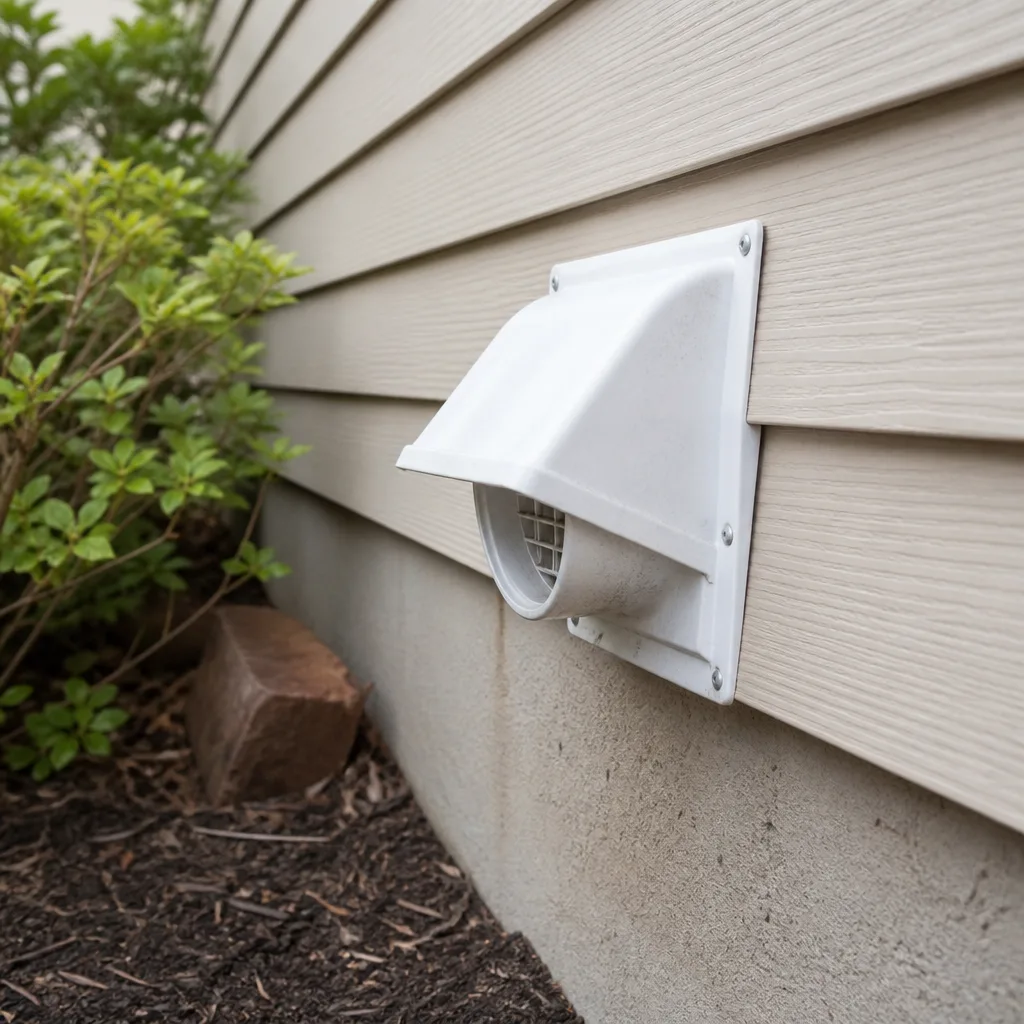
- The exterior termination cap is hard to find or hasn’t been checked in years. Chicago city code requires dryer vents to terminate at an exterior wall or roof, with a functioning damper or louvered cap. In Pilsen greystone conversions and Lakeview vintage six-flats, those caps are sometimes on rooftop parapets, painted over, or blocked by bird nesting. An inspection verifies the cap opens under airflow and isn’t obstructed.
- You just bought the home and have no service history. Chicago’s resale market moves fast. Buyers in Logan Square, Avondale, and Ravenswood often close on homes where the dryer vent hasn’t been inspected in the seller’s entire ownership period. A pre-occupancy inspection documents baseline conditions before they become your problem.
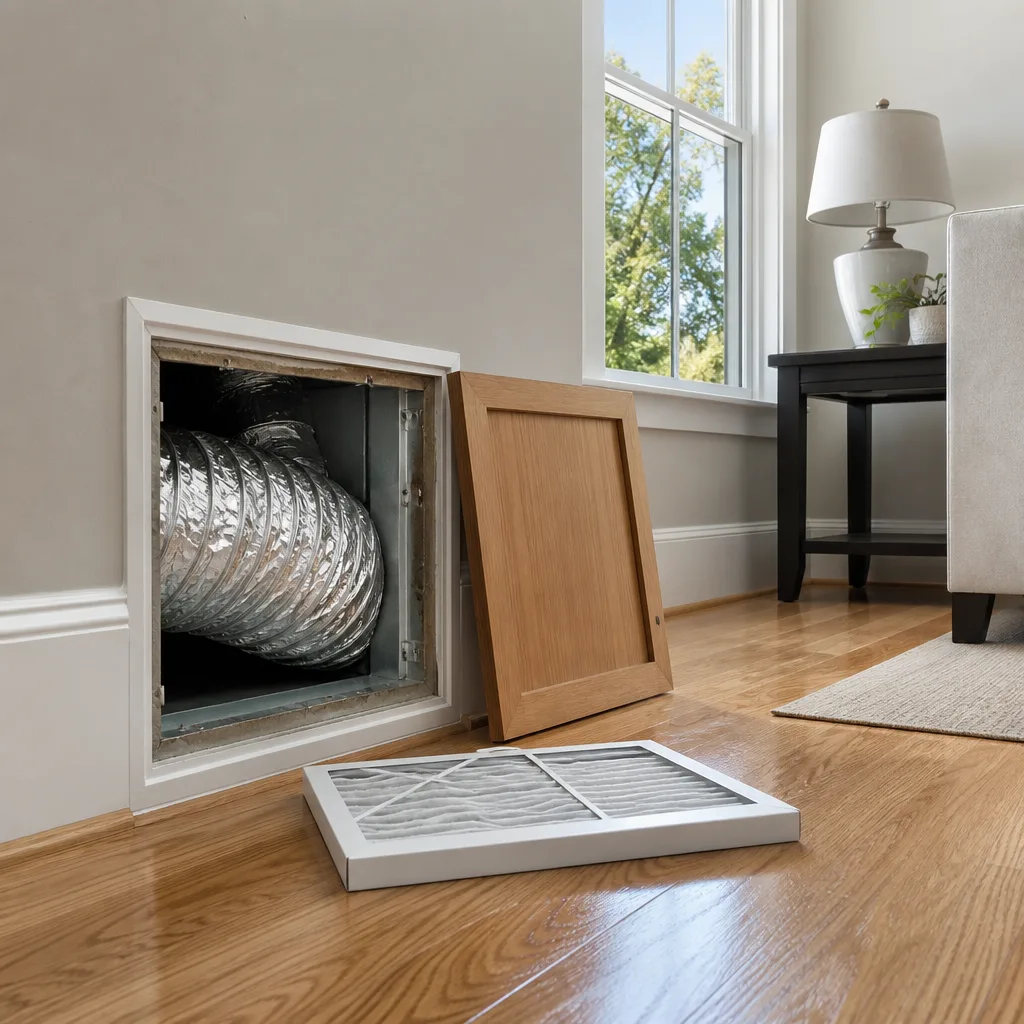
- The vent run uses flexible foil or plastic corrugated duct. Both materials are prohibited under current Chicago building code for concealed dryer vent installations. If your dryer sits in a closet or utility room with a concealed duct path, there’s a real chance the transition section is corrugated foil – which traps lint in its ridges and is a documented fire risk. The inspection identifies material type along the full run, not just the visible section.
- There’s a burning or musty smell near the dryer. A burning smell suggests lint is close to the heating element or motor housing. A musty smell, more common in Chicago’s humid summers, can mean moisture is backing up into the duct because the exterior termination cap isn’t sealing properly between cycles. Both conditions warrant a camera inspection before assuming the dryer itself needs service.
- The building was recently remodeled or the laundry room was relocated. Renovation work in Chicago’s greystone and brick-construction homes sometimes results in a dryer vent that was extended, rerouted through an interior wall, or reconnected without inspection. Junction points and added elbows are exactly where disconnections and lint dams develop first.
Our Dryer Vent Inspection Process
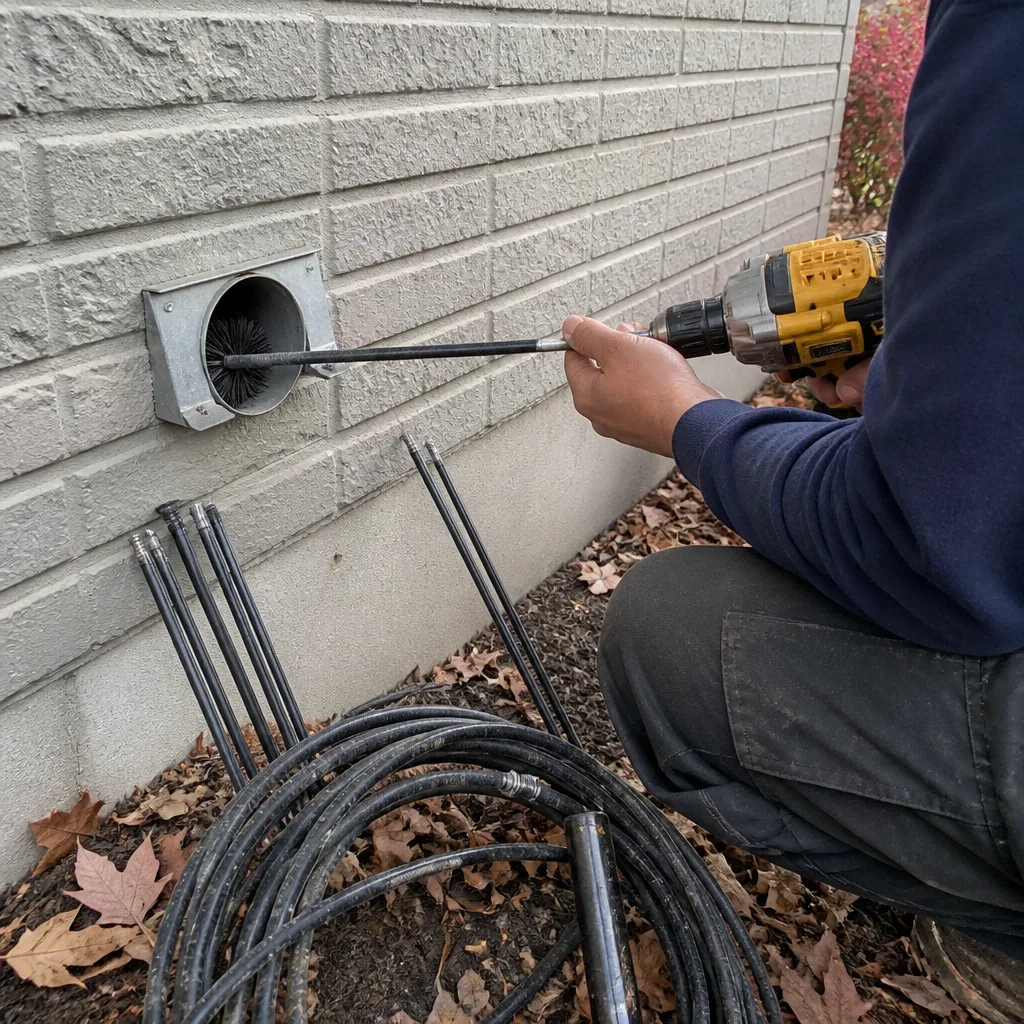
Every inspection follows the same documented sequence. Tomas Reyes built this process to produce a deliverable – a written scope and photo record – not just a verbal opinion. Here’s what happens from the time the technician arrives to when the report is in your hands.
- Written price before any work starts. Haven Standard Clause 1 is non-negotiable: no work begins until you have a written price and have agreed to it. The technician quotes the inspection fee on arrival, puts it in writing, and that number doesn’t change unless you add scope. There is no “we’ll tell you the price after we look” at CleanRun.
- Access and duct path tracing. The technician locates the dryer connection point, traces the full duct path through the wall or ceiling cavity to the exterior termination, and measures total run length and elbow count. In Chicago’s multi-unit buildings this step sometimes reveals that the duct path is longer than the previous owner believed, or that the duct shares a chase with another unit’s exhaust – both conditions that affect airflow performance and cleaning scope.
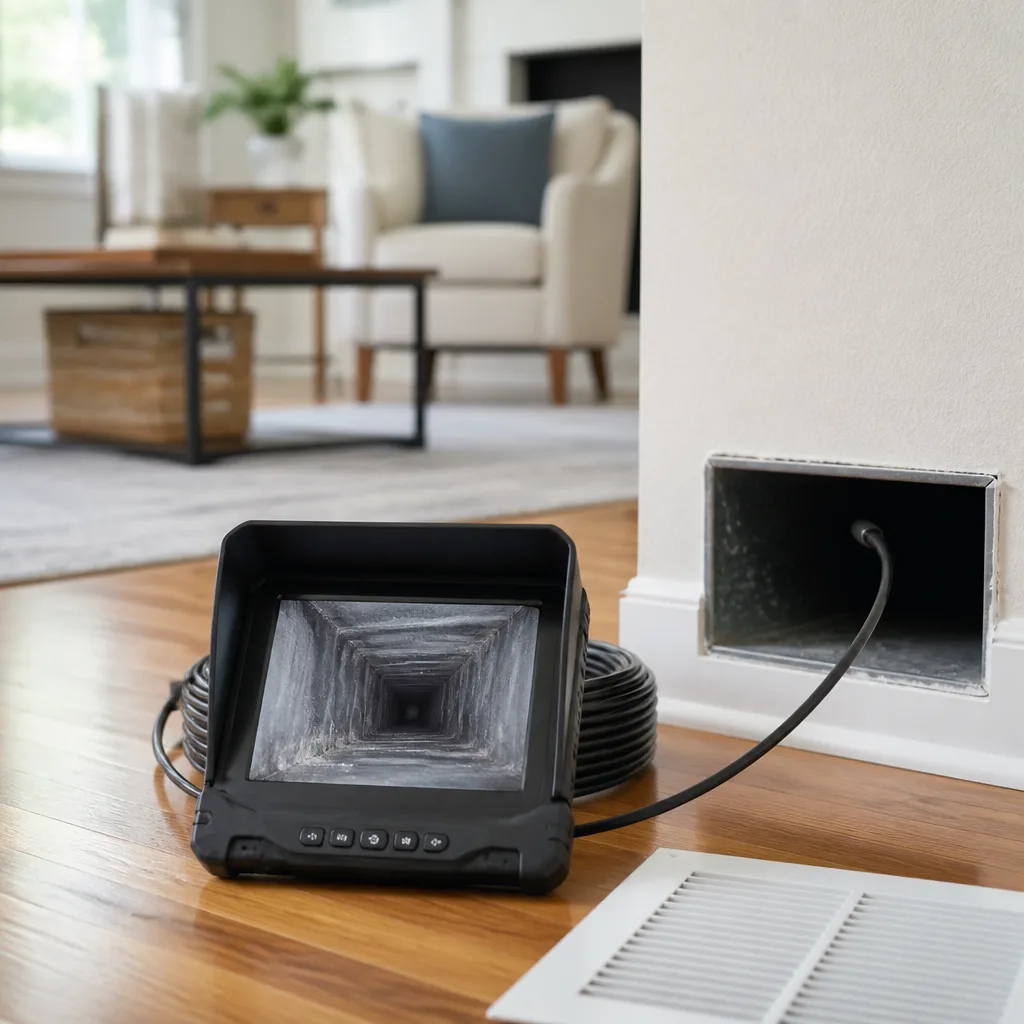
- Camera inspection of the full duct run. A flexible inspection camera travels the complete length of the duct, from dryer connection to exterior cap. The technician photographs lint accumulation depth at each elbow and straight run, notes any visible disconnections, crushed sections, or material type changes (rigid metal versus corrugated transition), and checks the interior of the termination cap for bird nesting or damper failure. Every photo is timestamped and associated with its location in the duct path.
- Airflow measurement at the exterior cap. With the dryer running on high heat, airflow velocity is measured at the exterior termination point using a calibrated anemometer. The reading is compared against manufacturer specifications for your dryer model and NFPA 96 airflow benchmarks. A reading below threshold is documented and noted in the written scope, with the actual number recorded – not a vague “poor airflow” notation.
- Written inspection report and photo record delivered. At the end of the visit you receive a written scope document covering: duct material type along the full run, total run length and elbow count, lint accumulation findings by location, airflow measurement result, any code or safety conditions observed, and photographs from the camera pass. This is a standard deliverable on every CleanRun inspection – Haven Standard Clause 4 – and it’s yours to keep whether or not you schedule any cleaning work.
- Clear next-step options, in writing. If the inspection finds conditions that warrant cleaning, repair, or code correction, the technician prepares a written quote for each recommended service before leaving. You can schedule the work, take the quote and compare it elsewhere (CleanRun offers a free second opinion on any written estimate), or do nothing. There’s no pressure attached to the inspection itself.
BeforeAfterDryer Vent Inspection Pricing in Chicago
Dryer vent inspection in Chicago costs $89-$149 for most residential single-family homes and first-floor units in two-flats and courtyard buildings. For details on related work, see our guide to How Much Does Dryer Vent Cleaning Cost? (2026 Price Guide) - Chicago, IL. The written price is delivered on arrival, before the technician opens a single access panel.
A few factors move the number within or slightly above that range:
- Duct run length. A standard installation in a Chicago bungalow or ranch is 10 to 20 feet with one or two elbows. A run that travels through multiple floors in a vintage greystone, or exits through a rooftop rather than a sidewall, adds camera time and is priced accordingly – typically $20-$40 more for runs over 25 feet.
- Multi-unit buildings. If the inspection is part of a building-wide assessment for a two-flat or six-flat where access to each unit must be coordinated separately, per-unit pricing applies. Building-wide inspections are quoted as a package – contact us for a written multi-unit price.
- Termination cap access. A rooftop exit in an Andersonville or Rogers Park vintage building may require ladder access. When that’s the case, the technician notes it in the written quote before work begins, so there’s no surprise on the invoice.
- Combined inspection and cleaning. If the inspection finds a duct that needs cleaning on the same visit, the inspection fee is applied toward the cleaning total. The written quote will show both line items clearly.
What you’re paying for is a documented record, not a visual estimate. The photo report and written scope have real value independent of any follow-on work – they’re documentation you can use for insurance purposes, for a building permit application, or simply as a baseline for future inspections.
Call (708) 683-3974 to get your written inspection price before scheduling. The quote takes about two minutes on the phone and commits us to a number before the truck moves.
FAQs – Dryer Vent Inspection
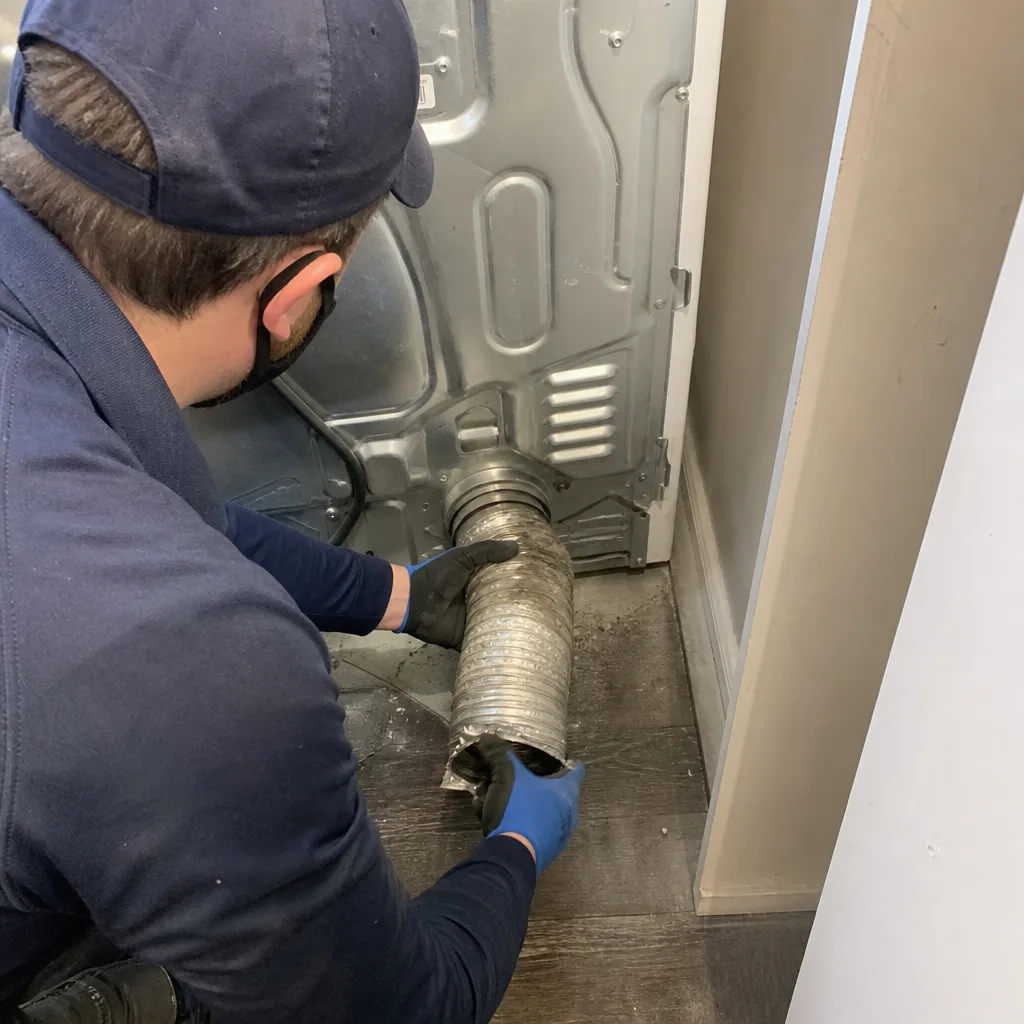
How is a dryer vent inspection different from dryer vent cleaning?
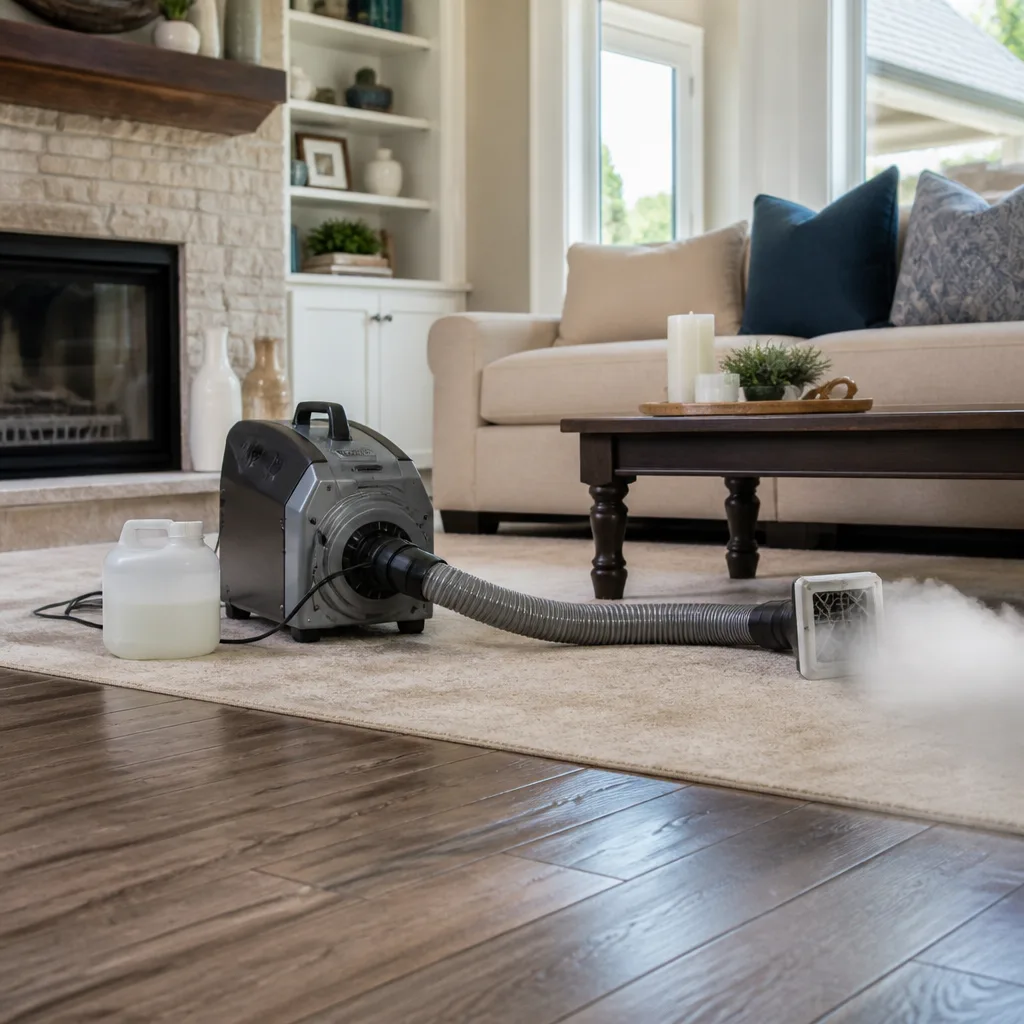
An inspection is a diagnostic pass – camera, airflow measurement, written report – that tells you what’s in the duct and whether it meets current code requirements. Cleaning is the physical removal of that material using negative-pressure extraction and rotary brush equipment. An inspection comes first; cleaning follows only if the inspection findings warrant it. You can have an inspection without scheduling cleaning, and the report you receive is yours either way. If you want to understand the full cleaning side of this, our Dryer Vent Cleaning in Chicago page covers the scope, equipment, and pricing for that service in detail.
How often should Chicago homeowners schedule a dryer vent inspection?
NFPA 211 and most dryer manufacturers recommend annual inspection for residential dryer vents. In Chicago, that interval is worth taking seriously: the city’s vintage housing stock tends to have longer duct runs with more elbows than modern construction, and the high proportion of conditioned closets and interior utility rooms means less natural airflow assistance. Homes with gas dryers, households that run more than five to six loads per week, or buildings where the duct exits through a rooftop rather than a sidewall should inspect annually without exception. For lower-use households in newer construction with a short, straight duct run, every 18 months is a defensible interval – but only if a baseline inspection has already confirmed the installation is code-compliant.
Can you inspect a dryer vent in a Chicago condo or apartment building?
Yes, and we do it regularly in Chicago’s high-rise and mid-rise buildings in the Gold Coast, South Loop, River North, and Streeterville. Multi-unit inspection has a few additional considerations: the duct path in a high-rise often travels through a shared mechanical chase or exits through a building-managed termination point, which may require building management coordination before the inspection date. When you call to schedule, tell us the building type and floor – that information lets us prepare the right equipment and confirm whether a building contact will be needed. Written pricing accounts for access conditions before the visit, not after.
What happens if the inspection finds a code violation or a disconnected section?
The technician documents the condition in the written inspection report with photographs and notes the specific code reference – typically Chicago Municipal Code Section 14-I or the applicable section of the International Mechanical Code as adopted by the city. A written repair or replacement quote is prepared on the spot if you want to address it the same day, or it’s included in the report if you’d prefer to get a second opinion first. CleanRun offers a free second opinion on any written estimate, so if you want to compare our repair quote against another contractor’s number, bring it – we’ll put our price next to theirs in writing. Nothing about the inspection report obligates you to schedule additional work with us.
What Sets CleanRun’s Inspection Apart
Most dryer vent companies do a visual check and hand you a verbal summary. CleanRun has operated under a different standard since 2013: every inspection produces a written scope and a camera-documented photo record, delivered to the customer as a standard job deliverable, not an upgrade.
Tomas Reyes designed the CleanRun inspection process around the idea that documentation is the service. A homeowner in Bucktown or Hyde Park who paid $500,000 or more for their home deserves to know exactly what’s in the duct that exhausts combustion moisture from their dryer – not a general impression, but a camera-verified record with measurements attached. The H.A.V.E.N. Standard that governs every CleanRun job formalizes that commitment: Haven Standard Clause 1 (written price before work starts), Clause 3 (verified crews – background-checked and uniformed technicians identified by name before arrival), and Clause 4 (documented photo record included on every visit).
The equipment used for camera inspection is the same professional-grade tooling used on full Vent Cleaning jobs – Rotobrush inspection systems that produce clear footage even in the tight bends common in Chicago’s older building stock. The airflow measurement uses a calibrated anemometer, not a hand-check near the termination cap. The report you receive has a timestamp, a technician name, and actual measurements – not checkboxes.
The 365-Day Done Right Promise backs every job in writing: if the work isn’t right, CleanRun makes it right. That applies to inspections too. If the report is incomplete or a finding is missed and documented by a subsequent camera pass, the work is corrected at no charge. That’s not a policy subject to manager approval – it’s a written commitment on every invoice.
Chicago homeowners who want to understand what else CleanRun handles can start at our home page, which covers the full service lineup across the metro.
Key Takeaways
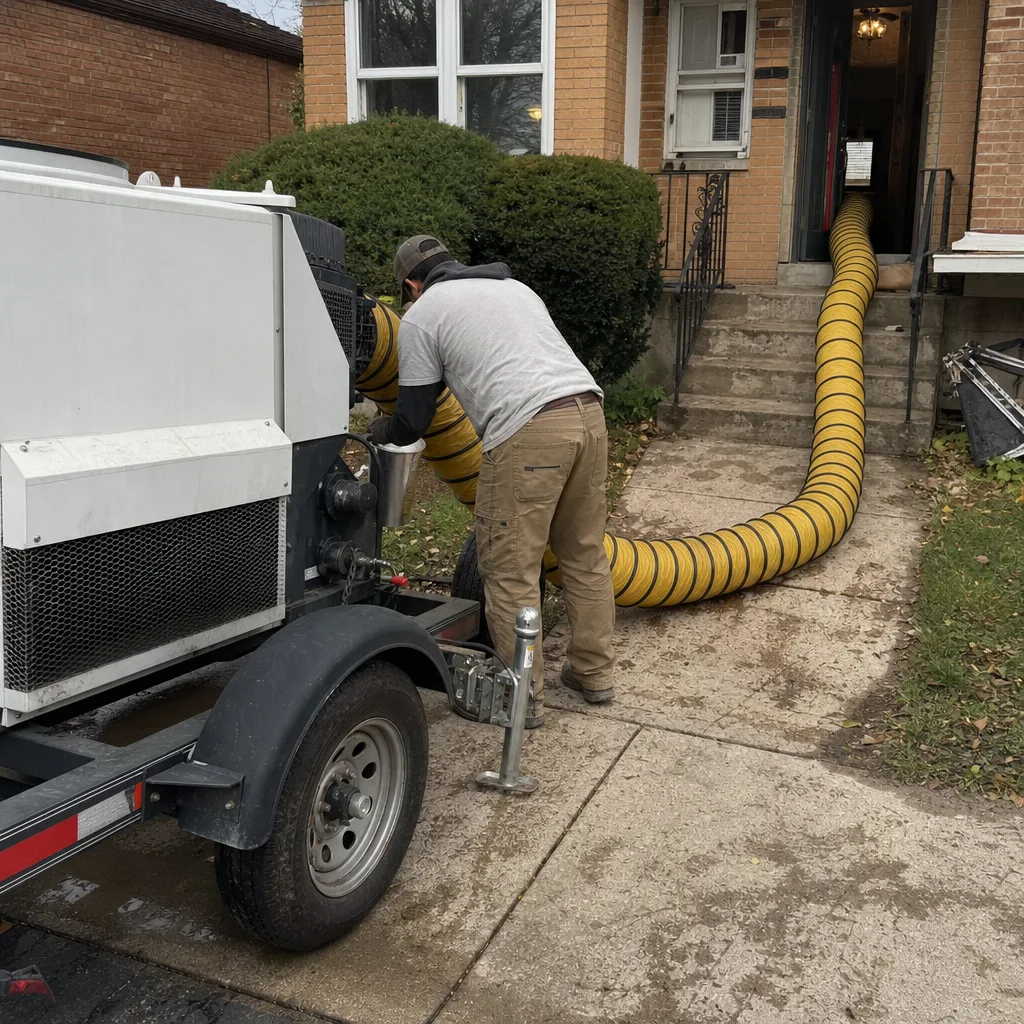
- Dryer vent inspection in Chicago runs $89-$149 for most residential installations, with a written price delivered before any work starts.
- Every inspection includes a camera pass of the full duct run, an airflow measurement at the exterior termination, and a written photo report – standard deliverables, not add-ons.
- Chicago’s older building stock – two-flats, greystones, courtyard buildings – produces more complex duct paths than modern construction, which is why camera documentation matters more here than in simpler installations.
- If the inspection finds conditions that need cleaning or repair, a written quote is prepared on the spot. You can schedule the work, compare the quote elsewhere, or do nothing – the inspection report is yours either way.
- CleanRun has operated under the H.A.V.E.N. Standard since 2013: verified crews, written prices, documented results, and a 365-Day Done Right Promise in writing on every job.
- Call (708) 683-3974 to get a written inspection price before scheduling – a live person answers every call.
To schedule a dryer vent inspection or get a written price for your Chicago home, call (708) 683-3974. A live person answers every call. The written price is ready before the truck rolls, and the photo report is in your hands before the technician leaves.
Written by Tomas Reyes, Owner at CleanRun Air Duct Cleaning Chicago, serving Chicago since 2013.