
Last updated September 23, 2026
Whole-system duct and dryer vent check with before-and-after photos - you see exactly what came out of your vents
That "$99 whole-house special" is a bait ad - the real number appears once they are in your hallway, or the "clean" is a shop-vac at the register. We photograph the inside of your ducts before and after instead.
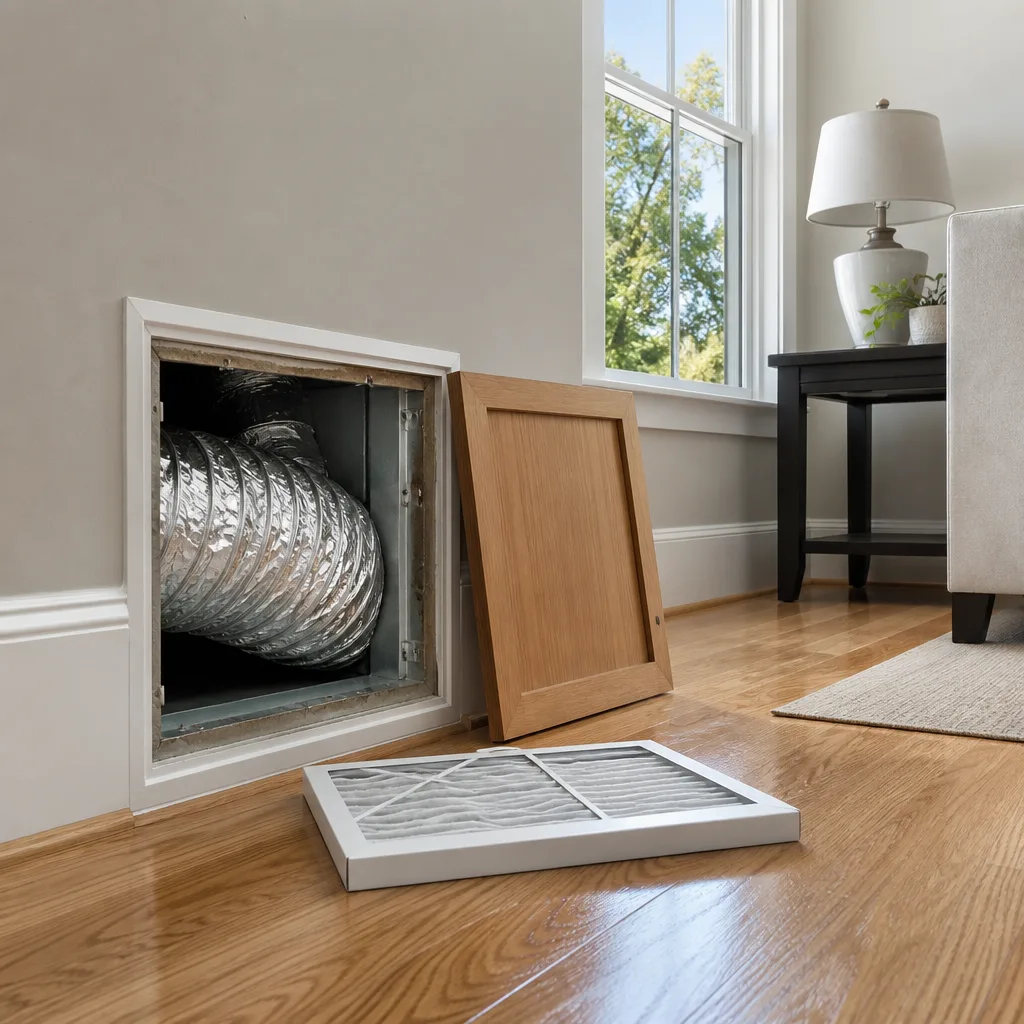
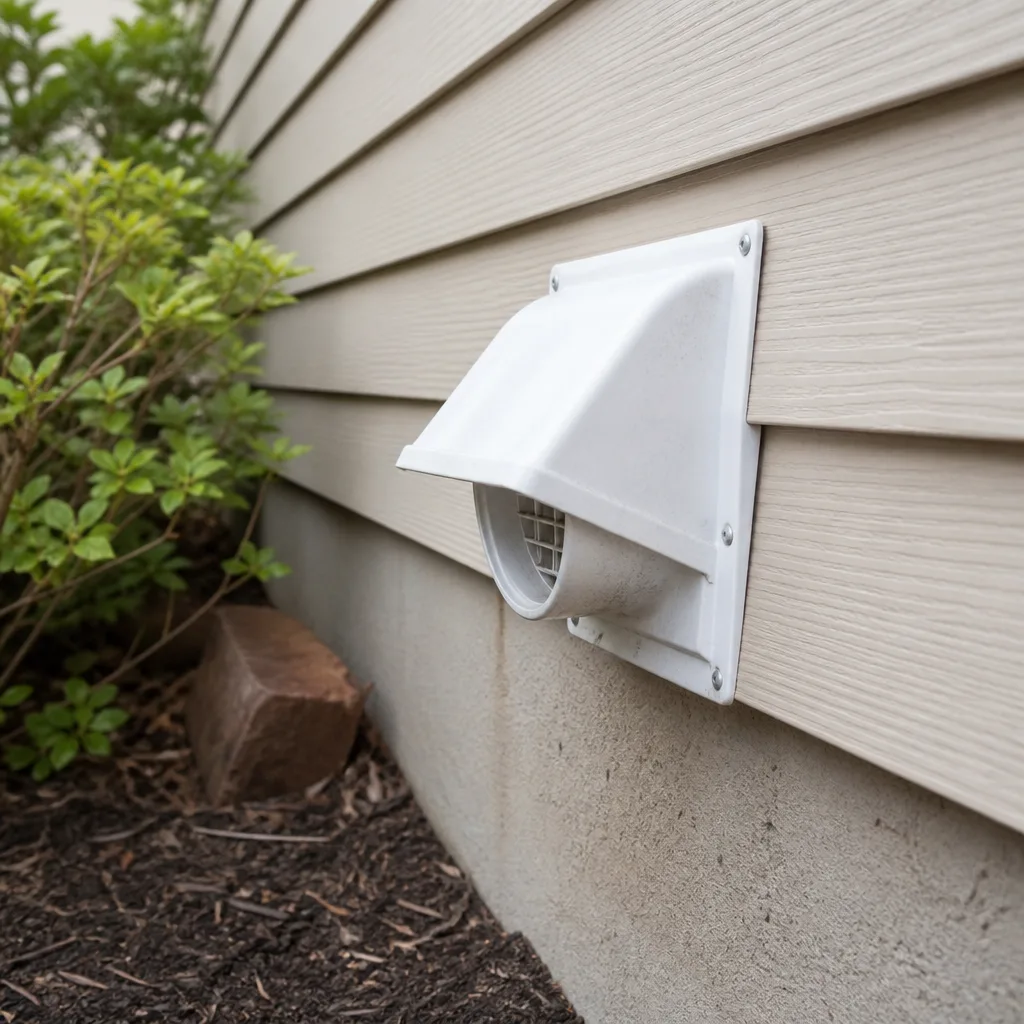
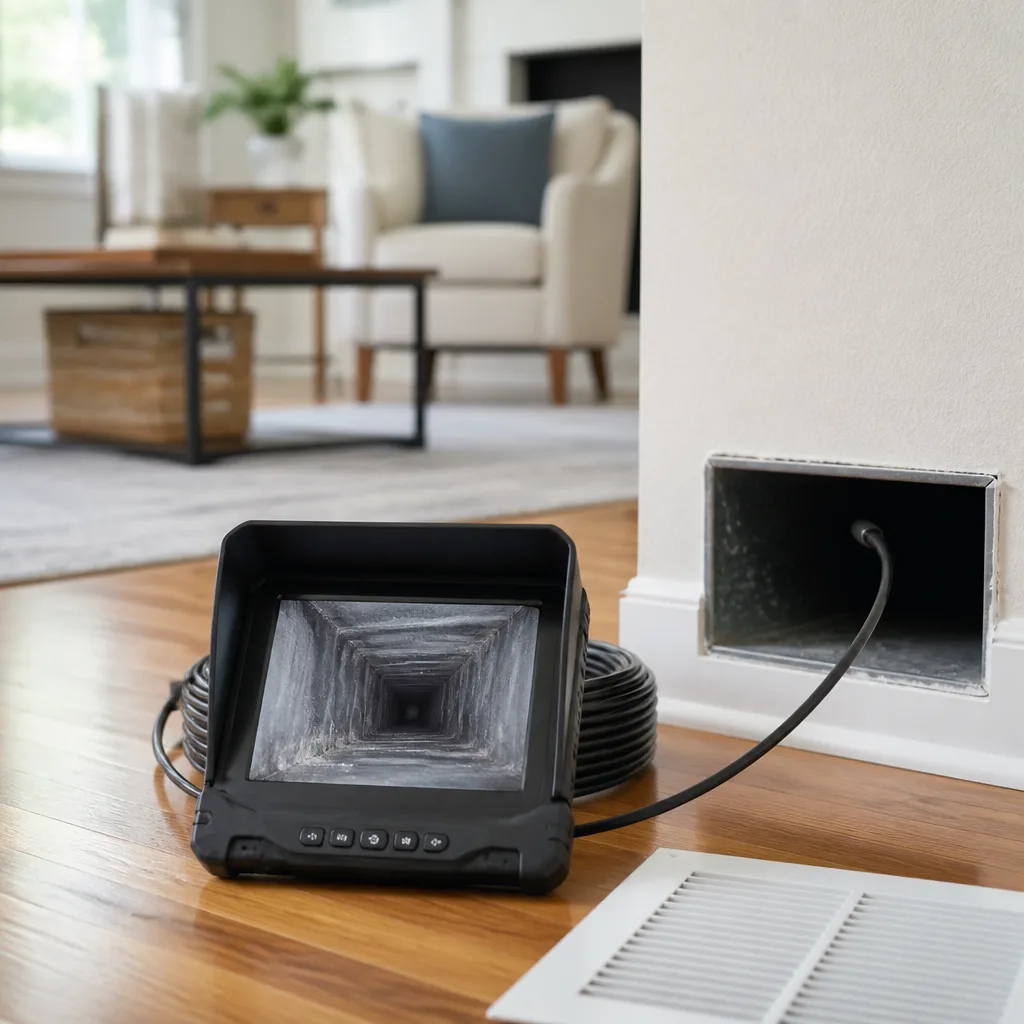
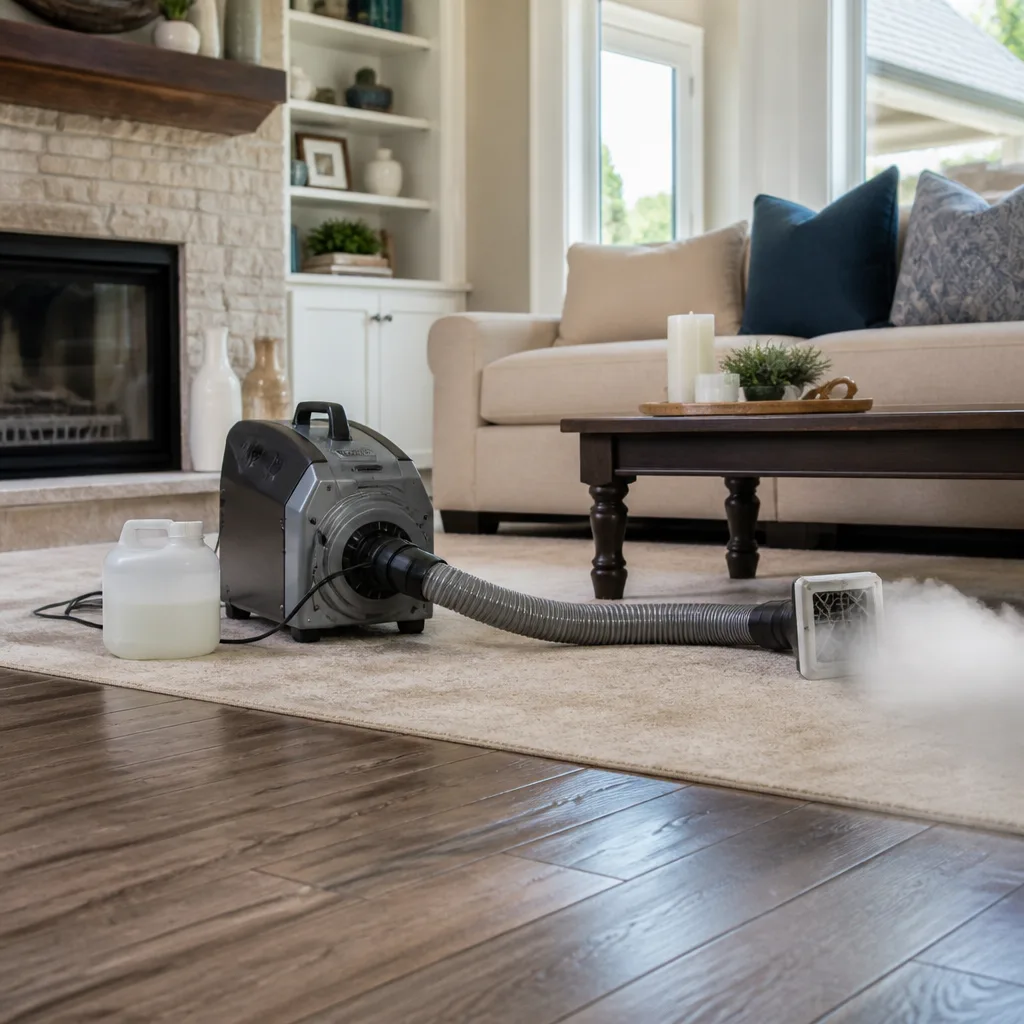
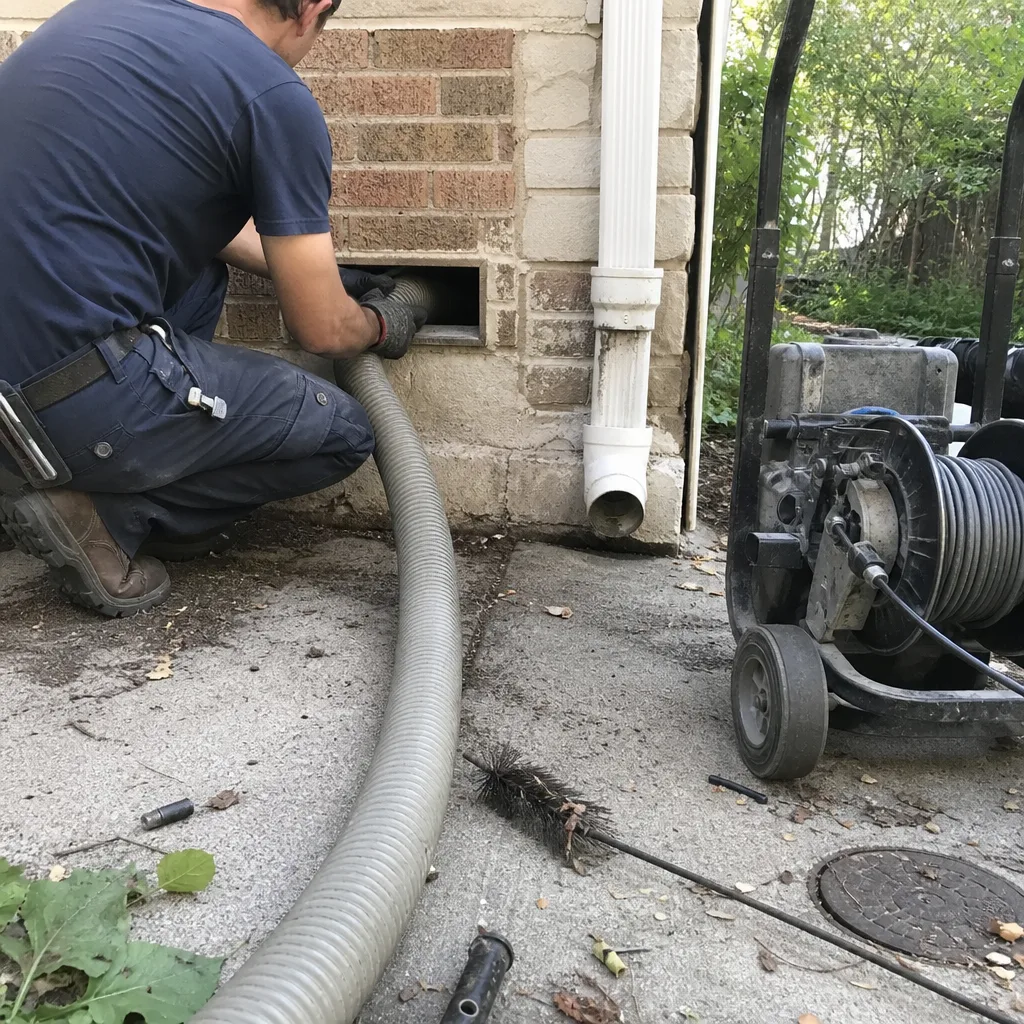 Before
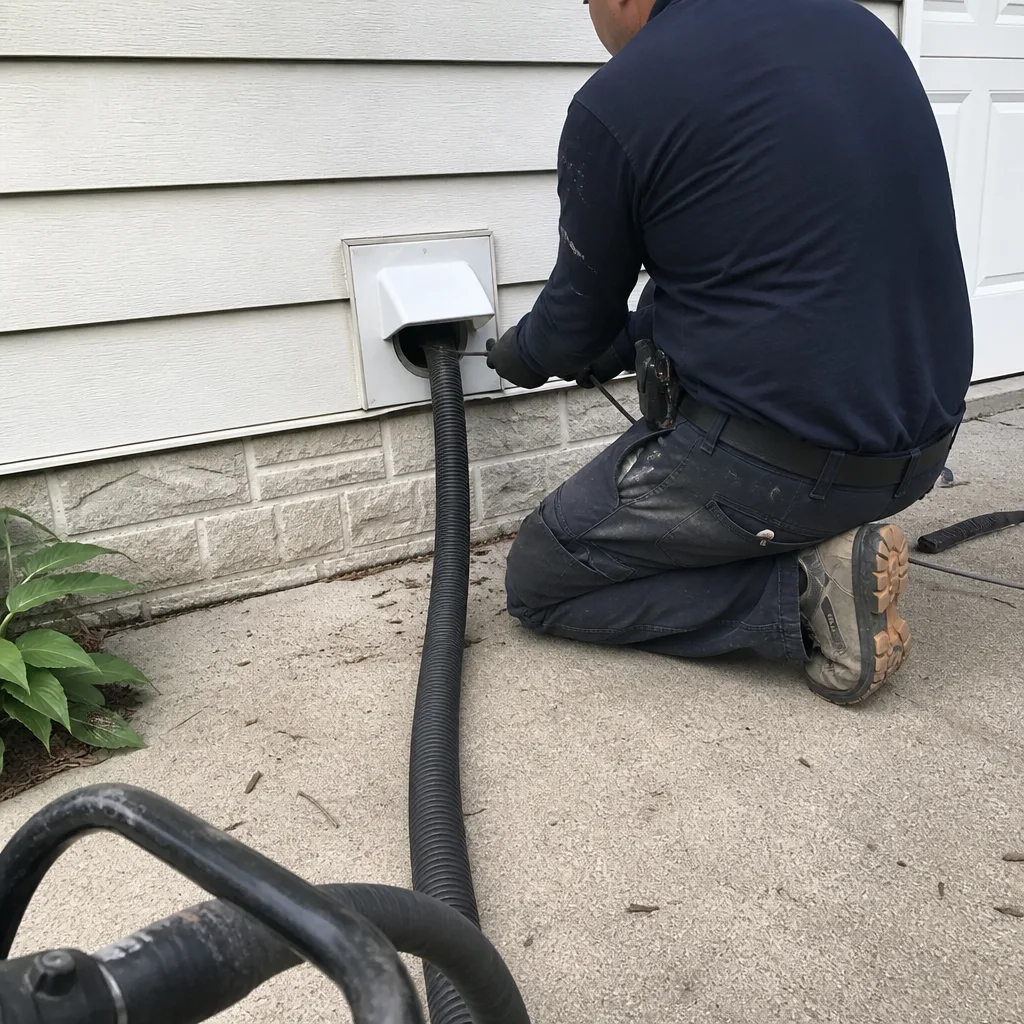 After
After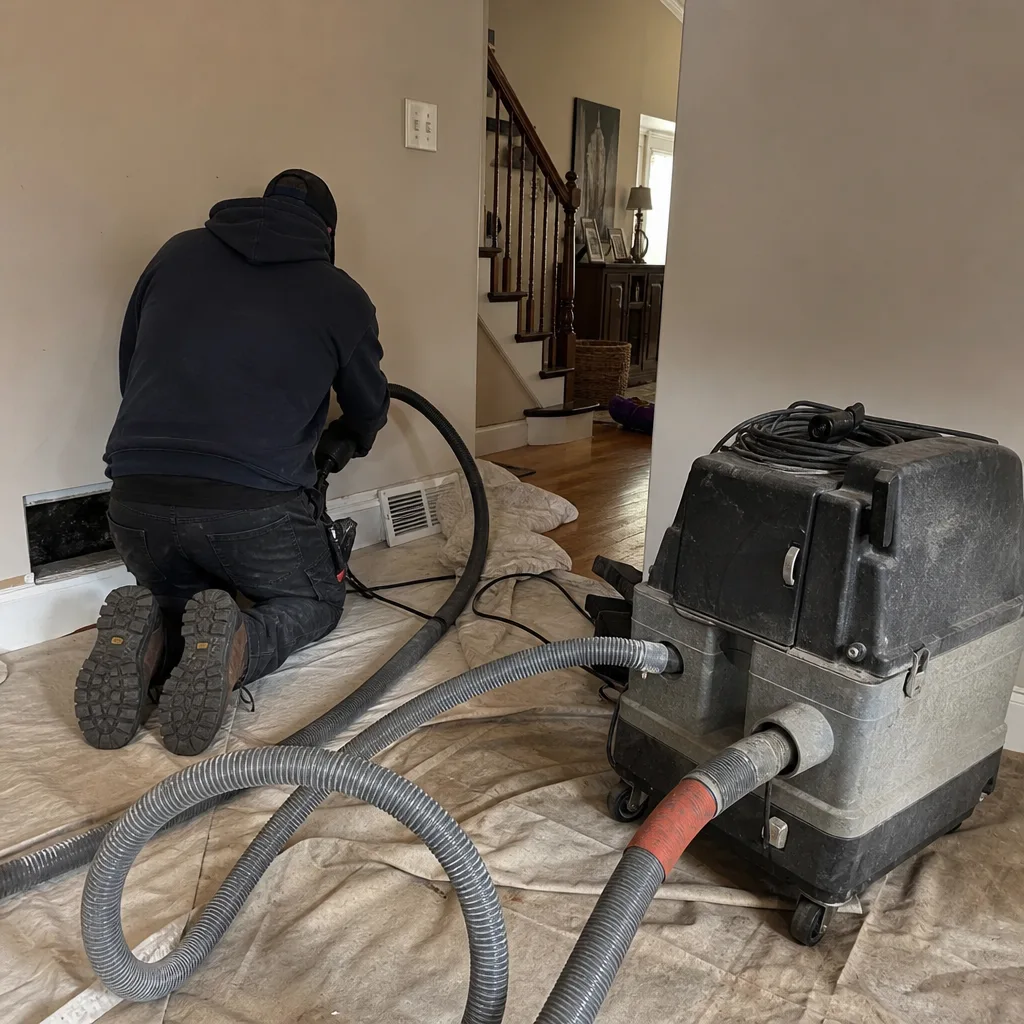 Before
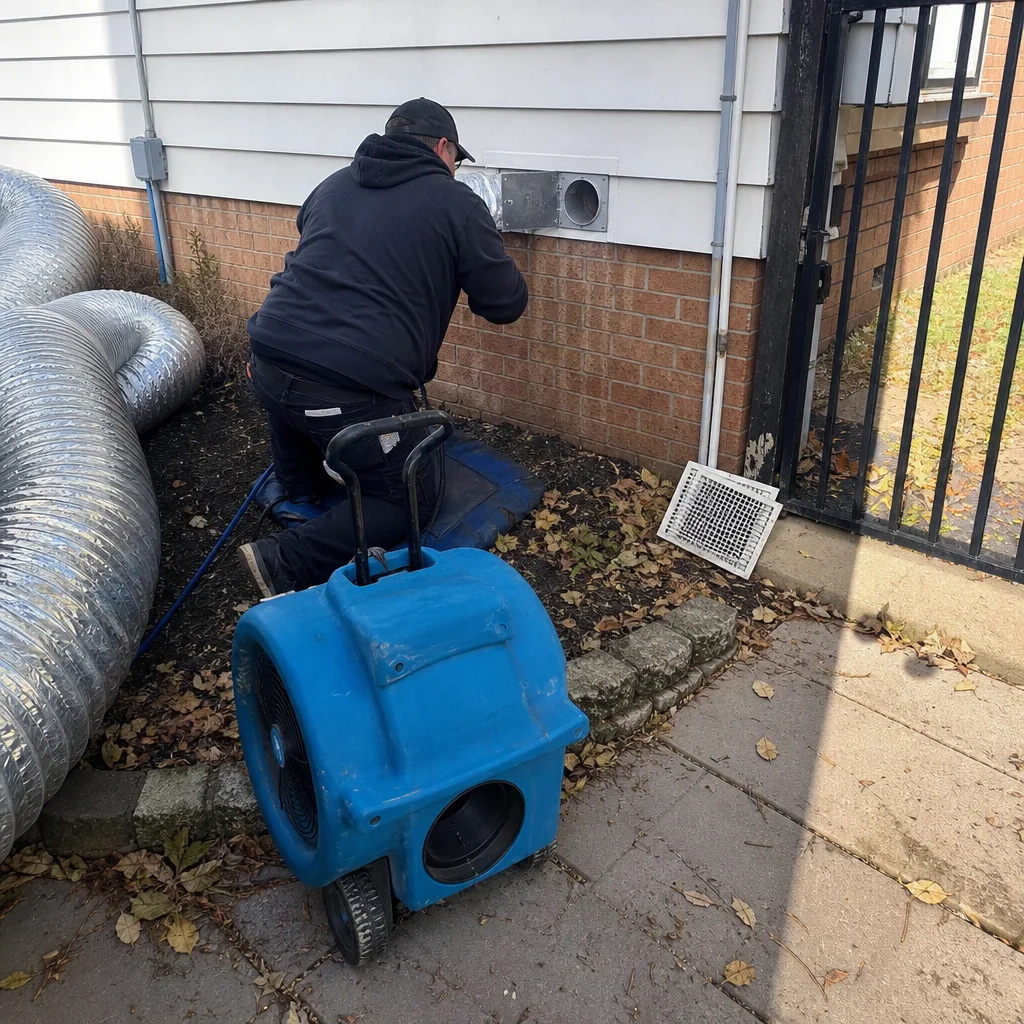 After
After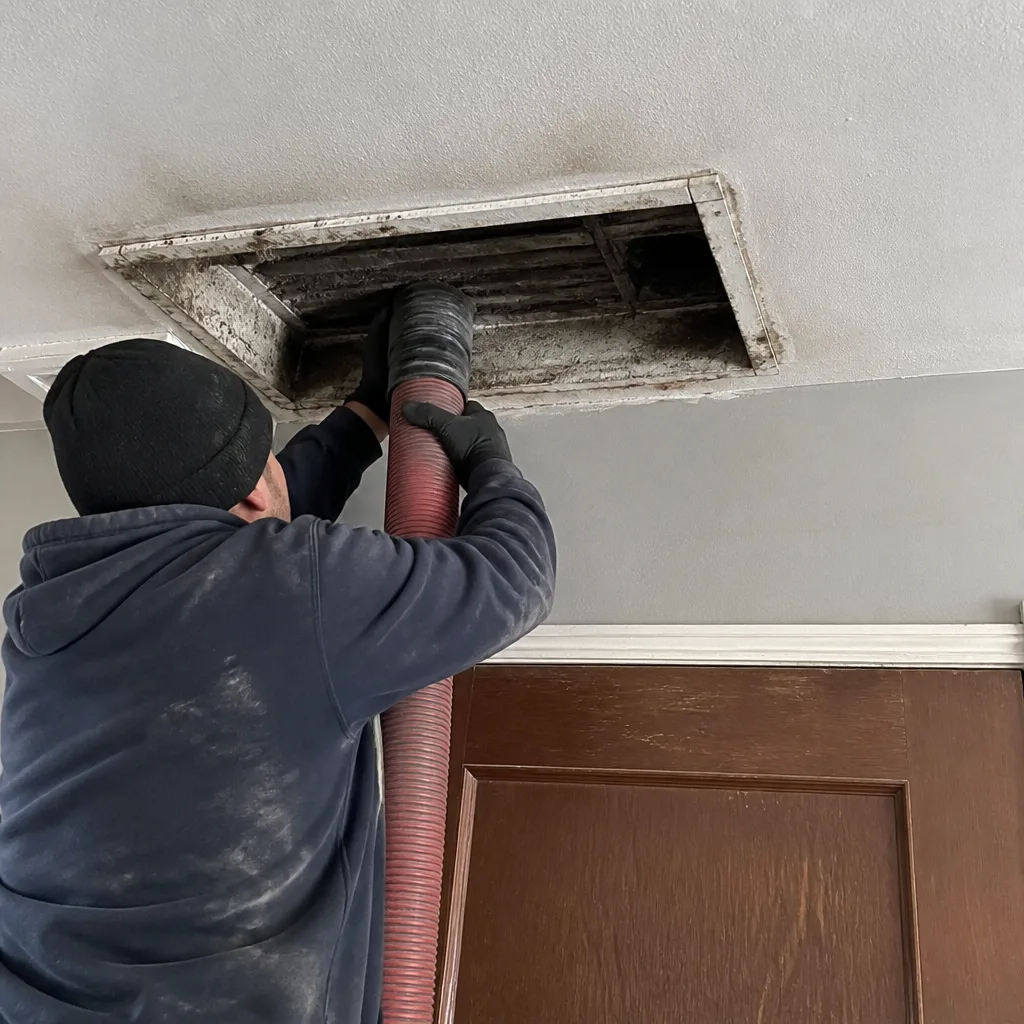 Before
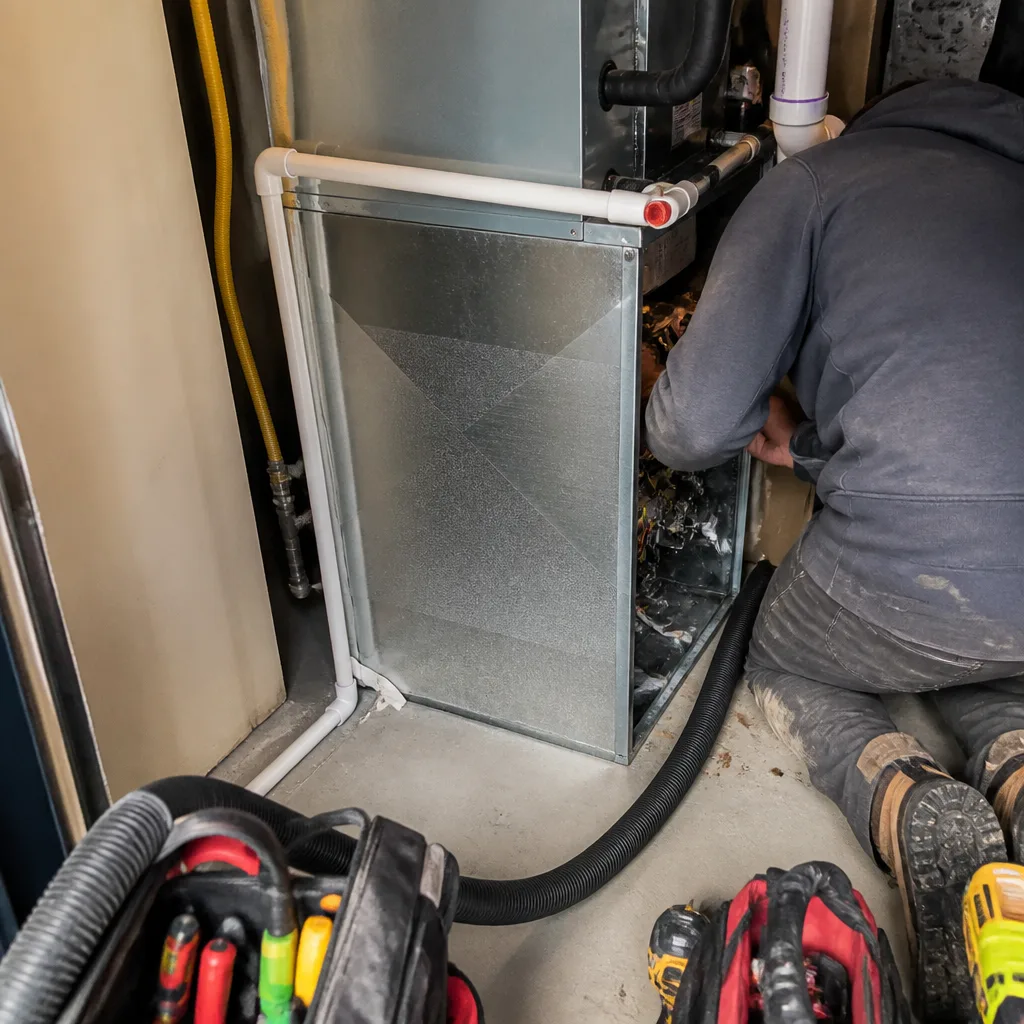 After
AfterAir Duct Cleaning Permits, Codes & Inspections in IL: What You Need to Know
When an air duct cleaning company tells you they’ll “seal a few gaps while they’re in there,” that work - unlike the cleaning itself - may require a permit under Chicago Municipal Code Title 14, and doing it without one can create title problems you won’t discover until you try to sell the house. Most homeowners in Chicago assume duct cleaning lives in the same regulatory bucket as carpet cleaning: show up, do the work, leave. It doesn’t. The line between cleaning and modification is sharper than the industry admits, and crossing it unknowingly has cost Illinois sellers thousands in last-minute repairs, delayed closings, and denied insurance claims. In The Complete Guide to Air Duct Cleaning in Chicago, we mapped exactly where Chicago’s building code draws that line; here, we’ll expand on what Cook County suburbs add to the picture, and how to verify that any ductwork on your property won’t surface as a disclosure problem later.
Quick Answer
Air Duct Cleaning services - the routine removal of debris from existing ductwork using negative-pressure extraction - require no permit under Illinois or Chicago code. However, duct repair, sealing, replacement, or the installation of inline equipment such as UV lights or energy-recovery ventilators triggers Chicago Building Code 14-M mechanical permit requirements, and unpermitted work must be disclosed under the Illinois Residential Real Property Disclosure Act.
Table of Contents
- Cleaning vs. Modification: Where the Code Draws the Line
- What Triggers a City of Chicago Mechanical Permit
- Cook County and Suburban Municipality Variations
- The Insurance Dimension: Unpermitted Work and Claim Denial
- Illinois Home Sale Disclosure Requirements
- How to Verify Permits and Inspector Sign-Off
- What CleanRun Documents on Every Job
- Common Mistakes to Avoid
- When to Call a Professional
- Frequently Asked Questions
BeforeAfterCleaning vs. Modification: Where the Code Draws the Line
Chicago Municipal Code Title 14, the Chicago Building Code, governs all mechanical systems within city limits. The code distinguishes between maintenance activities and mechanical alterations. This distinction matters because it determines whether your contractor needs a permit, whether the work gets inspected, and whether the job creates a record that follows the property.
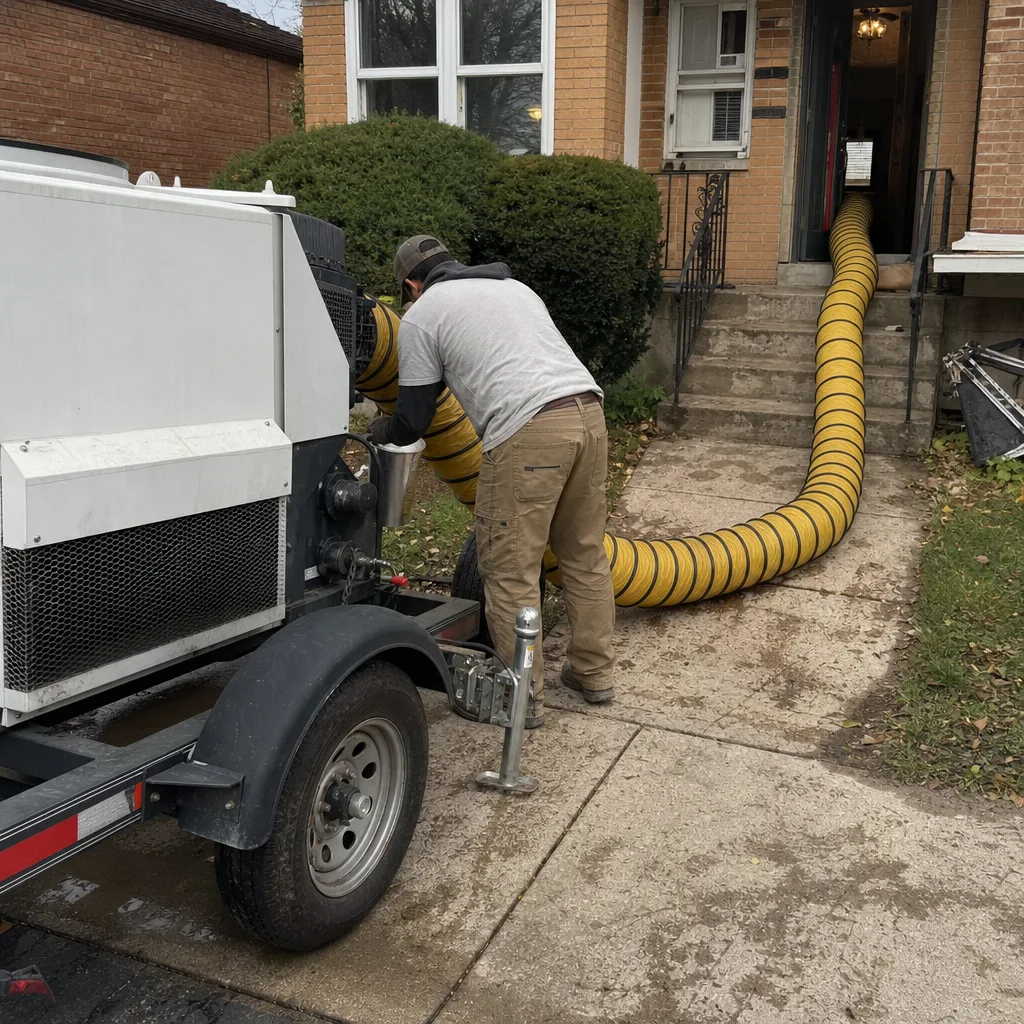
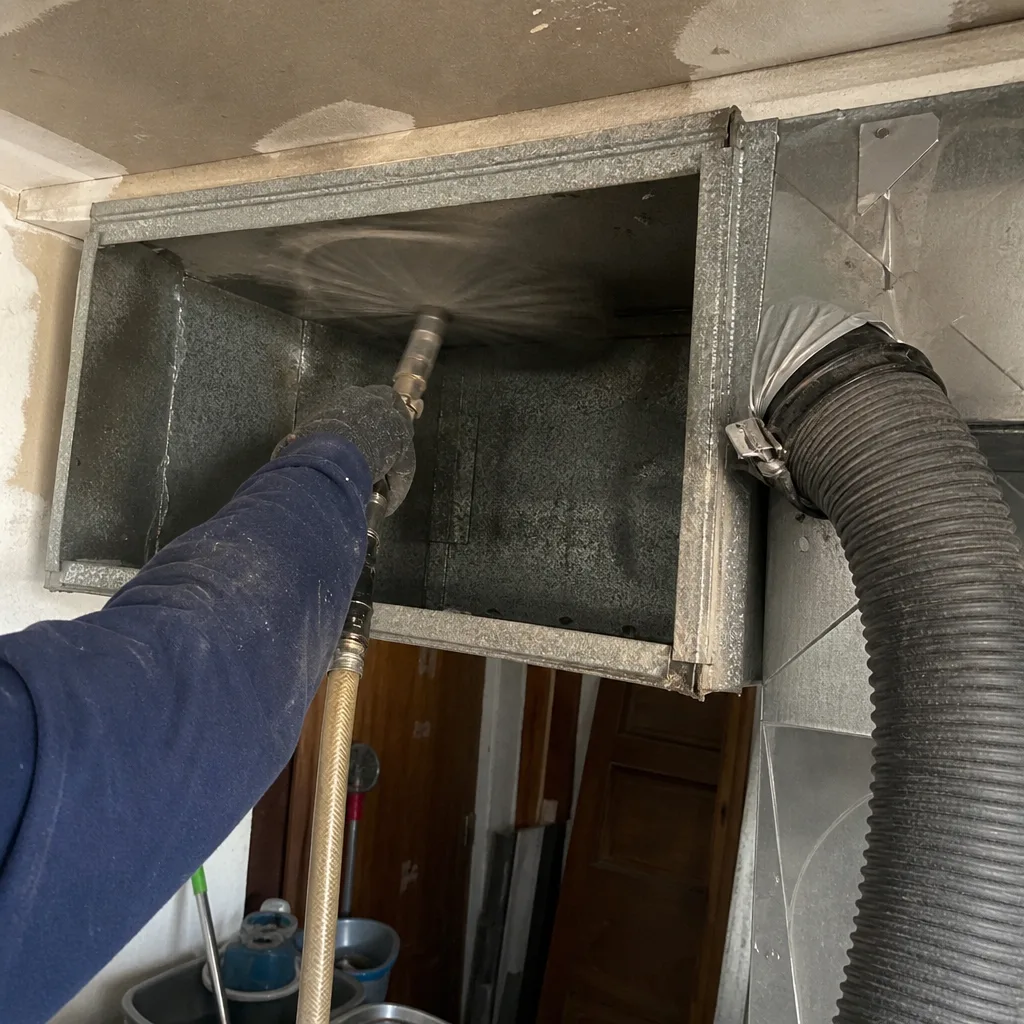
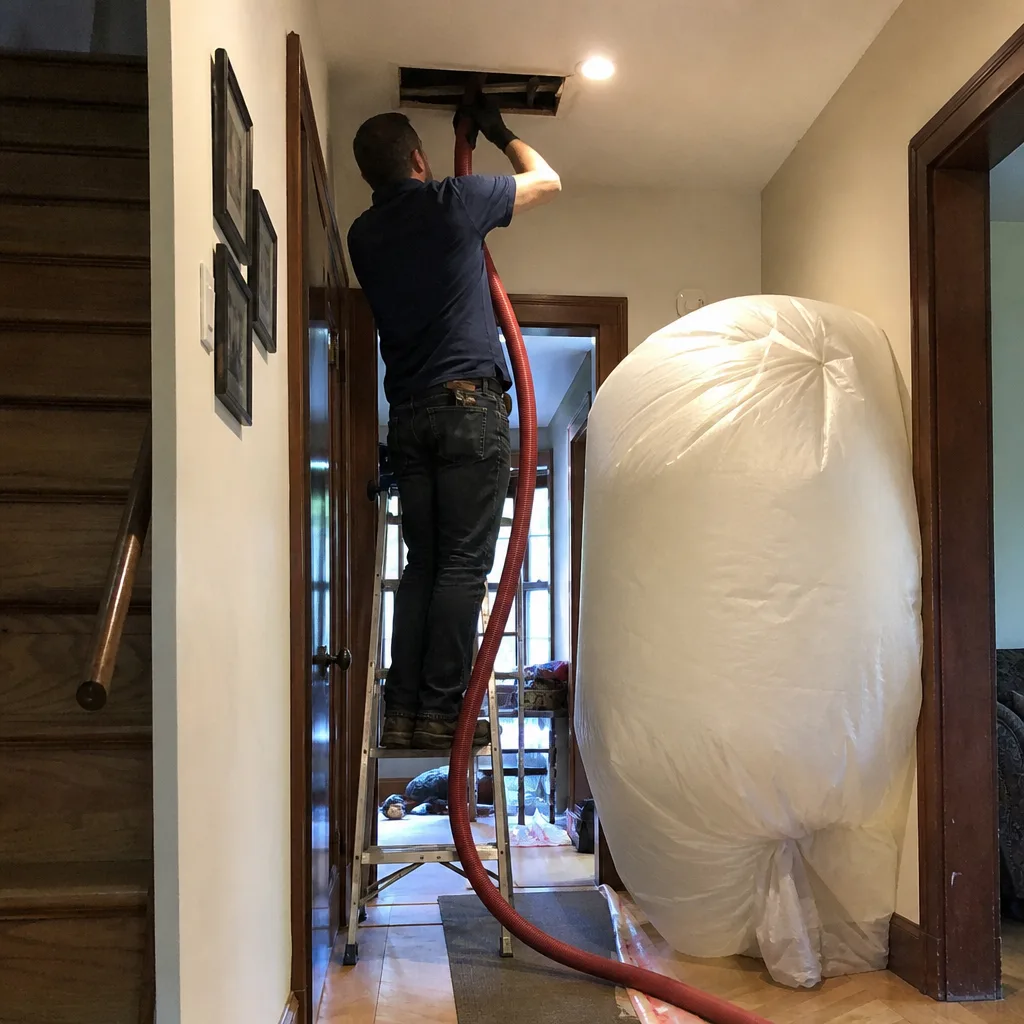
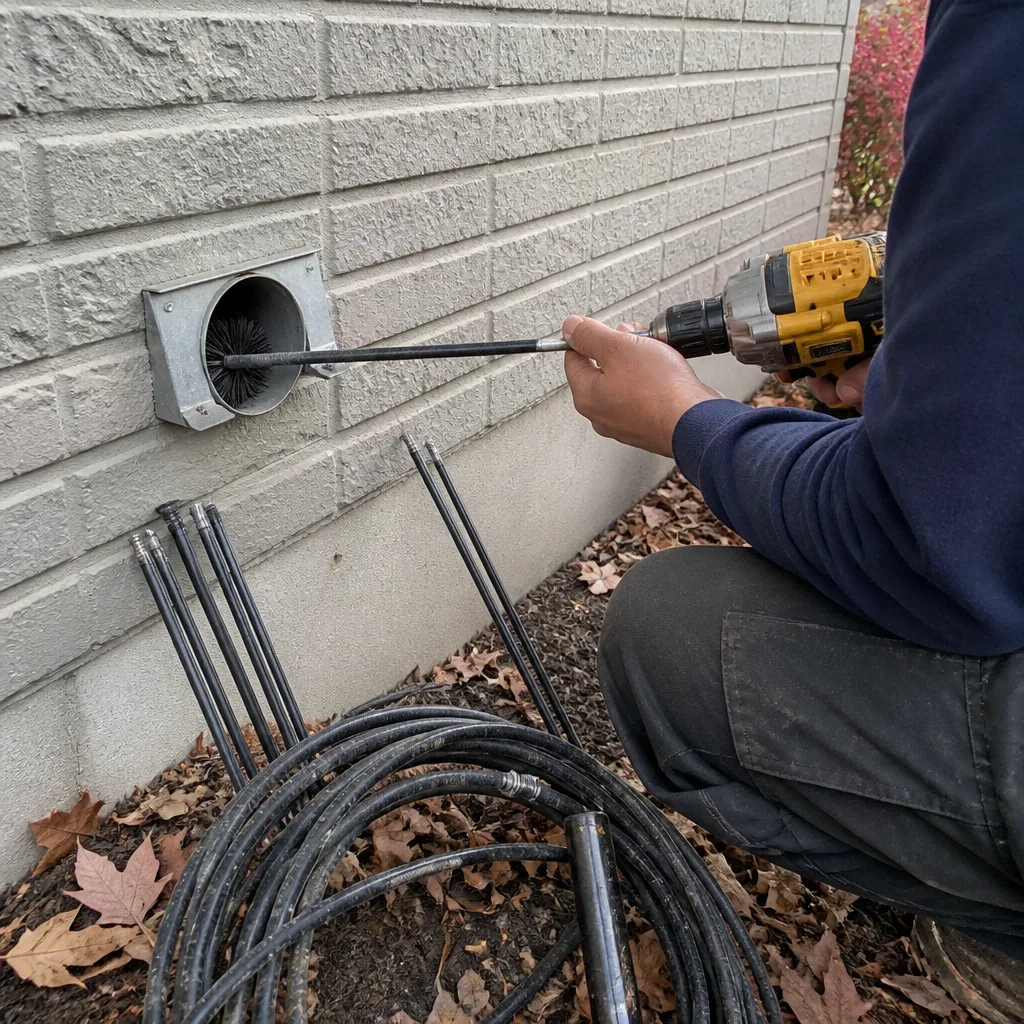
Routine cleaning falls under maintenance. When a technician connects a negative-pressure extraction system - a vacuum unit that pulls debris through the duct run while agitation tools loosen buildup - to existing registers and cleans the interior surfaces, this is classified as maintenance. No permit. No inspection. No record with the Department of Buildings. The work is reversible, involves no structural change, and does not affect the mechanical system’s design capacity.
Modification crosses the line. The code triggers permit requirements when work involves:
- Replacement of duct sections, including transitions or elbows
- Installation of access panels that penetrate fire-rated assemblies
- Sealing of duct joints with materials that alter airflow characteristics or static pressure
- Addition of inline equipment: UV-C sanitizing lights, electronic air cleaners, energy-recovery ventilators (ERVs), or humidifiers
- Relocation of registers or changes to duct run routing
We’ve seen this confusion play out in Lincoln Park vintage walk-ups and South Loop new construction alike. A homeowner schedules what they believe is a standard cleaning. The crew discovers disconnected flex duct in the crawl space, offers to “fix it while we’re here,” and completes the repair without pulling a permit. The fix solves the immediate airflow problem. Five years later, the owner lists the property. The buyer’s inspector notes the new duct transition, asks for permit documentation, and the seller faces a choice: track down the original contractor, apply for a retroactive permit with associated fees and possible rework, or disclose unpermitted work and accept a price reduction.
The H.A.V.E.N. Standard exists partly to prevent this scenario. Haven Standard Clause 1 - Written Price Before Any Work Starts - requires that every scope item be named and priced in writing before work begins. If duct repair appears on that written scope, the customer sees it, can ask whether a permit is required, and can verify before the crew starts.
What Triggers a City of Chicago Mechanical Permit
Chicago Building Code 14-M, the mechanical code, adopted the International Mechanical Code with Chicago amendments. The permit triggers are specific, and understanding them helps homeowners evaluate whether a contractor’s proposal stays on the right side of the law.
1. Duct Section Replacement
Replacing any section of rigid duct, flex duct, or duct board constitutes mechanical work under 14-M. This includes:
- Removing a corroded galvanized section in a Humboldt Park basement and installing new sheet metal
- Replacing crushed flex duct in a West Ridge attic crawl
- Installing a new plenum - the central distribution box connected to your air handler - after the original deteriorates
Each requires a mechanical permit, plan review for buildings under Department of Buildings jurisdiction, and rough and final inspections.
2. Access Panel Installation in Fire-Rated Assemblies
Chicago’s older housing stock, particularly in neighborhoods like Hyde Park and Rogers Park, contains fire-rated drywall between units and between conditioned spaces and garages. Cutting an access panel into these assemblies to reach ductwork requires a permit. The fire-resistance rating must be restored with listed materials and methods, and the repair is subject to inspection.
3. Inline Equipment Installation
UV-C lights, bipolar ionization devices, and ERVs have grown popular in Chicago since 2020. Installing any of these within the duct run, rather than as standalone units, requires mechanical permitting. The permit ensures:
- Electrical connections meet Chicago Electrical Code requirements
- Airflow rates remain within design parameters after equipment insertion
- Condensate drainage, where applicable, is properly routed
Equipment from manufacturers like Honeywell and Aprilaire - brands CleanRun uses - carries UL listings and installation specifications that inspectors verify against the submitted plans.
4. Duct Sealing Beyond Maintenance
Here’s where the line gets fuzzy in practice. Light sealing of accessible joints with mastic during a cleaning visit - the “while we’re here” offer - occupies a gray area. The Chicago Department of Buildings has not issued definitive guidance on incidental sealing during maintenance. However, systematic duct sealing using aerosolized sealant (a process that pressurizes the entire system and seals leaks from the inside) or extensive manual sealing of multiple joints clearly constitutes mechanical work. When in doubt, a permit application costs less than a retroactive resolution.
Permit Costs and Timeline in Chicago
| Permit Type | Estimated Fee Range | Typical Timeline |
|---|---|---|
| Mechanical permit, minor repair | $150-$300 | 3-5 business days for issuance; inspection scheduling additional |
| Mechanical permit, duct replacement | $300-$600 | 5-10 business days for plan review; inspections as scheduled |
| Combination mechanical/electrical, inline UV or ERV | $400-$800 | 10-15 business days; coordinated inspections required |
| Retroactive permit (after work completed) | Base fee + 150% penalty | Variable; may require exposed work for inspector verification |
These figures are based on Chicago Department of Buildings fee schedules effective 2024. Always verify current rates at the city’s official portal before budgeting.
Cook County and Suburban Municipality Variations
A contractor pulling a Chicago permit does not cover work in Oak Park, Evanston, Naperville, or any other municipality. Each operates its own building department with independent codes, fee structures, and inspection protocols. This matters because many duct cleaning companies based in Chicago serve the broader metro area without adjusting their permit compliance accordingly.
Oak Park enforces the International Mechanical Code without Chicago’s amendments but adds local requirements for energy-recovery ventilation in new construction and substantial renovations. A duct cleaning contractor who installs an ERV inline with existing ductwork needs an Oak Park mechanical permit, even if they’ve performed identical work in Chicago with proper permitting.
Evanston requires registration of all mechanical contractors with the city’s Building and Inspection Services division. An unregistered contractor cannot pull permits, and homeowners who hire unregistered contractors may face delays if the city requires contractor verification before inspection scheduling.
Naperville operates under DuPage County jurisdiction with its own amendments. The city requires permits for duct replacement in all occupancies and mandates inspection of fire damper installations - a detail relevant when ductwork passes through rated assemblies in Naperville’s multi-family developments near the Metra corridor.
Skokie, Wilmette, and Glenview each participate in the North Shore Consortium for code administration, which coordinates some inspection scheduling but maintains separate permit databases. A property owner in one of these villages cannot assume that work permitted in neighboring Chicago or Evanston satisfies local requirements.
For homeowners in Chicago’s collar counties - Lake, McHenry, Kane, Will, and Kendall - the same principle applies. The Illinois State Plumbing and Mechanical Officials Association provides model codes, but adoption is municipal, not uniform. Always verify with your local building department before work begins.
The Insurance Dimension: Unpermitted Work and Claim Denial
Homeowners insurance policies in Illinois contain standard provisions that affect coverage for losses involving unpermitted mechanical work. The language varies by carrier, but the core principle is consistent: if unpermitted work is found to be the proximate cause of a covered loss, the insurer may deny the claim or limit recovery.
Consider a scenario we’ve encountered in Chicago’s bungalow belt. A homeowner has duct sealing performed without permit during a cleaning visit. The sealing material, improperly applied near a heat exchanger, degrades under temperature cycling. Two years later, a fire originates at that location. The fire department investigation notes the unpermitted modification. The insurer’s adjuster requests permit documentation. None exists. The claim enters dispute, and the homeowner faces potential denial based on policy exclusions for losses resulting from work performed without required permits.
Moisture claims follow a similar pattern. Unpermitted installation of an ERV without proper condensate drainage in a Hyde Park greystone leads to water intrusion and mold. The insurer investigates, discovers the unpermitted mechanical work, and invokes the policy’s workmanship exclusion.
This is not theoretical. Illinois courts have upheld claim denials where unpermitted work contributed to the loss, most recently in appellate decisions applying the “increase of hazard” doctrine. The doctrine holds that a homeowner who increases the risk of loss through unpermitted modifications may forfeit coverage for the resulting damage.
Documented work protects against this exposure. When CleanRun performs duct repair or sealing under permit, the permit number, inspection sign-offs, and photo record become part of the property’s documented history. If a future claim arises, the homeowner has evidence that the work was performed to code and inspected - not a guarantee of coverage, but a material reduction in dispute risk.
Illinois Home Sale Disclosure Requirements
The Illinois Residential Real Property Disclosure Act (765 ILCS 77/) requires sellers to disclose known defects and material facts affecting the property’s value. Since 2021 amendments, this explicitly includes unpermitted work on mechanical systems. The standard disclosure form asks: “Are you aware of any work performed on the property that required a building permit but was performed without one?”
A “yes” answer triggers buyer scrutiny. A “no” answer, if later proven inaccurate, exposes the seller to fraud claims and rescission rights. The statute of limitations for disclosure violations runs five years from closing, meaning a seller who knowingly conceals unpermitted ductwork faces liability well into future ownership of their next home.
Buyers’ inspectors in the Chicago market have grown more systematic about this. In competitive neighborhoods like Wicker Park, Logan Square, and Andersonville, where multiple offers are common, buyers use inspection findings to renegotiate. Unpermitted duct modifications surface in several ways:
- Visual identification of new duct transitions in unfinished basements where no permit is on file
- Infrared imaging showing temperature anomalies at sealed joints, prompting questions about when and how sealing occurred
- Comparison of current duct configuration against original building plans on file with the Department of Buildings
The cost of remediation typically falls on the seller in these scenarios. Retroactive permitting requires opening walls or ceilings for inspector access, paying penalty fees, and potentially redoing work that doesn’t meet current code. In a 2023 Logan Square sale we observed, unpermitted duct sealing discovered during inspection cost the seller $4,200 in emergency permit application, drywall repair, and repainting - all to avoid a disclosure that would have tanked the deal.
CleanRun’s practice of documenting every job with before-and-after photography, and of separating cleaning from modification in written scopes, gives homeowners a defensible record. If we clean your ducts, the photo record shows what was done. If we perform work requiring permit, the permit number appears on your invoice and in your job file.
How to Verify Permits and Inspector Sign-Off
Homeowners can verify permit status independently. The process varies by jurisdiction but follows a common pattern.
In Chicago
- Visit the Chicago Department of Buildings online permit portal
- Search by address or permit application number
- Review the permit status: issued, under review, inspections scheduled, final sign-off
- Request a copy of the inspection report for your records
For work performed before digital records (approximately pre-2012), contact the Department of Buildings records division at City Hall for microfilm or paper archive retrieval. Fees apply, and retrieval can take 2-4 weeks.
In Suburban Cook County
Each municipality maintains its own system. Oak Park, Evanston, and Skokie offer online permit lookup. Smaller municipalities may require phone or in-person inquiry. The Cook County Building Commissioner’s office does not maintain a unified database; you must contact the local jurisdiction where the property sits.
What to Request from Your Contractor
Before work begins, ask for:
- The permit application number, if work requires permitting
- Written confirmation that all work falls within maintenance (no permit) or modification (permit required)
- Inspection scheduling documentation for permitted work
- Final inspection sign-off before final payment
Under Haven Standard Clause 1, CleanRun provides this documentation as a standard deliverable. If we perform permitted work, the permit application number appears on your written scope, and we schedule inspections without homeowner involvement. The final sign-off is delivered with your job completion packet.
What CleanRun Documents on Every Job
Documentation is not an afterthought in our process. It is the process. Every job, whether cleaning or repair, generates a complete record that homeowners retain for their property files.
The Written Scope (Haven Standard Clause 1). Before any work begins, you receive a written scope naming each task, the equipment to be used, and the flat price. For cleaning, this specifies the number of duct runs, the register count, and whether the plenum and main trunk are included. For repair or modification, this notes whether permitting is required and, if so, the permit application number.
The Documented Photo Record. Inside every duct run, before and after. The camera shows the 3-inch debris build-up at the first elbow, the corrosion pattern on the galvanized trunk, or the gap between flex duct and collar that was causing airflow loss. These images are delivered as part of the standard job record, not held hostage for a review or additional fee. We’ve maintained this practice since our first job in 2013.
The Equipment Roster. The written scope names the specific equipment for your job: Rotobrush brush-and-vac systems for agitation cleaning, Nikro negative-pressure extractors, Abatement Technologies HEPA filtration, Honeywell or Aprilaire inline air quality equipment where specified. You can verify manufacturer specifications independently before agreeing to the scope.
The 365-Day Done Right Promise. Backed in writing on every job. If the work is not right, we make it right. This is not a policy subject to manager approval. It is a written guarantee delivered with your completion documentation.
Permit Documentation. For permitted work, your completion packet includes the permit application number, inspection dates, and final sign-off. For maintenance cleaning, a clear statement that no permit was required, supported by the photo record showing no modification occurred.
This documentation serves your interests at sale, at claim time, and during future service. A homeowner in Portage Park who had us clean in 2019 used her photo record to verify duct condition when selling in 2024, avoiding a buyer’s demand for “preventive” cleaning that had already been performed.
Common Mistakes to Avoid
- Assuming “cleaning” covers everything the technician proposes. When a crew suggests sealing, repair, or equipment installation during a cleaning visit, stop and ask whether the additional work triggers permit requirements. Get the answer in writing before proceeding.
- Accepting verbal assurance that “no permit is needed.” Chicago contractors have been cited for performing mechanical work without permits. Their assurance does not protect your property record. Verify independently with the Department of Buildings.
- Hiring a Chicago-permitted contractor for suburban work without checking local requirements. A valid Chicago mechanical license does not authorize permit pulling in Evanston, Oak Park, or Naperville. Confirm the contractor is registered in your specific municipality.
- Paying in full before final inspection sign-off. For permitted work, retain final payment until the inspection is passed and documentation is delivered. Unscrupulous contractors have abandoned jobs after payment, leaving homeowners with uninspected work and no leverage.
- Failing to disclose unpermitted work from prior owners. If you discover unpermitted duct modification after purchase, you become the disclosing party at your next sale. Address it proactively rather than hoping it goes unnoticed.
- Confusing equipment brand reputation with installation compliance. A Honeywell or Aprilaire unit installed without permit is still unpermitted work. The brand name does not substitute for code compliance.
- Neglecting to retain documentation for the statutory period. Illinois disclosure liability runs five years. Keep your permits, inspection sign-offs, and photo records for at least that long, preferably for the duration of ownership.
When to Call a Professional
Call a licensed mechanical contractor when ductwork requires anything beyond debris removal from existing runs. If you’re experiencing uneven heating in a Lincoln Park two-flat, hearing whistling from registers in a South Shore bungalow, or planning to add an ERV to your Logan Square greystone, the work likely crosses into permit territory. CleanRun Air Duct Cleaning in Chicago offers free estimates - we’ll assess your system, tell you explicitly whether your scope requires permitting, and put our written price next to any competitor’s quote under our Free Second Opinion policy. Call (708) 683-3974.
Frequently Asked Questions
No. Routine cleaning - the removal of debris from existing ductwork using negative-pressure extraction and mechanical agitation - is classified as maintenance under Chicago Building Code 14-M and requires no permit, inspection, or registration. Call (708) 683-3974 for a written estimate on maintenance cleaning.
Replacement of duct sections, installation of access panels in fire-rated assemblies, systematic duct sealing, and installation of inline equipment such as UV lights or ERVs all trigger Chicago mechanical permit requirements under Building Code 14-M. The permit ensures plan review, inspection, and a record that protects your property title.
A Chicago mechanical license does not automatically authorize permit pulling in Evanston, Oak Park, Naperville, or other suburban municipalities. Each jurisdiction maintains separate contractor registration requirements. Always verify that your contractor is registered with the specific municipality where the work will occur.
Check the Chicago Department of Buildings permit portal by address for historical permits. For pre-digital records, request archive retrieval. During home purchase, hire an inspector who verifies mechanical work against permit records. In Chicago’s vintage housing stock, undocumented modifications are more common than in new construction.
You must disclose unpermitted mechanical work on the Illinois Residential Real Property Disclosure Form. Failure to disclose exposes you to fraud liability and rescission rights for five years. Buyers’ inspectors increasingly flag unpermitted modifications, leading to renegotiation, emergency permitting, or deal cancellation.
If unpermitted work is the proximate cause of a fire, moisture, or other covered loss, your insurer may deny the claim under policy exclusions for losses resulting from work performed without required permits. Illinois courts have upheld such denials under the “increase of hazard” doctrine. Permitted, inspected work reduces this risk materially.
The Bottom Line
Air duct cleaning in Chicago requires no permit. Duct modification, repair, or equipment installation does. The gap between these categories is where homeowners get hurt - by contractors who blur the line, by assumptions that all duct work is maintenance, and by documentation that doesn’t exist when it’s needed. Verify permits independently, get scopes in writing, and retain records for the statutory period. The cost of clarity upfront is trivial against the cost of discovery at claim time or closing.
Written by Tomas Reyes, Owner at CleanRun Air Duct Cleaning Chicago, serving Chicago since 2013.