
Whole-system duct and dryer vent check with before-and-after photos - you see exactly what came out of your vents
That "$99 whole-house special" is a bait ad - the real number appears once they are in your hallway, or the "clean" is a shop-vac at the register. We photograph the inside of your ducts before and after instead.
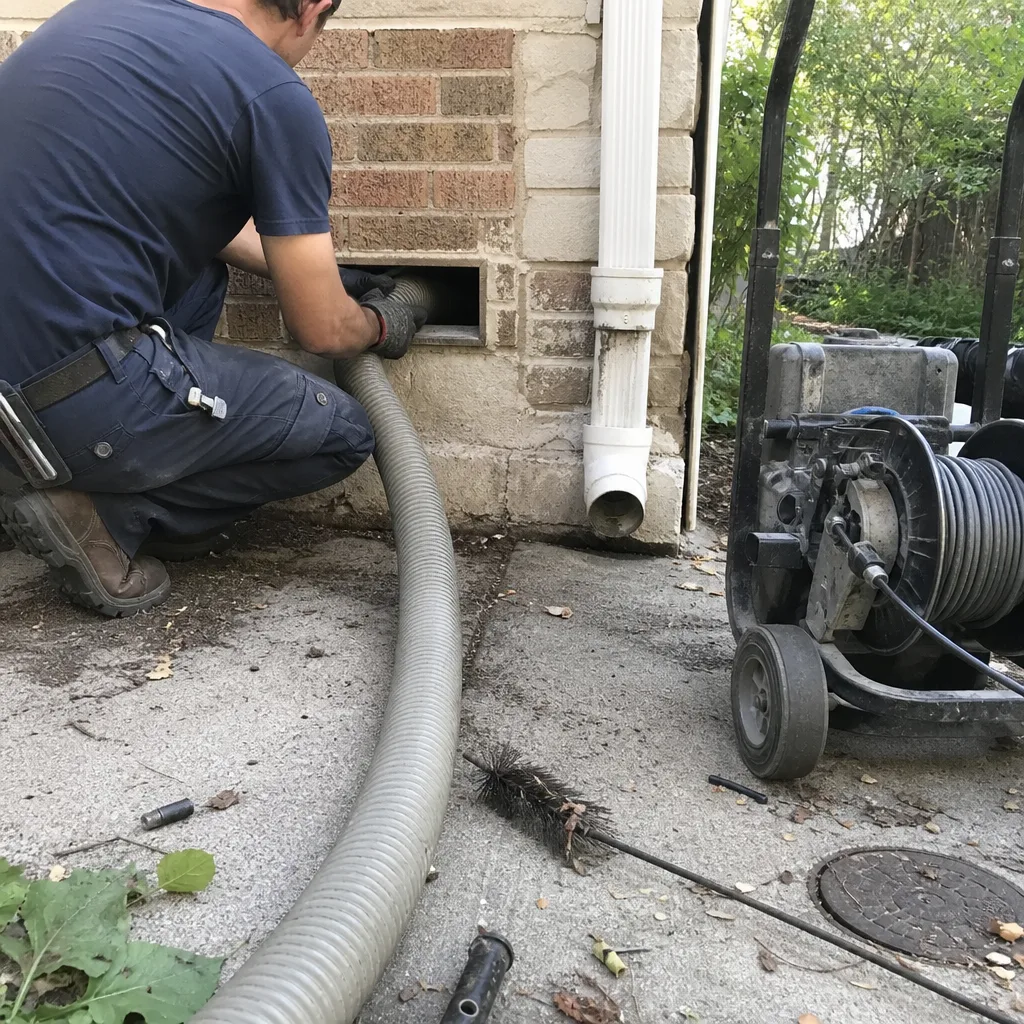 Before
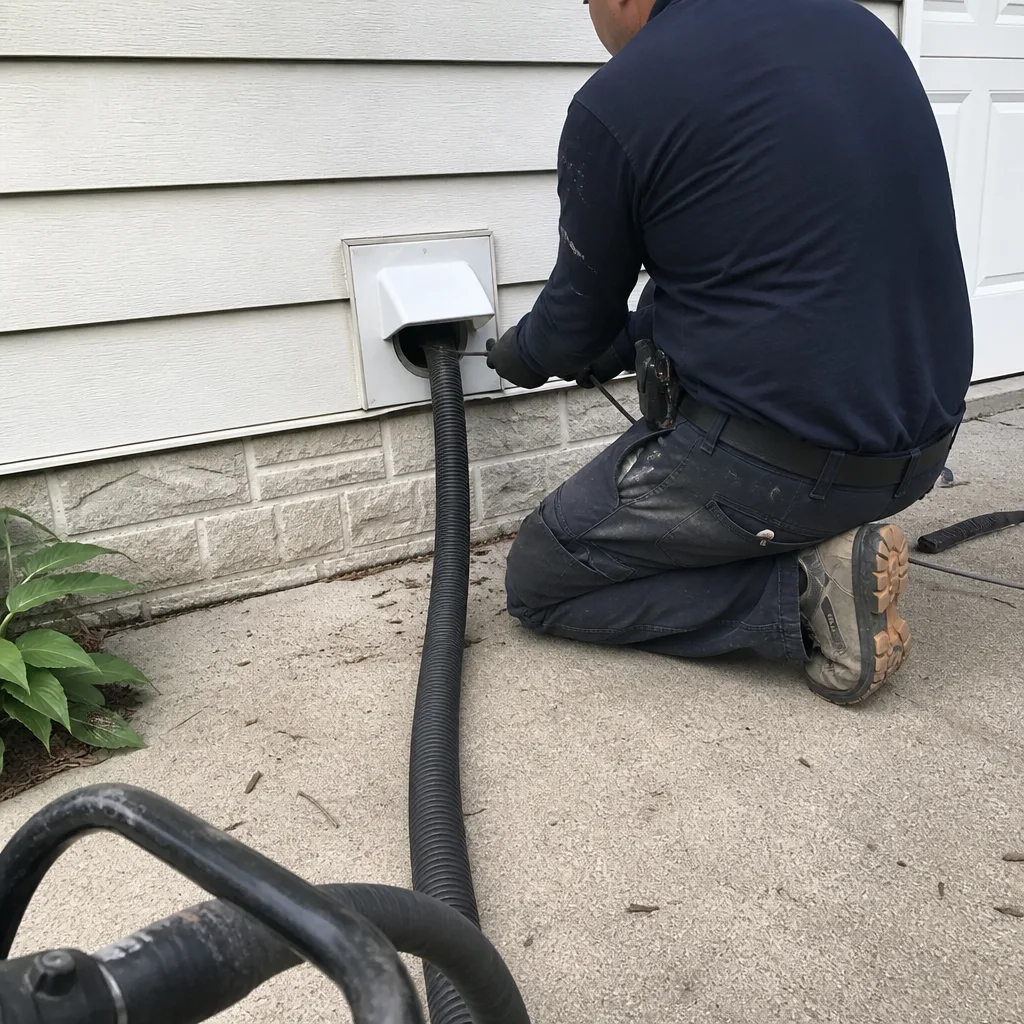 After
After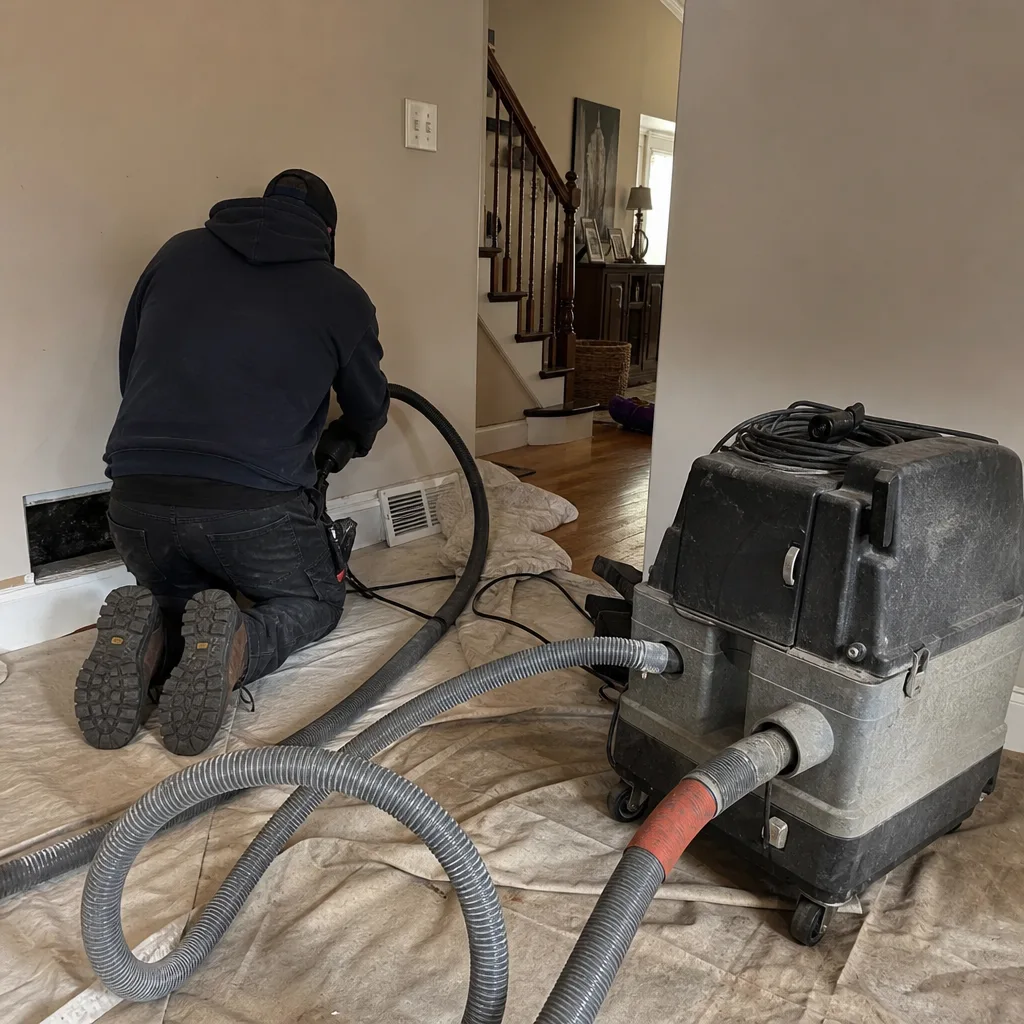 Before
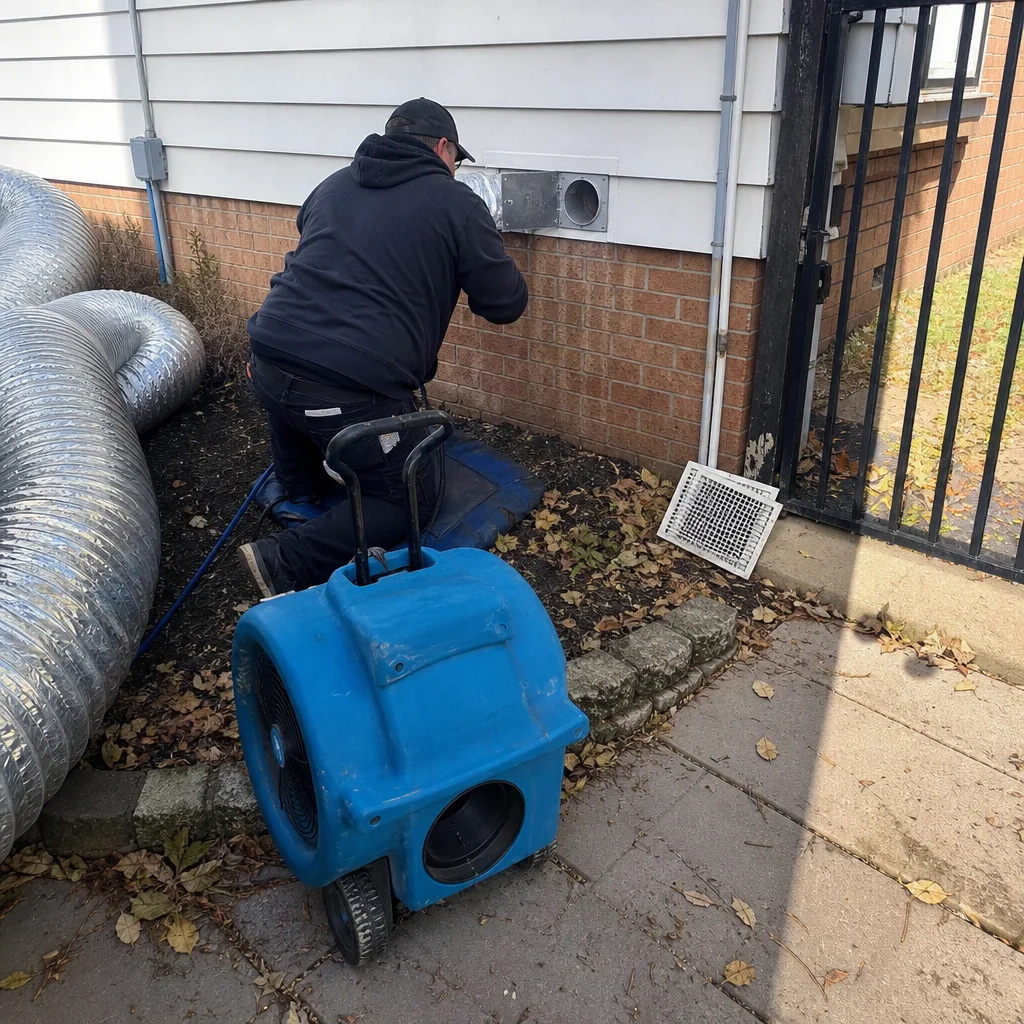 After
After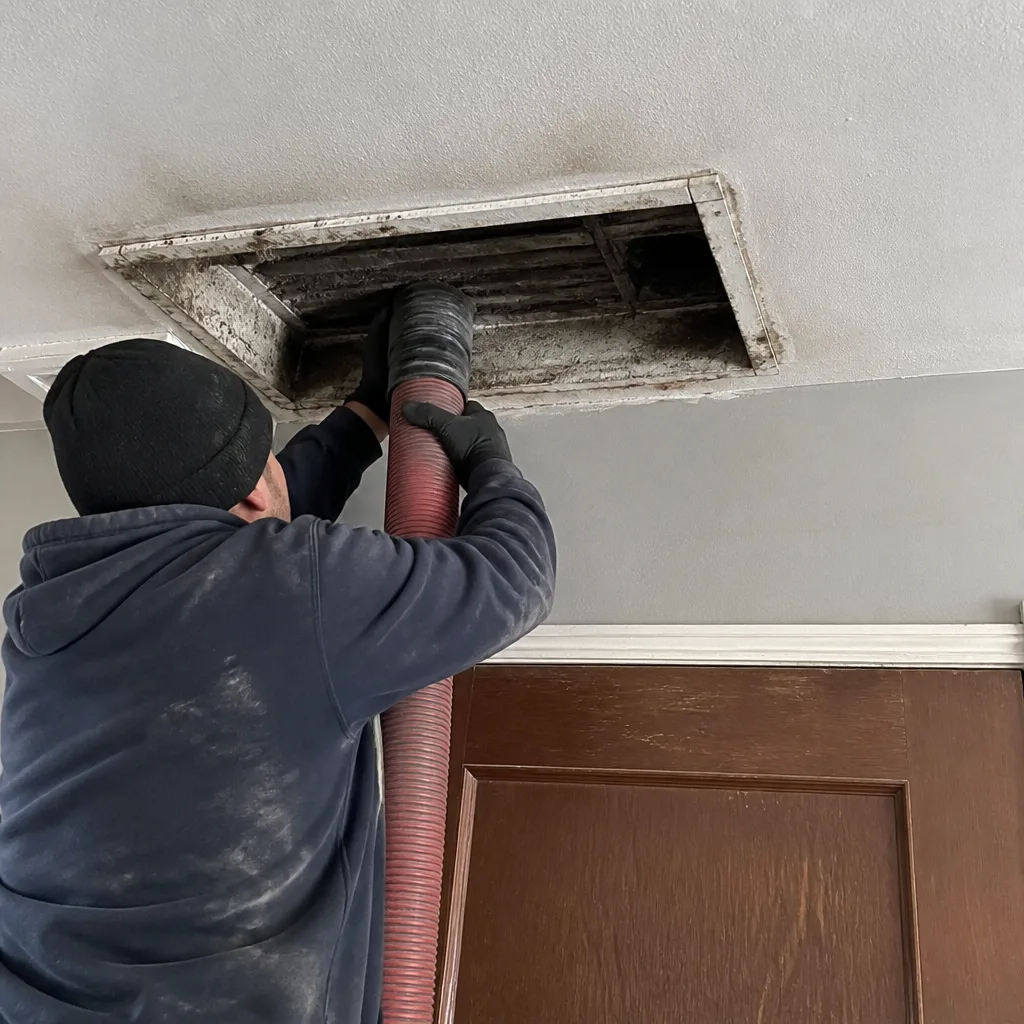 Before
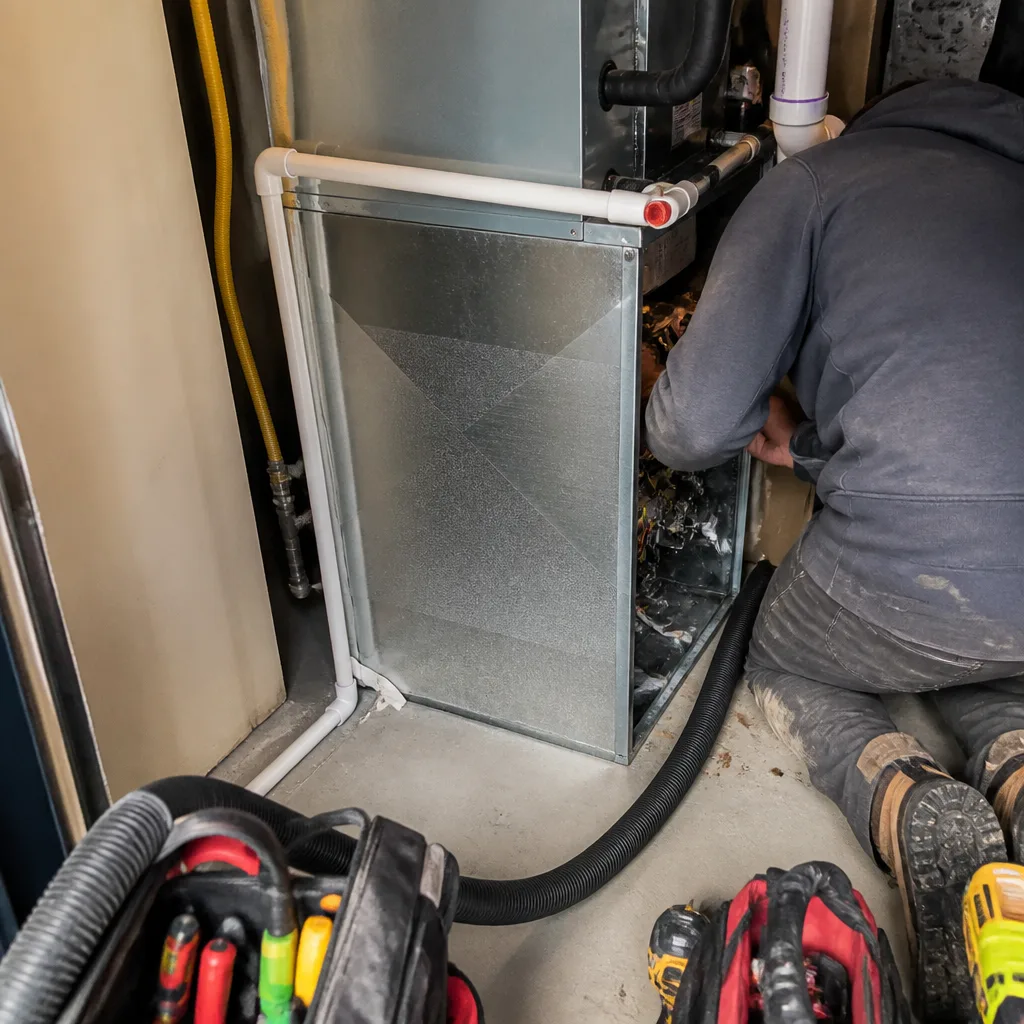 After
AfterSupply Duct Cleaning in Chicago, IL
Supply duct cleaning removes accumulated debris – dust, dander, mold spores, and construction particulate – from the duct runs that carry conditioned air from your HVAC system out to each room in your home. In Chicago, where houses cycle through genuine heating seasons and humid summers, those runs collect material faster than most homeowners expect. A Video Inspection inside a typical Chicago bungalow’s supply trunk line will show visible debris layering within three to five years of the last cleaning, and in older Pilsen or Logan Square two-flats, we’ve documented build-up that predated the current owner’s purchase entirely.
CleanRun Duct Repair & Cleaning has served Chicago homeowners since 2013 – over 52,000 homes, every one of them quoted with a written price before a single panel came off, and photographed inside every duct run before and after the work. If you’d like a written number for your home, call us at (708) 683-3974. A live person answers every call. Supply duct cleaning is part of our full Air Duct Cleaning in Chicago service, and this page explains exactly what the work involves, what it costs in this market, and what you’ll receive when the job is done.
What Supply Ducts Actually Do – and Why They Get Dirty
Your HVAC system has two duct networks. The return side pulls air back from your living spaces toward the air handler. The supply side pushes conditioned air out. Supply ducts originate at the plenum – the large box directly connected to the air handler – and branch out through trunk lines into individual duct runs that terminate at the supply registers you see in your floors, walls, or ceilings.
Because supply ducts are under positive pressure when the system runs, air is always moving through them. That movement carries fine particulate with it. Some of that particulate settles at bends and elbows, especially in older Chicago homes where duct systems were laid out with tight 90-degree turns to fit around radiator pipes or structural members. Some of it accumulates at register boots – the sheet metal boxes that connect the duct run to the register cover. In homes that went through a renovation, construction dust settles deep into supply runs and stays there, because no amount of regular filter changes pulls it back out.
A supply duct isn’t self-cleaning. The air moving through it can only carry particles it has enough velocity to suspend. Fine gypsum dust, insulation fibers, or mold spores from a prior moisture event sit well below that suspension threshold and stay put until a technician physically extracts them.
When You Need Supply Duct Cleaning
- Uneven airflow between rooms. If one bedroom runs noticeably warmer or cooler than the rest of the house, a partial debris blockage in that room’s supply run is a common cause. We see this regularly in Wicker Park and Bucktown greystones, where supply runs often make multiple turns between the basement plenum and upper-floor registers.
- Visible dust discharge at registers. If you can see dust blowing out of a supply register when the system kicks on – or if there’s a gray ring of settled dust on the wall or ceiling around the register cover – the duct behind it has accumulated material that the airstream is now pushing out.
- Musty or stale odor when the system runs. Supply ducts that developed moisture at any point – from a prior roof leak, a humidifier without a drain line, or Chicago’s summer humidity working through an unsealed boot – can carry mold spore loads that produce a detectable odor. The smell typically arrives within the first minute of a heating or cooling cycle, then fades as the air dilutes it.
- Post-renovation in Chicago’s older housing stock. Chicago’s 1920s and 1930s bungalows and two-flats were not built with dust-tight duct systems. A kitchen or bathroom gut job sends drywall dust, old plaster dust, and insulation fibers directly into open supply registers unless every register is sealed before work starts. Many contractors skip that step.
- Recent purchase of a pre-2000 home. Homes in Bridgeport, Beverly, Jefferson Park, and similar established Chicago neighborhoods frequently change hands with original ductwork that has never been professionally cleaned. An inspection scope often shows 15 to 30 years of accumulated material in the supply trunk line.
- Allergy or asthma symptoms that worsen indoors. Supply ducts that carry dust mite allergen, pet dander, or mold spores distribute that material to every room simultaneously when the system runs. If household members consistently feel better outdoors or after time away, the HVAC distribution system is worth examining.
BeforeAfterOur Supply Duct Cleaning Process
- Written price before any work starts. This is Haven Standard Clause 1, and it is not optional on any CleanRun job. Tomas Reyes built the company on the premise that a homeowner should never agree to a service without a number in writing first. We assess the system – number of supply runs, linear footage, duct material, access points – and hand you a written price. That number does not change when the job is underway.
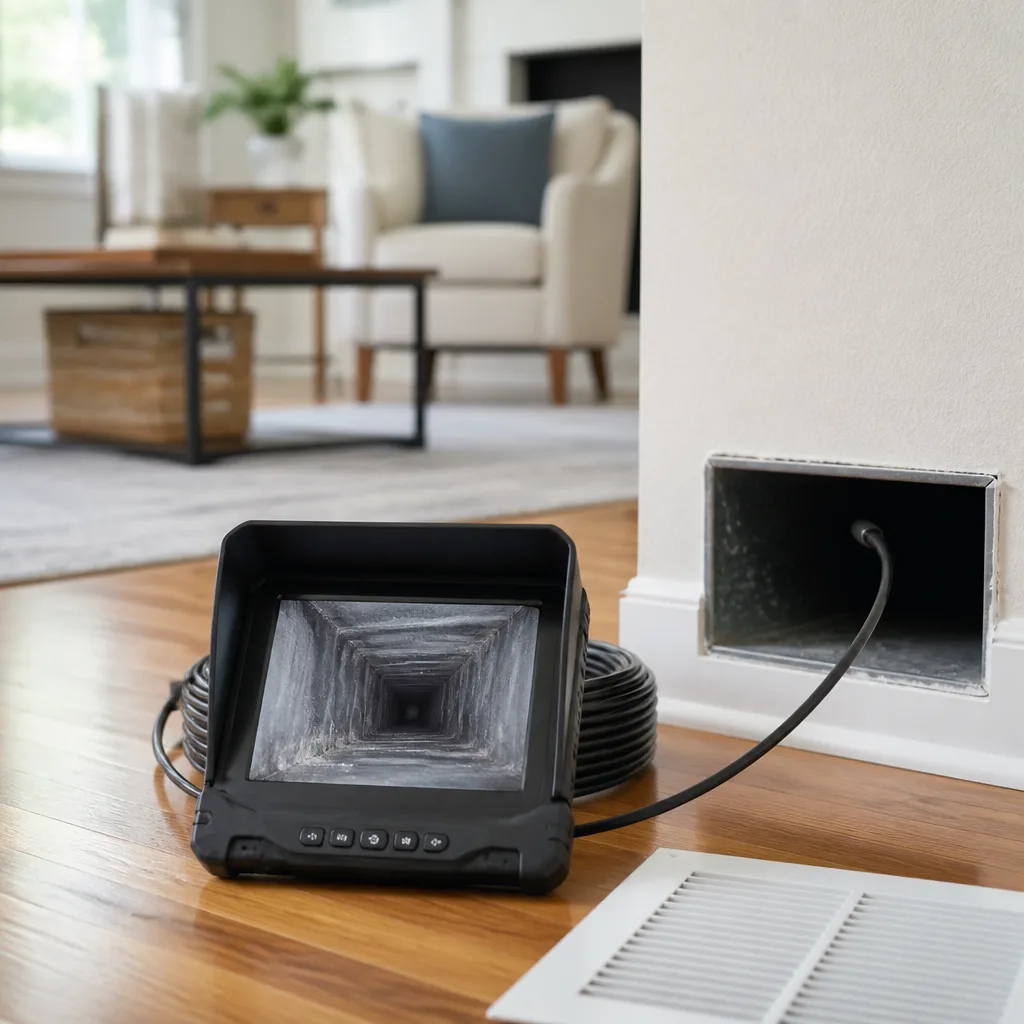
- Pre-cleaning camera documentation. Before any equipment enters the ductwork, a camera goes in first. Every supply run is photographed from the plenum to the register boot. The images are time-stamped and become part of your job record. You see exactly what was inside before we touched anything – no claims, just photos. This is the practice CleanRun has held since its first job in 2013.
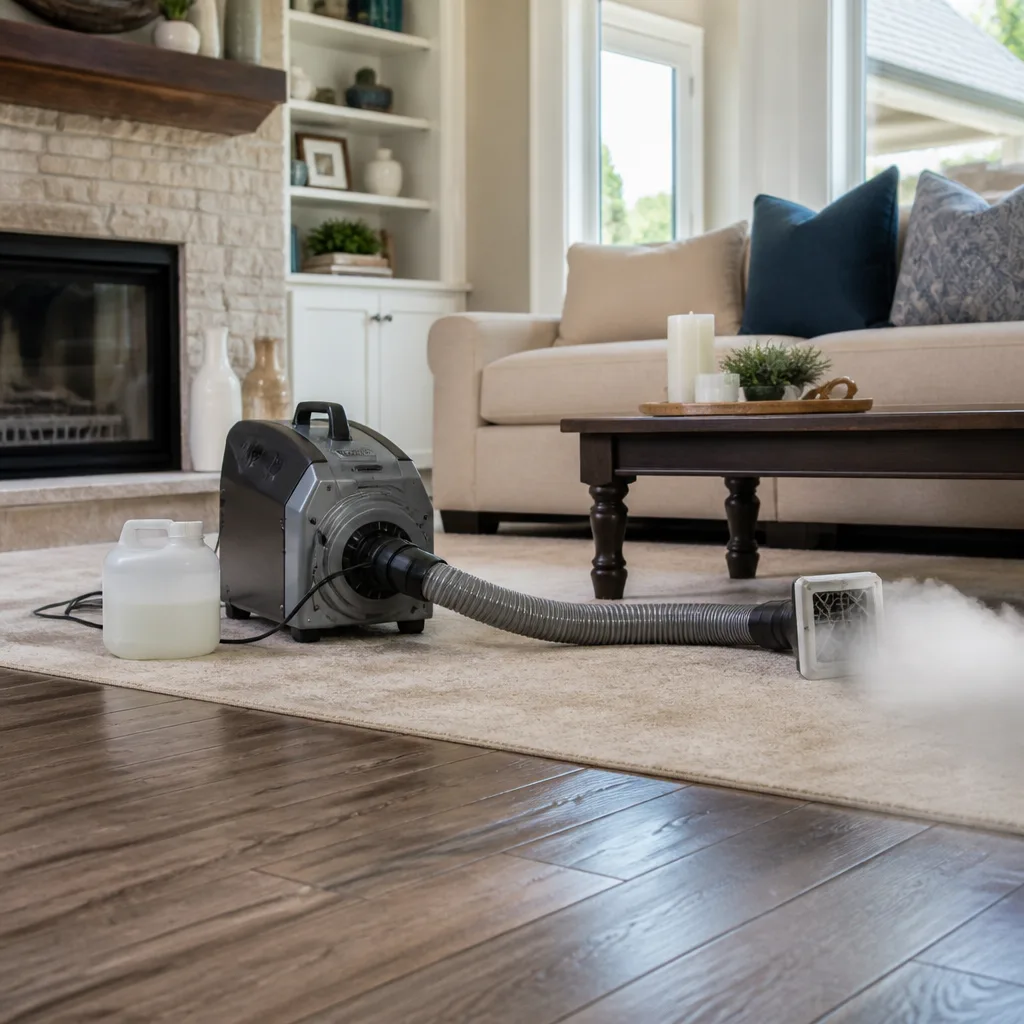
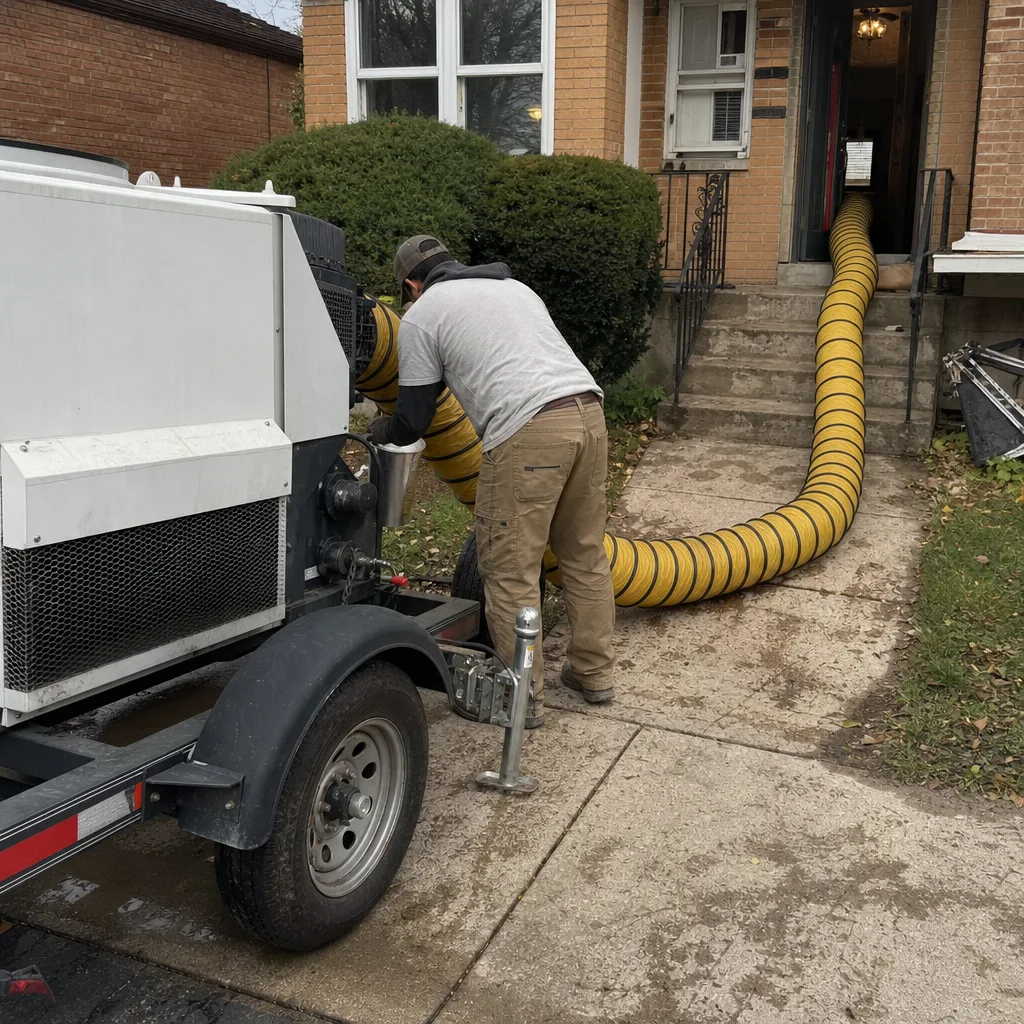
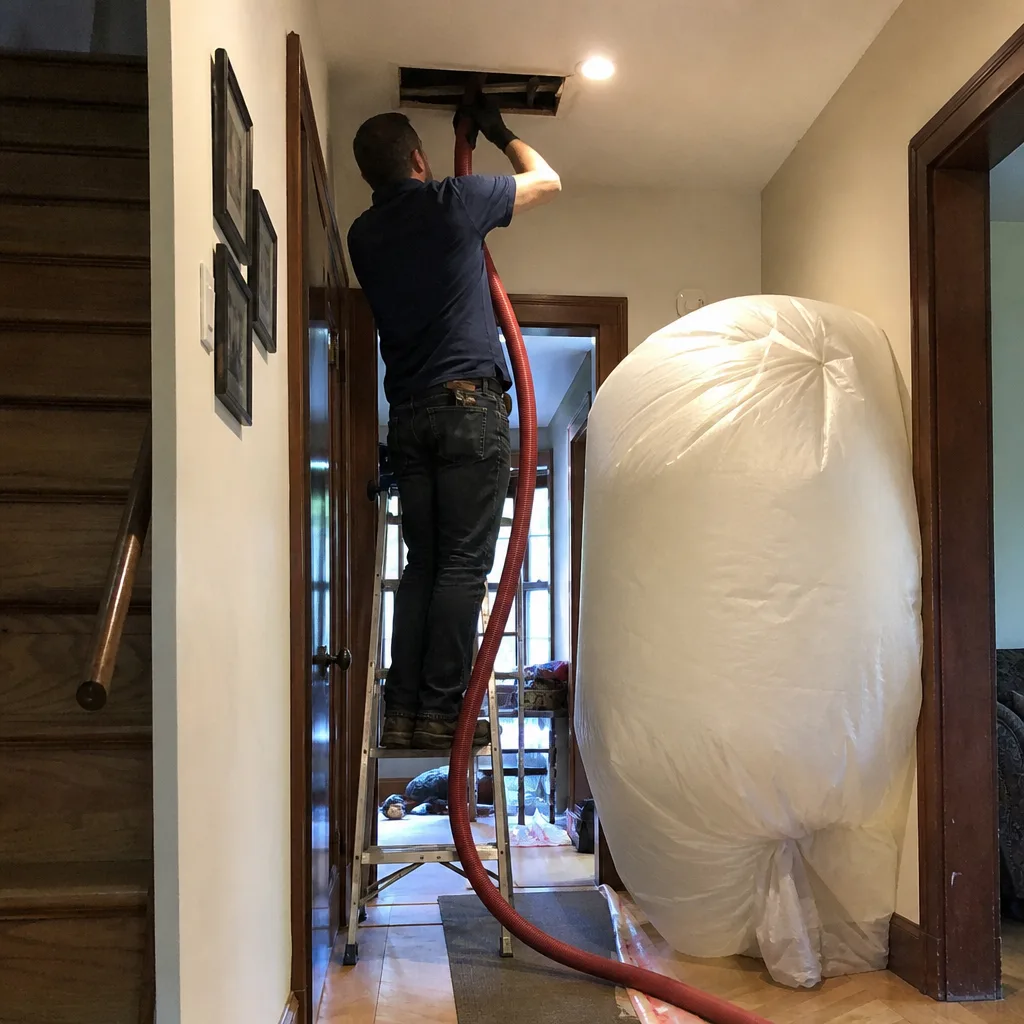
- Negative-pressure setup at the plenum. Negative-pressure extraction means we connect a Nikro collection unit to the supply plenum and create a contained airflow that pulls toward our equipment rather than toward your living space. This matters because an improperly set-up cleaning can push debris further into the system or discharge it into the room. With negative pressure established, loosened debris has one direction to travel: out of the duct and into the collection drum.
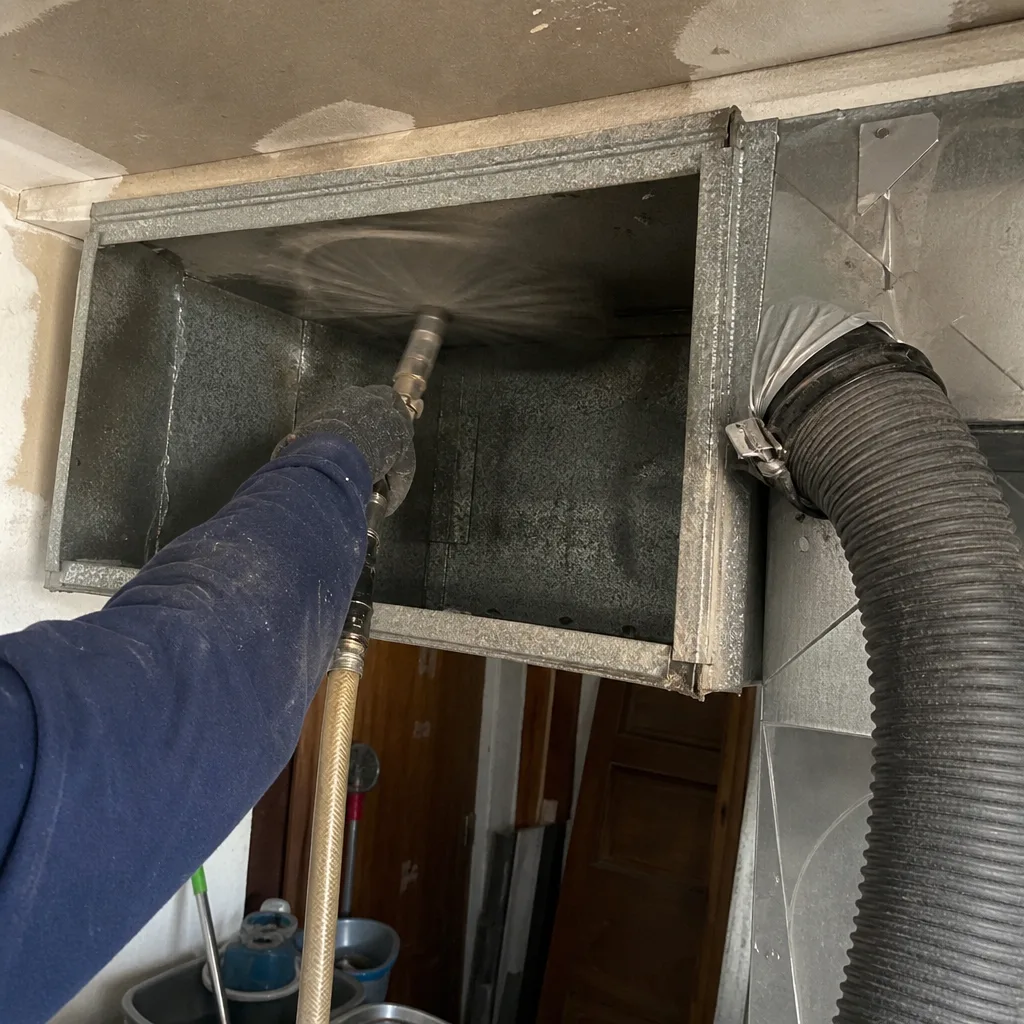
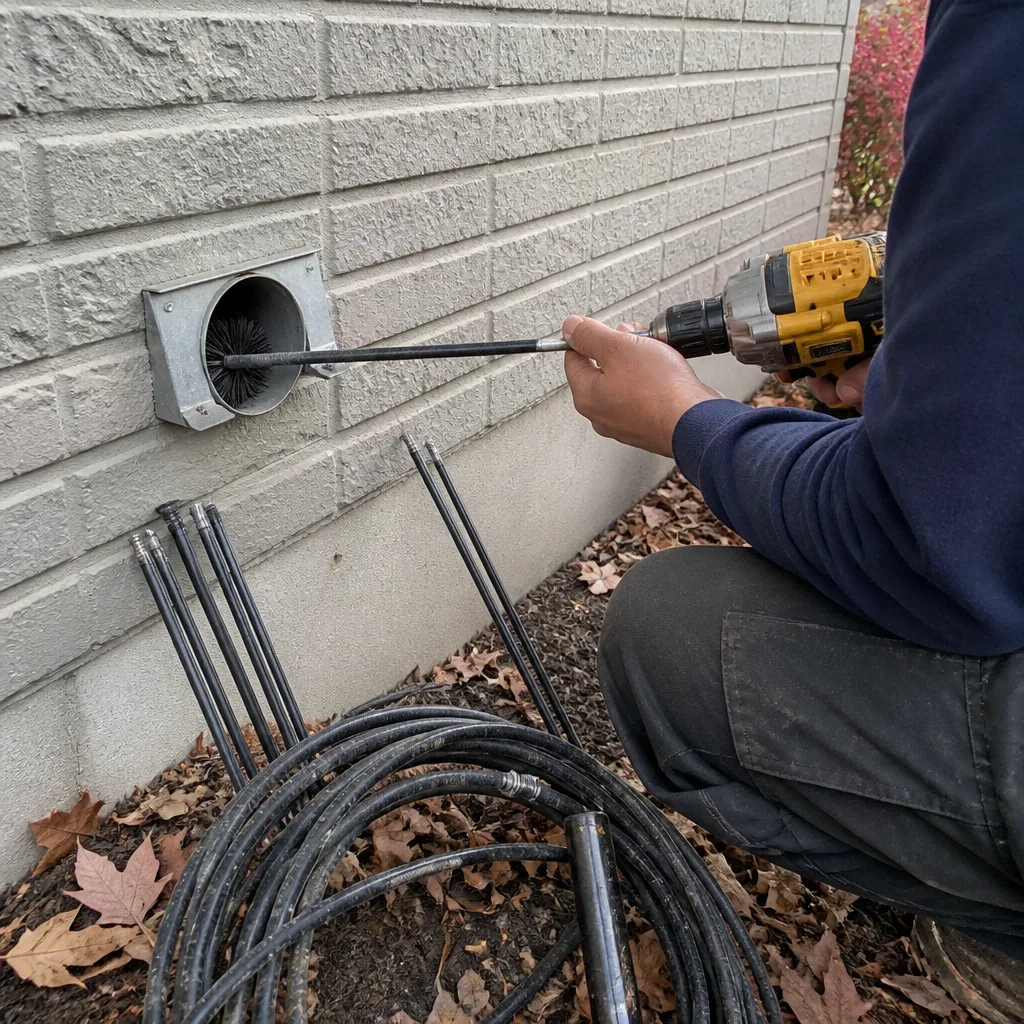
- Mechanical agitation of each supply run. With the collection system drawing air through the plenum, a Rotobrush rotary brush system works through each individual supply run from the register boot back toward the trunk line. The rotating brush breaks up adhered debris – compacted dust, insulation fibers, construction particulate – that a vacuum alone cannot dislodge. Each run is worked until the camera shows a clean interior surface, not until the technician has spent a fixed number of minutes on it.
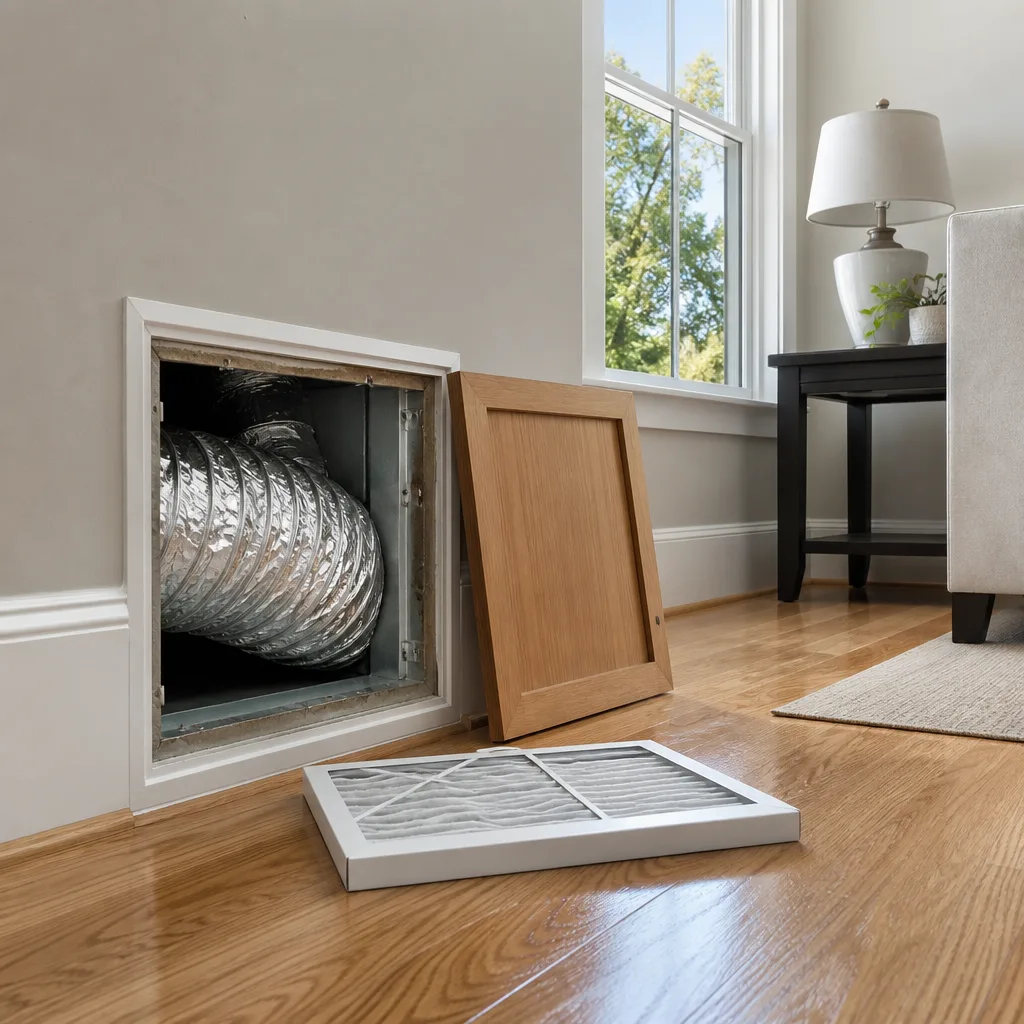
- Register boot inspection and cleaning. Register boots – the sheet metal boxes at the end of each supply run – are a collection point that many cleaning operations skip entirely. We remove each register cover, photograph the boot interior, clean it, and reinstall the cover. In Chicago homes with older stamped-steel registers, we check the boot connection to the duct for gaps or displaced tape that could be pulling unconditioned air from inside the wall cavity.
- Post-cleaning camera documentation and written job record. After every supply run is cleaned, the camera goes back in. Every run is re-photographed. The before and after images are delivered to you as part of the standard job record – not available on request, included by default. You have documented evidence of what changed. That photo record is also the foundation of the 365-Day Done Right Promise: if the work isn’t right, we have the documentation to evaluate the claim and make it right.
Supply Duct Cleaning Pricing in Chicago
How Much Does Air Duct Cleaning Cost in Chicago, IL? (2026 Price Guide) - supply duct cleaning typically runs between $280 and $620 for a single-family home, depending on the factors listed below. That range reflects the Chicago market as of 2025 and 2026, and it covers homes from a Lincoln Square two-bedroom to a five-bedroom house in Norwood Park. The number you’re quoted is always in writing before work begins – there is no call-for-a-quote process at CleanRun.
| Variable | Typical Range |
|---|---|
| Base supply duct cleaning (up to 10 supply runs, single system) | $280 – $380 |
| Per additional supply run beyond 10 | $18 – $28 per run |
| Trunk line cleaning (large-diameter supply plenum branch) | $60 – $120 |
| Post-renovation contamination (heavy construction particulate) | Add $80 – $160 |
| Homes with original 1920s-1940s ductwork requiring access modifications | Add $50 – $100 |
| Sanitizing treatment (Aprilaire or Guardsman-compatible antimicrobial application) | Add $90 – $150 |
What moves a job toward the higher end of the range: more supply runs than average, restricted access in older Chicago construction, heavy contamination from a renovation or prior water event, or a system with flexible duct material that requires a modified agitation approach. None of that changes without discussion – if the scope shifts when we’re in the system, we stop and talk to you before continuing.
If you have a written estimate from another company, bring it. CleanRun’s free second opinion means we’ll put our own written number next to theirs. No pressure, no performance – just two numbers on paper so you can make an informed decision. Call (708) 683-3974 to schedule.
What the Chicago Climate Does to Supply Ductwork
Chicago’s heating season runs roughly from October through April. That’s six months during which your supply system is moving heated air for a significant portion of every day. The thermal cycling – warm air through cold sheet metal in an unconditioned basement or crawl space – creates condensation conditions at certain points in the duct system, particularly at uninsulated transitions and at seams where tape has failed. Moisture at those points creates a surface where biological material can establish itself.
The summer side introduces a different problem. Chicago’s July and August humidity regularly exceeds 70 percent. Supply ducts that pass through unconditioned attic space – common in Chicago’s cape cod and ranch-style homes in neighborhoods like Portage Park and Clearing – sweat on their exterior during cooling season. If the duct insulation is damaged or absent, that condensation can migrate inward. An Aprilaire whole-home dehumidifier integrated with the supply plenum addresses the root cause, but the ductwork still needs to be cleaned before any humidity control is added.
Chicago also sits in a high-dust-transport corridor during spring and fall. Particulate from the lake shore and from heavy truck traffic on I-90, I-94, and I-290 makes its way into homes through normal infiltration. Homes in Avondale, Hermosa, and the areas near the Kennedy Expressway interchange see measurably higher dust loads in supply systems than homes in quieter residential pockets further from the highway corridors.
FAQs – Supply Duct Cleaning
How is supply duct cleaning different from general air duct cleaning?
Supply duct cleaning focuses specifically on the duct runs that carry conditioned air from the air handler out to your rooms – the side of the system that delivers air to you. Our Air Duct Cleaning services typically cover both the supply side and the return side (the ducts that pull air back toward the air handler). Some homes need both cleaned at the same time; others have a supply system that accumulated the bulk of the contamination while the return system is relatively clear. Our pre-cleaning camera documentation shows you the condition of each side before we quote any work, so you’re not paying to clean something that doesn’t need it. Call (708) 683-3974 and we’ll tell you exactly what your written estimate would cover.
How long does supply duct cleaning take in a typical Chicago home?
A supply duct cleaning on a standard Chicago single-family home with 8 to 14 supply runs takes between two and four hours. Homes with more complex duct layouts – multi-zone systems, partially accessible runs in finished basements, or original 1940s galvanized steel ductwork – can run longer. We don’t give you a time estimate to manage your schedule and then rush the job to meet it. The written scope tells you what’s being done; the camera record at the end confirms it was done.
Can supply duct cleaning help with uneven heating or cooling between floors?
It can, depending on the cause. If uneven airflow is the result of debris accumulation partially blocking a supply run – which is common in Chicago’s older two-story homes where runs to upper floors travel longer distances and make more turns – cleaning that run will restore airflow and reduce the temperature imbalance. If the cause is an undersized duct, a damper stuck in the wrong position, or a design problem with the original layout, cleaning alone won’t fix it, and we’ll tell you that directly in writing rather than take your money for a service that won’t solve the problem. Call us at (708) 683-3974 for an honest assessment.
Does CleanRun clean supply ducts in condominiums and multi-unit buildings in Chicago?
Yes. Chicago’s mid-rise and high-rise condominiums from the 1960s and 1970s in neighborhoods like Edgewater, Uptown, and the Near North Side often have fan-coil unit supply systems rather than central forced-air systems, and those require a different approach than a single-family system. We assess the building’s duct configuration before quoting – written price first, always – and the same camera documentation and 365-Day Done Right Promise apply regardless of property type. Condo associations and individual unit owners both qualify for a free second opinion on any written estimate they’ve already received.
The 365-Day Done Right Promise
Every supply duct cleaning CleanRun performs in Chicago is backed by the 365-Day Done Right Promise. If the work isn’t right within 365 days of the job date, we make it right. That commitment is in writing on every job – not subject to manager approval, not conditional on circumstances we decide later. The photo record from every duct run is what makes this promise meaningful rather than decorative: if there’s a dispute about what was done or what condition a duct was left in, we have the documentation to evaluate it honestly.
Haven Standard Clause 3 – Verified Crews – means that every technician who enters your home is background-checked, uniformed, and identified by name before arrival. You know who’s coming before they knock.
Key Takeaways
- Supply duct cleaning addresses the positive-pressure side of your HVAC system – the runs that carry conditioned air to your rooms.
- Chicago’s climate, older housing stock, and proximity to high-traffic corridors make supply ducts in this city collect debris faster than homeowners typically expect.
- CleanRun’s process includes camera documentation before and after every run – delivered as part of the standard job record, not available on request.
- Written price before any work starts, every time – Haven Standard Clause 1.
- Pricing in the Chicago market runs from $280 to $620 for most single-family homes, with a written number provided before the job begins.
- The 365-Day Done Right Promise is in writing on every job.
- A free second opinion on any written estimate from another company is available at no cost.
Schedule Your Supply Duct Cleaning in Chicago
If your supply registers are pushing dust, certain rooms aren’t reaching temperature, or you’re simply not sure what’s inside the duct system you’ve been running for years, call (708) 683-3974. A live person answers every call. We’ll assess your system, give you a written price before any work starts, document every duct run with before and after photos, and back the work with the 365-Day Done Right Promise. That’s the job, in plain terms, with nothing left out.
CleanRun Duct Repair & Cleaning serves Chicago homeowners across the city’s neighborhoods – from Bridgeport and Pilsen on the South Side to Rogers Park and Andersonville in the north. The same written price, the same camera record, and the same guarantee apply on every job, regardless of zip code. Visit our home to see the full range of services we provide.
Written by Tomas Reyes, Owner at CleanRun Air Duct Cleaning Chicago, serving Chicago since 2013.